Use Your Legs, Not Your Arms: The Beginner's Secret
Learn why climbing with your legs instead of your arms saves energy, prevents pump, and unlocks better technique for beginner climbers.
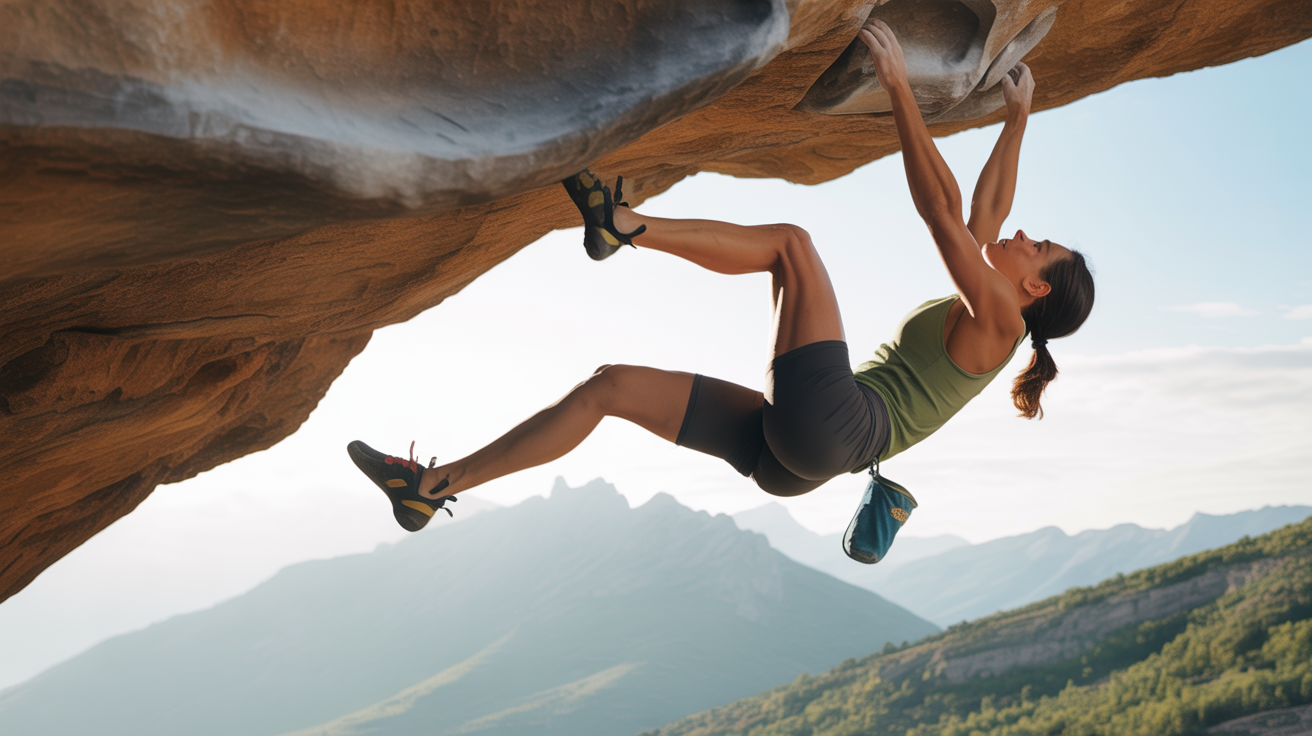
Walk into any climbing gym and you can spot a beginner from across the room. They're the ones white-knuckling the wall, forearms visibly swelling, making what looks like a desperate pull-up on every move. Within a few routes their arms are toast and they're shaking out on the floor wondering why climbing feels so impossibly hard.
Here's the thing: it doesn't have to. The single biggest shift a beginner can make is understanding which muscles are actually supposed to do the work. Spoiler: it isn't your arms.
Why Beginners Default to Their Arms
It makes sense that new climbers grab the wall and pull. When you're nervous and the holds feel insecure, your instinct is to clamp down and haul yourself up. Your hands are touching the rock, so your brain decides your hands and arms should be doing the job.
But your arms are relatively small muscles, designed for fine control and pulling assistance, not for repeatedly hoisting your entire bodyweight up a wall. Your legs, by contrast, are the strongest muscles in your body. Your quads, glutes, and calves can generate far more force with far less fatigue. Every time you push up through your feet instead of pulling up with your hands, you're tapping into an engine that's two or three times more powerful.
The climbing term for what happens when you over-use your arms is getting "pumped." Blood pools in your forearms, lactic acid builds, and your grip strength drains away until you literally cannot hold on. Experienced climbers manage pump carefully by keeping their arms straight and letting their skeleton bear the load between moves. Bones, not biceps.
The Two Signs You're Arm-Climbing
You don't need a coach to tell you when you've slipped into arm-climbing mode. Two clear signals:
- Your forearms pump within a few moves. If your forearms are burning on a route that's technically within your ability, you're muscling through instead of moving efficiently.
- Your feet keep cutting loose. When you're pulling hard with your arms, your body swings away from the wall like a pendulum. Your feet pop off holds because you haven't weighted them properly.
The Core Principle: Stand Up, Don't Pull Up
Think about how you climb a ladder. You don't hang from the rungs and drag yourself skyward. You push down through your feet and stand up. Climbing works the same way, even though the holds are tilted at odd angles.
The goal on every move is to get your weight over your feet and then stand up to gain height. Your hands are there for balance and direction, not propulsion. When you internalize this, the whole game changes.
Keep Your Arms Straight
Straight arms are one of the most important habits in climbing. When your arm is bent, your bicep is under load. Hold that position for even a few seconds and you'll feel how quickly it fatigues. When your arm is straight, you're hanging from your skeleton. Your bones take the load and your muscles barely work at all.
Between moves, try to find a position where at least one arm is fully extended. On steeper terrain this gets harder, but on beginner routes and slabs you can almost always find a moment to drop an arm straight and let it rest.
For more on building the movement habits that support this, see Climbing Technique for Beginners: Move Like a Climber.
Get Your Weight Over Your Feet First
Before you reach for the next handhold, ask yourself: is my weight over my feet? If you reach while your weight is still hanging off your hands, you'll need to pull to compensate. If you shift your hips in, get your weight over your feet, and then reach, you'll barely need to use your arms at all.
This hip-in, weight-over-feet position is sometimes called being "close to the wall." The closer your hips are to the surface, the better your feet can push effectively. Beginners often hang far off the wall (arms bent, hips back) because it feels secure, but that position actually puts you in the worst spot for efficient movement.
Four Drills to Retrain Your Movement
These drills work best on easy routes at the gym, well below your limit, where you can focus on technique rather than just surviving. Tell your gym's staff or instructor what you're working on; they can often point you to ideal routes for each drill.
1. Straight-arm climbing. Pick a route two or three grades below your limit and climb it with a rule: no bent arms unless you're actively reaching. Every time you find a stable position, drop both arms straight. It'll feel awkward at first, but you'll quickly notice how much less your forearms work.
2. Slab balance moves. Slabs (walls that lean back slightly past vertical) are the great equalizer. You genuinely cannot pull yourself up a slab because there's nothing to pull against. Find a low-angle slab at the gym and practice moving up it using only your feet. Keep one or two fingers lightly on the wall for balance, but treat them as training wheels, not load-bearing.
3. Place your foot, then stand. This is less a drill and more a deliberate habit. Before every move, say (or think) "foot, then stand." Find the foothold. Place your foot precisely. Shift your weight over it. Then stand up to the next hold. The pause feels slow, but it rewires the impulse to grab and haul.
4. Easy routes, legs-only focus. Pick a route at least two grades below your limit and climb it with your entire attention on your legs. Where are your feet? Are they pushing or just resting? Is your weight over them? Ignore your hands almost entirely. This is the drill that tends to produce the most noticeable shift in how climbing feels.
For more on making your feet work precisely, Footwork 101: Why Quiet Feet Matter in Climbing covers foot placement technique in detail.
What Good Leg Technique Actually Looks Like in Practice
Watch an experienced climber and notice that their movement looks almost leisurely. They step up deliberately, pause for a half-second, and then rise smoothly on their legs. Their arms extend as they move and stay relatively relaxed between moves. There's very little jerking or desperate clutching.
That's leg-driven movement. The experienced climber identifies the foothold first, loads it, and then uses the leg push to generate upward momentum. The arms steer and provide a light brace; they're passengers, not the engine.
Compare that to a beginner's movement pattern: reach for the handhold, pull hard, drag feet up somewhere vaguely near a foothold, repeat. Every move is an upper-body event. It works for a few moves, then the pump clock runs out.
On Steeper Terrain
On very steep, overhanging routes, your arms will always be working harder than on a vertical wall. That's unavoidable physics. But even on steep terrain, experienced climbers use powerful hip drives and precise footwork to reduce arm load as much as possible. The principle doesn't change: engage your legs as much as the angle allows, and rest your arms whenever a position lets you hang straight.
For a closer look at how different hold types change how you use your body, see How to Use Different Climbing Holds: Crimps, Jugs, and Slopers.
A Note on Safety and Learning in a Gym
Everything in this article is educational. It's a framework for thinking about movement, not a replacement for learning from a qualified instructor in person. If you're new to climbing, a beginner course at your local gym is genuinely worth the time. An instructor watching you climb can spot specific habits in seconds that would take you weeks to identify on your own.
Use properly rated (UIAA/CE) gear, always check your harness and your partner's harness before every climb, and learn belaying hands-on rather than from any written source including this one. The gym staff are there to help.
One more thing: resist the urge to jump into aggressive finger training like hangboarding early in your climbing life. Your tendons take much longer to adapt than your muscles do, and finger injuries are the most common way new climbers sideline themselves for months. Build technique first. Strength follows.
FAQ
Why do my forearms pump so fast even on easy routes?
Almost always because you're maintaining a bent-arm grip for too long. Try climbing with straight arms between moves. Even a few seconds of hanging straight gives your forearms a partial recovery. If pump hits within your first two or three routes, that points to a technique issue, not a fitness issue.
I know I should use my legs but I keep forgetting on harder moves. How do I make it automatic?
It takes deliberate repetition on easy routes before it becomes habit on harder ones. The drills above, especially the "foot then stand" cue, help build the movement pattern at low stress. Once it's automatic on routes you could climb in your sleep, it starts showing up on harder moves too.
Does using your legs more mean using your arms less on all routes?
In practice, yes, though not to zero. On easy and moderate routes you can get by with arms doing almost nothing beyond balance. On steep or overhanging routes, your arms will contribute more. The goal isn't to never use your arms; it's to use them for reaching and steering, not as your primary engine.
My feet keep slipping off the holds when I try to stand up on them. What am I doing wrong?
Usually one of two things: either the foot isn't placed precisely enough (the tip of the shoe on the hold, not the arch), or your weight isn't loaded over the foot before you push. Try slowing down and placing your foot intentionally before shifting your weight onto it. The quiet feet drill on a slab will also sharpen this quickly.
Is this different for bouldering versus top-rope climbing?
The principle is exactly the same. Bouldering tends to involve shorter, more powerful moves, which can feel more arm-intensive. But the most efficient boulderers still drive from their legs as much as possible. On top-rope, you have the advantage of a full route to practice pacing, which makes it slightly easier to stay aware of your energy use across many moves.