Footwork 101: Why Quiet Feet Matter in Climbing
Learn why precise climbing footwork saves energy. Covers quiet feet, toe placement, edging, smearing, and beginner drills you can start today.
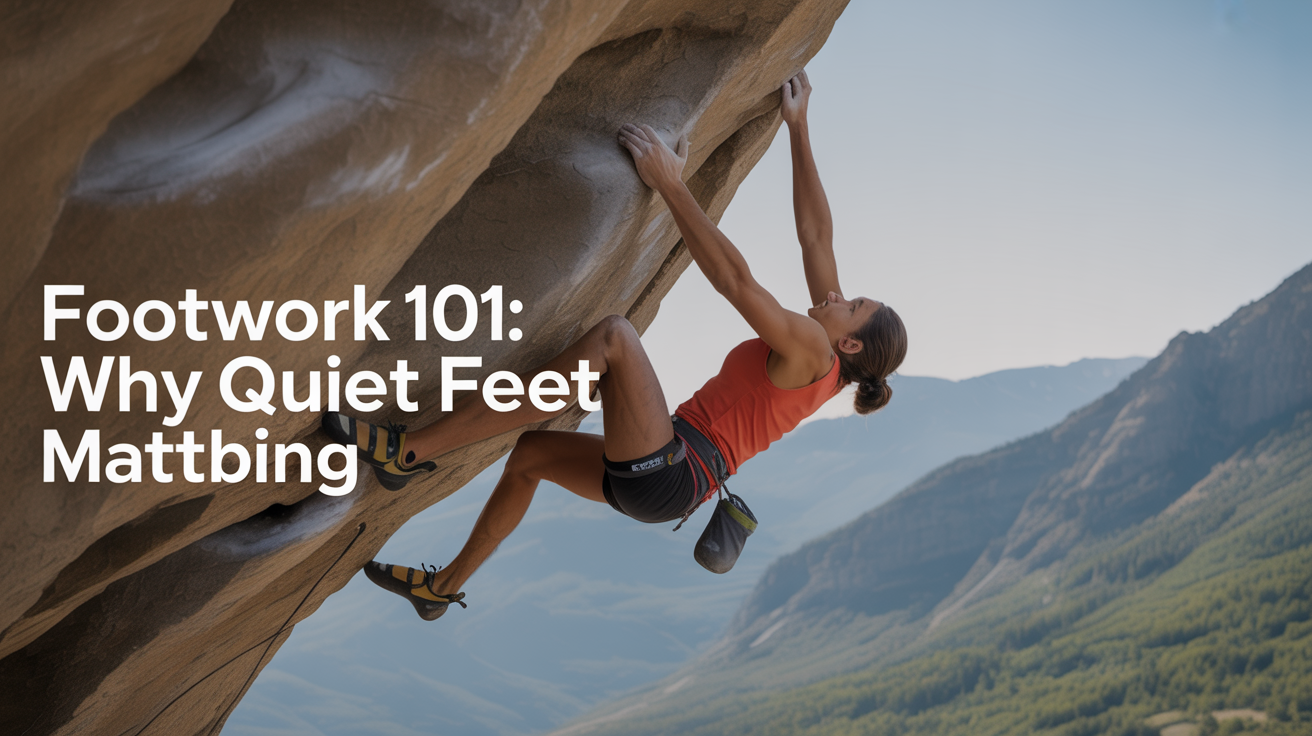
Watch a beginner on the wall and you will almost always see the same thing: arms fully engaged, feet scraping and shuffling for any purchase they can find. Watch an experienced climber on the same route and the contrast is striking. Their feet land once, precisely, and stay. Their arms barely bend. The secret is not stronger fingers. It is better feet.
Good footwork is the single skill that unlocks everything else in climbing. It lets you stand up into reaches rather than pull yourself up, it preserves grip strength for the moves that actually demand it, and it gives you a stable platform that makes reading sequences far easier. The good news is that footwork is entirely learnable. You do not need to be strong. You just need to pay attention to your feet in a way that most beginners never do.
Why Your Legs Should Do More Work Than Your Arms
Your legs are built for this. The muscles in your quads, hamstrings, and glutes are among the largest in your body. Your forearm flexors, which do most of the work when you hang from holds, are small by comparison. Every time you rely on your arms to haul yourself up instead of pushing through your feet, you are drawing from a much smaller tank.
Think about how you climb a ladder. You do not drag yourself up rung by rung with your arms. You step up, push down through your feet, and your legs do the heavy lifting. Climbing a wall works the same way when your footwork is sound. When your feet are precisely placed on a hold, you can stand up through the move rather than pulling. Your arms stay straighter, your grip stays fresher, and you last longer on the wall.
For more on shifting work from your arms to your legs, see Use Your Legs, Not Your Arms: The Beginner's Secret.
The Mechanics of Precise Foot Placement
Use the Toe, Not the Arch
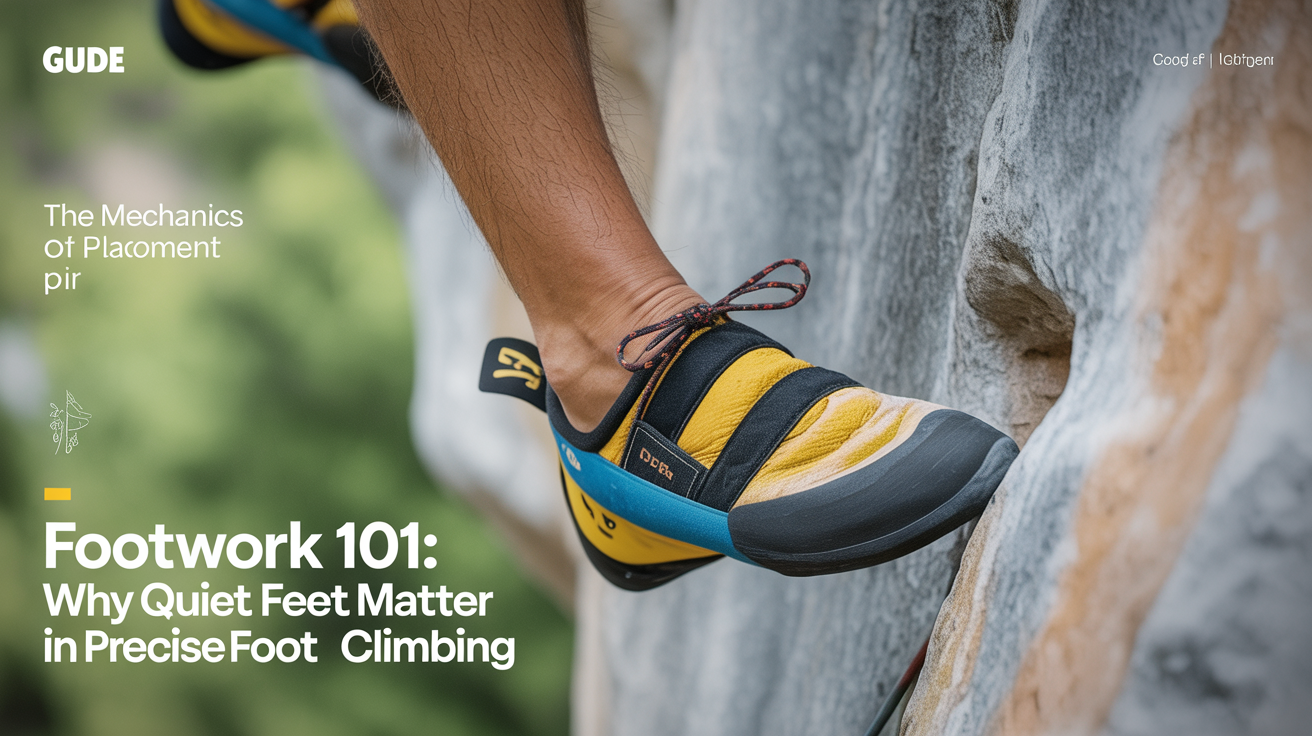
The most common beginner footwork mistake is stepping onto holds with the middle of the foot. The arch feels stable on the ground, but on a climbing hold it gives you almost no feedback and tends to roll off. The sweet spot is the inside edge of the shoe, right at the big-toe joint.
Your climbing shoes are designed around this principle. The rubber wraps tightly around the toe because that is where precision happens. When you step onto a small edge, you want the narrowest possible contact point directly over the hold. More specifically:
- Inside edge: The inner corner of the big-toe area. Use this on edges, pockets, and most vertical footholds where you need to stand with intention.
- Front point (smearing position): The very tip of the toe, used when the hold is so small that even the inside edge is too wide.
- Smearing: Pressing the full front pad of the shoe against a sloped surface or volume. The friction comes from maximizing rubber contact, not from hooking an edge.
Place the Foot, Then Trust It
Precision comes before commitment, but you have to commit. Many beginners place a foot tentatively, feel uncertain, and immediately start readjusting. All that shuffling costs energy, makes noise, and signals to any observer that the placements are not deliberate.
The sequence for good footwork is: look at the hold, decide where your toe lands, place the foot there, and then weight it without second-guessing. If the placement turns out to be wrong, that is useful information. But if you never fully commit, you never develop the feel that tells you whether a placement is solid.
Heel Position Depends on the Hold
There is no universal rule about heel height, but there are clear guidelines based on what the foothold is asking of you.
On a small edge, keep the heel slightly dropped. This engages your calf and the connective tissue around the ankle, which stabilizes the foot and increases friction between rubber and rock. Lifting the heel on a small edge often causes the foot to skate off.
On a slab or volume where you are smearing, let the heel come up only as much as it needs to in order to maximize the rubber surface pressing against the wall. Too much heel drop on a featureless slab lifts the toe, reducing contact. Too much heel raise shifts weight onto a tiny patch of rubber and gives it nowhere to go.
On big footholds, your heel position matters less. Enjoy the rest.
What "Quiet Feet" Actually Means
Quiet feet is a coaching cue, not a personality trait. It means your feet make no noise when they land on holds.
Scraping sounds when you search for a foothold. Tapping sounds when your foot bounces before settling. Clunking sounds when you miss a hold and drag up to it. All of these noises tell you and your coach the same thing: the placement was not precise.
When a foot is placed with intention, rubber meets hold and that is the end of it. No sound, no adjustment. This is harder than it sounds because it requires you to look at your foot until it lands, which beginners often skip in their rush to get to the next handhold.
The "quiet feet" cue is effective because it gives you immediate, honest feedback. You do not need to analyze your footwork mentally in the middle of a route. You just listen. Noise means imprecision. Silence means you are on track.
See Climbing Technique for Beginners: Move Like a Climber for how quiet feet fits into the broader picture of movement fundamentals.
Four Drills to Build Better Footwork
These drills can all be done on easy routes at your gym, ideally on terrain you can climb comfortably. The goal is to practice footwork in isolation, without the cognitive load of a difficult route. Always warm up with a few easy laps before drilling.
1. Silent Feet
Choose a route two to three grades below your limit. Climb it top to bottom with one rule: your feet must make absolutely no noise. No scraping, no tapping, no shuffling after placement. If you make a sound, stop, step back down to the hold, look at it, and place the foot again deliberately.
Do this drill for an entire session every few weeks and you will notice your footwork improving even on routes where you are not thinking about it.
2. Deliberate Placement
Before each foot move, stop. Look at the hold. Decide exactly where on the hold you will place your toe. Place it there. Only then move your hands. This slows you down significantly, which is the point. Speed comes after precision, not before.
On easy terrain this feels almost tediously slow. That is fine. You are building a habit that will later feel automatic.
3. Glue Foot
Set a rule before you start the route: once a foot lands on a hold, it does not move. You can lift it to step to a new hold, but you cannot shuffle it or readjust. If you place your foot poorly and realize it, you must either commit to the placement or lift the foot entirely and reset from scratch.
This drill forces you to make better decisions before the foot lands, because there is no correction available afterward. It is surprisingly challenging even on moderate routes, and experienced climbers still use it as a calibration exercise.
4. Downclimbing
Downclimb every route you go up. Coming down a route requires even more deliberate footwork than going up because you cannot see the holds as easily and your body position is different. Downclimbing builds footwork precision, adds volume without increasing intensity, and helps you read sequences from a new angle.
Start on routes well below your limit. Downclimbing your project is an advanced skill. Downclimbing a few grades easier is a practical drill anyone can add to a regular session.
Common Beginner Footwork Mistakes
Knowing what goes wrong is half the battle. Here are the patterns to watch for in your own climbing.
Looking away before the foot lands. This is probably the most widespread beginner error. You look at the foothold, then shift your eyes to the next handhold before your toe actually arrives. The foot then lands somewhere near the hold and you spend the next second adjusting. Fix: keep your eyes on the hold until you feel your weight settle.
Using the arch instead of the toe. The arch feels grippy on the ground. On a climbing hold, it is too wide and too imprecise. Train yourself to consciously move weight forward to the big-toe joint on every foothold, every time.
Tippy-toe over-reaching. When a foothold is below your hips and you rush to reach the next handhold, you sometimes come up onto the very tips of your toes and lose the stable platform your legs could otherwise provide. Drop back down, let the foot settle, then reach.
Treating feet as an afterthought. Beginners understandably focus on their hands because holds are easier to see and grip strength is the most obvious bottleneck early on. But the fastest improvements in energy efficiency almost always come from footwork, not from getting stronger.
For a look at different hold types and how foot technique changes across them, see How to Use Different Climbing Holds: Crimps, Jugs, Slopers.
FAQ
How long does it take to develop good footwork?
There is no single answer, but most climbers notice real improvement within a few focused sessions if they are actively drilling. The challenge is that easy routes do not demand good footwork, so it is possible to climb for months without ever building it. Deliberate practice on moderate terrain, not just working hard on your limit, is what builds the habit.
Should I look at my feet while climbing?
Yes, especially as a beginner. More experienced climbers develop enough body awareness to feel when a placement is solid, but that awareness only comes from years of looking. Until footwork feels automatic, keep your eyes on your feet until each placement is complete.
Do climbing shoes make a big difference for footwork?
A well-fitted pair of beginner shoes makes a noticeable difference compared to rental shoes that are too large and too stiff. That said, beginner footwork errors are technique problems, not gear problems. Renting at the gym while you figure out whether you enjoy climbing is completely reasonable. When you do buy a first pair, fit matters more than price. A snug shoe with responsive rubber will serve you far better than an expensive shoe that is half a size too big.
Can I practice footwork outside of the gym?
You can practice the awareness and intention that footwork requires anywhere, but the actual skill develops on the wall. Visualization helps: before you climb a route, look at where the footholds are and mentally place your feet before your body does. Some climbers also walk slowly across rough terrain focusing on precise foot placement, which builds body awareness. Nothing replaces wall time, but deliberate thinking about footwork off the wall reinforces good habits.
Is footwork still important on overhanging climbs?
Absolutely, though the mechanics shift. On steep terrain, footholds are often smaller and the body position changes dramatically. Precise toe placement becomes even more critical because you are trusting smaller contact points with more of your body weight hanging below. Beginners tend to focus entirely on their hands on overhangs because the pump sets in quickly. The climbers who last longest on steep terrain are often the ones who have built good footwork habits on vertical routes first.
The Climbing Primer is an independent educational resource and is not affiliated with any gym, brand, or organization. Climbing carries an inherent risk of injury. This content is educational only and is not a substitute for hands-on instruction from a qualified instructor. Learn belaying, falling technique, and any lead or outdoor skills in person. Always use properly rated gear (UIAA/CE certified) and check your systems and your partner before every climb.