How to Use Different Climbing Holds (Crimps, Jugs, Slopers)
Learn the main types of climbing holds and how to grip each one. From jugs to slopers to crimps, this beginner guide covers body position and safe technique.
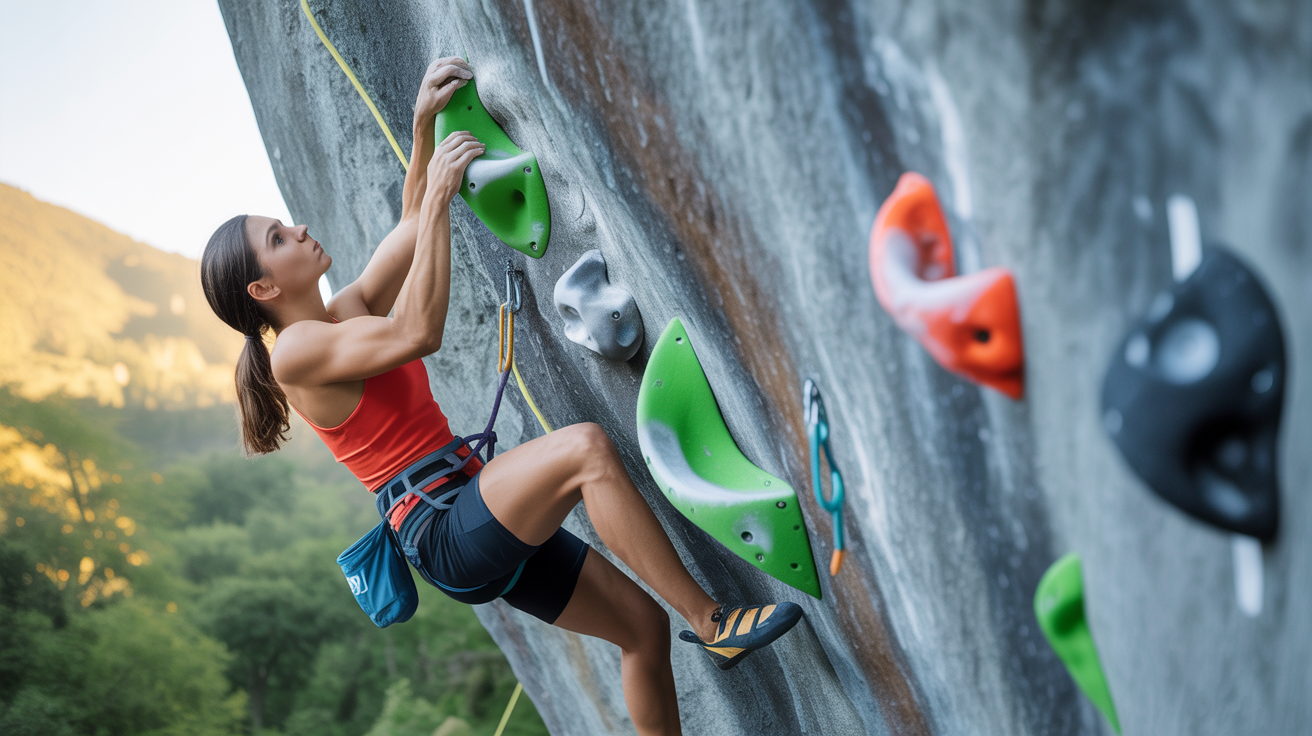
Walk into any climbing gym and the wall looks like a puzzle someone glued together with brightly colored plastic. After a few sessions, though, the chaos starts to make sense. Those shapes all have names, and each one asks your body to move in a slightly different way. Get familiar with the main hold types early and you will spend less time muscling through problems and more time actually reading the movement.
This guide covers what each major hold type looks like, how to grip it, and the body position that makes it work. One note before we dive in: all of this is educational context to supplement real practice. Learning to climb well happens on the wall with a qualified instructor, not from a screen.
The Hold Types at a Glance
Before breaking each one down, here is a quick reference table. Think of it as a field guide you can skim between burns.
| Hold Type | What It Looks Like | Best Grip Style | Key Cue |
|---|---|---|---|
| Jug | Large, bucket-shaped, deeply positive | Full wrap | Pull and hang freely |
| Crimp | Small ledge or thin edge | Open-hand or half-crimp | Stay light, use feet |
| Sloper | Rounded, smooth, no positive edge | Open palm, maximum contact | Weight below the hold |
| Pinch | Rib or blob you squeeze | Thumb on one side, fingers opposite | Grip from the inside out |
| Hole drilled in the hold | One to three fingers | Gentle; pocket injuries are common | |
| Edge | Flat ledge, larger than a crimp | Open-hand or half-crimp | Same care as crimps |
| Volume | Large geometric shape bolted to the wall | Varies by feature | Use the surface, not just holds on it |
Jugs: Your Best Friends on the Wall
A jug is exactly what it sounds like. Big, positive, bucket-like. You can wrap your whole hand around it and hang with a straight arm. Jugs are the most beginner-friendly hold on the wall because the physics are simple: the hold pulls in against your grip, so you do not have to generate tension to stay on.
That said, jugs still reward good habits. Rest on them with a straight arm rather than a bent elbow. A bent arm means your bicep is working when it could be resting. When you find a jug on a tough route, treat it like a gas station stop: shake out, breathe, plan your next moves.
Beginners naturally gravitate to jugs, which is fine. As you build climbing technique for beginners, you will learn to treat every hold with the same efficiency: grab, hang, move.
Crimps: Small Edges, Big Responsibility
Crimps are the thin, often fingernail-width ledges that make up a large portion of intermediate and advanced routes. They look deceptively simple (just a small ledge), but how you grip them matters a great deal, especially early in your climbing life.
The Three Crimp Positions
Full crimp: Your fingers curl tightly over the edge with the thumb wrapped over the index finger. It feels strong, and in the short term it often is. The problem is that this position puts intense load on your A2 pulley ligament. Full-crimping too early in your training life, before those connective tissues have adapted, is one of the most common causes of finger pulley injuries in climbers. Beginners should avoid making this their default.
Half crimp: Your fingers are bent at roughly 90 degrees at the first knuckle, thumb free to the side. This is a middle ground: more contact and control than the open-hand grip, less pulley strain than the full crimp. It is a reasonable position to use once you have some finger conditioning built up.
Open-hand grip: Your fingers lie relatively flat across the hold, bent only slightly at the first knuckle. It feels weaker at first because you are generating friction rather than mechanical hook. Stick with it. Open-hand gripping distributes load across more tendon and pulley structures and builds the kind of finger strength that holds up over a career. If you start climbing today, make open-hand your default on crimps. Train it from the beginning.
The practical takeaway: use open-hand on crimps, let your feet do more of the work, and do not chase difficulty on thin holds before your fingers are ready. Footwork is genuinely half the equation.
Slopers: Learning to Trust Friction
Slopers are the holds that make new climbers feel like the wall has been greased. They are rounded, smooth, and offer no positive edge to hook onto. At first glance they look unclimbable. Then you watch an experienced climber roll up one with no apparent effort and the mystery deepens.
The secret is body position. Slopers work on friction, and friction is maximized when you keep your weight directly below the hold. The moment your hips swing out to the side or your body pulls away from the wall, the contact angle changes and the sloper sheds you.
How to Use a Sloper
- Press your palm flat against the surface. More skin contact equals more friction.
- Keep your arm relatively straight and your shoulder low, dragging the hold rather than pulling on it.
- Hips close to the wall, center of gravity under the hold. This is where using your legs pays off. Your legs position your body so the sloper works, rather than raw arm strength carrying everything.
- Dry hands help significantly. Chalk the palm, not just the fingertips.
Slopers improve with practice and humidity awareness. Hot, humid gyms are hard on friction. Cooler, dry days are much more friendly to sloper climbing.
Pinches: Squeeze to Believe
A pinch is any hold where your thumb works on the opposite side from your fingers: a rib, a column, a blob with a feature you can squeeze. They tax your thumb and forearm in ways other holds do not.
To grip a pinch, place your fingers on one face and your thumb on the other, then squeeze inward. The mistake beginners make is gripping from the outside edges, which reduces the mechanical advantage of the squeeze. Instead, try to get your hand as far around the hold as possible before committing the squeeze. The more of the hold you wrap, the more you can use your thumb as a lever.
Pinch strength builds slowly. Do not be discouraged if these feel horrible for the first few months. They feel horrible for most people.
Pockets: Go Easy Here
Pockets are holes drilled or molded into a hold face. They range from comfortable three-finger pockets to brutal mono pockets (one finger only). The physics are efficient and you get a strong hook angle, but the load concentrates into a small number of fingers and tendons.
Pocket injuries are genuinely common, and they heal slowly. As a beginner, stick to two- or three-finger pockets and avoid mono pockets entirely until you have at least a year of consistent climbing under your feet. When you do use pockets, be deliberate. Do not yank or campus between pocket moves before you are ready. Feel the hold, place your fingers cleanly, and move with control.
Which fingers to use in a two-finger pocket is personal, but most climbers default to the middle and ring fingers (the strongest pair for most people). Experiment and note what feels balanced.
Edges and Foot Chips
An edge is essentially a larger, more positive version of a crimp. Edges still ask for the same grip principles: open-hand where possible, keep the pressure light, use your feet so your fingers are not carrying all the load. Foot chips are tiny edges or nubs meant for your climbing shoes rather than your hands. Precise footwork on foot chips is one of the skills that separates climbers who feel strong from climbers who actually climb well.
Volumes: The Background Architecture
Volumes are the large, geometric shapes bolted directly to the wall: triangles, wedges, curved panels. They are not holds in themselves so much as terrain features that change the angle and position of the smaller holds set on top of them or nearby.
Pay attention to volumes as surfaces. You can often step on them, press a palm against them for balance, or use an edge of the volume itself as a feature. Beginners sometimes ignore volumes entirely and only focus on the brightly colored holds, which leaves technique on the table. Treat the whole wall as climbable.
Building a Habit: One Hold at a Time
The fastest way to improve across all these hold types is to consciously practice each one rather than defaulting to whatever feels easiest. When you warm up, spend a few minutes on slopers with good body position. When you cool down, do easy traverses on open-hand crimps. Notice what your feet are doing on pockets.
None of this needs to feel like drilling. Just stay curious about why a move worked or did not work, and hold type recognition will start to happen automatically.
Keep your sessions reasonable in length, especially in the first six to twelve months. Fingers adapt slower than everything else in your body, and overuse injuries are far easier to prevent than treat. Two or three sessions a week with rest days in between is a sensible starting rhythm.
FAQ
What is the easiest type of climbing hold for beginners?
Jugs are the most beginner-friendly because they offer a deep, positive edge you can wrap your hand around fully. You can hang with a straight arm and rest on them. Routes set with lots of jugs are usually labeled V0 or 5.6 to 5.8 range, which is exactly where most beginners should start.
Is crimping bad for your fingers?
Not inherently, but the specific grip position matters. Aggressive full-crimping (thumb wrapped over the index finger) puts concentrated stress on the A2 pulley ligament and is a common source of finger injuries in climbers who ramp up volume too fast. Open-hand gripping distributes that load more safely. For beginners, open-hand on crimps is the right default. Let your finger tendons adapt gradually over months before spending much time on the half or full crimp positions.
Why do slopers feel impossible at first?
Because they rely on body position and friction rather than a mechanical hook, and beginners often have not yet developed the habit of keeping their weight directly below the hold. Slopers feel more possible once you learn to lower your hips, press your palm flat for maximum contact, and keep your arm extended. They also improve in cooler, drier conditions where friction is better.
How do I know when a pocket is safe to use?
Avoid mono pockets (one-finger holes) until you have significant finger conditioning, meaning at least a year of regular climbing. For two- and three-finger pockets, use them with care and do not yank through moves. If a pocket feels like it is pulling your finger sideways or loading unevenly, skip it or find a different finger combination. Pocket injuries tend to be ligament-based and can sideline you for weeks or months.
Should I use chalk on all hold types?
Chalk helps most on holds where friction matters: crimps, slopers, and pockets especially. It is less critical on jugs since the mechanical advantage is so favorable. One thing to watch: over-chalking can actually reduce friction on slopers if you build up a thick, dusty layer. A thin, even coat of chalk on your palm works better than caking it on.