Skin Care for Climbers: Protecting Your Hands
Build healthy calluses, treat flappers, and keep climbing skin in good shape with this practical hand care guide for beginner climbers.
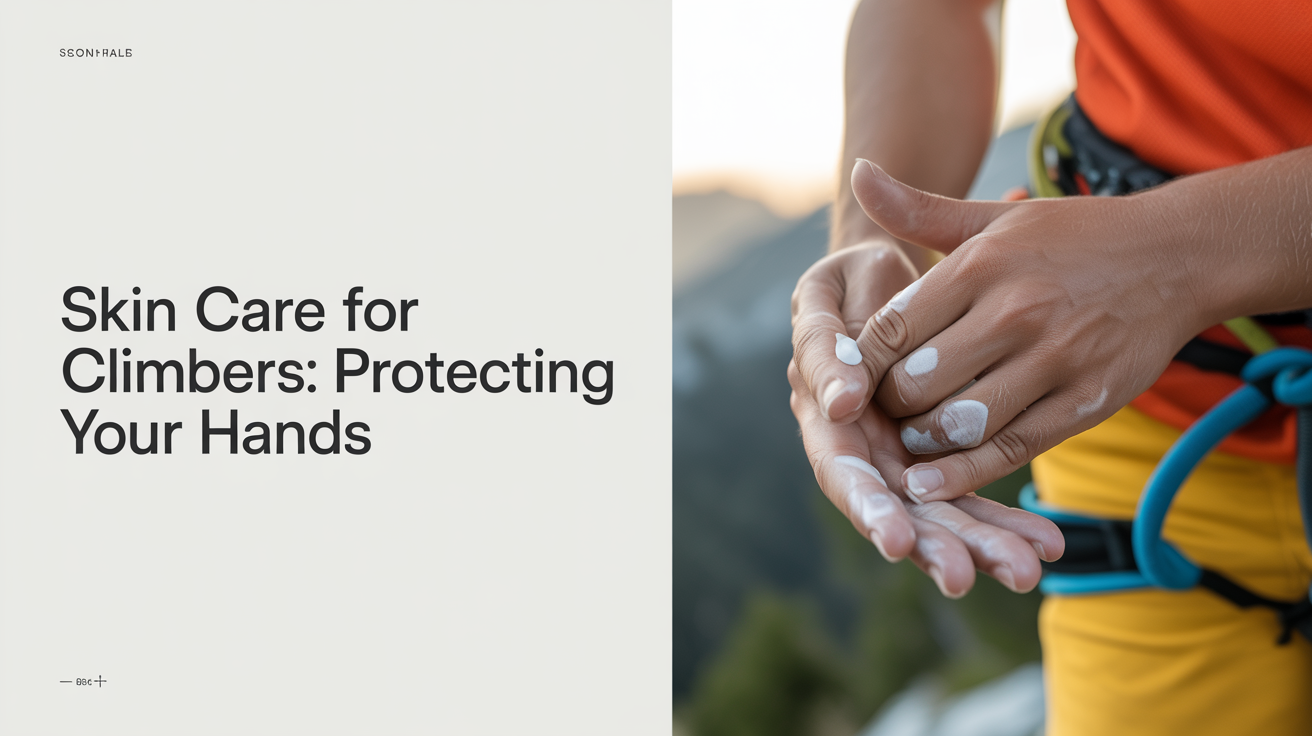
Your hands are the first thing to adapt when you start climbing, and they take a beating before they toughen up. New climbers often expect sore muscles and stiff fingers, but the skin on their fingertips and palms is usually what sends them home early. Understanding how climbing skin works and how to maintain it helps you train more consistently and avoid the setbacks that come from torn skin.
How Climbing Changes Your Skin
Repeated contact with textured holds and rough rock gradually thickens the outer layer of skin on your fingertips, palms, and the pads below your fingers. That thickened layer, a callus, is useful. It gives you a slightly harder surface to press against holds and reduces the raw soreness that beginners feel in their first few weeks.
The problem is that calluses need to be the right thickness. Skin that is too thin tears easily on sharp crimps or textured slopers. Skin that is too thick and dry can crack, catch on holds, and peel away in larger strips than necessary. Both extremes are painful and keep you off the wall.
The adaptation process takes several weeks of regular climbing. In the early stages your skin may feel tender after every session and you may notice small areas of puffiness or mild fluid-filled blisters. That is normal. What you want to avoid is climbing until the skin actually tears, because torn skin takes longer to recover than skin that was simply tired.
Building Calluses Without Wrecking Your Skin
The most reliable way to build useful calluses is to climb frequently but stop before your skin deteriorates. Short sessions several times a week condition skin faster than one long session that ends in torn fingertips.
After each session, wash your hands with mild soap and water. Chalk dries skin aggressively, and residue left on skin overnight accelerates cracking. Pat dry rather than rubbing hard.
Once the skin has dried completely, apply a climbing-specific salve or a plain lanolin-based balm. These products replace the moisture that chalk strips out without making skin so soft that it tears more easily. Apply before bed and let it absorb overnight. Avoid heavy petroleum-based creams, which can make skin too slippery for climbing and may slow the toughening process.
A small pumice stone or a climbing file (some brands sell these as "skin files") lets you smooth down raised edges and dry ridges between sessions. You are not trying to sand calluses flat. The goal is to knock down any rough edge that could catch on a hold and tear. File lightly after a shower when the skin is slightly softened, then apply balm before the skin dries fully.
What a Flapper Is and What to Do About One
A flapper is a partial skin tear where a flap of skin peels away but remains attached at one edge. They happen most often on the pads at the base of your fingers and on the palm, usually on slopers or when you re-grip a hold repeatedly under load.
If you get a flapper mid-session, the best decision is to stop climbing. Continuing to climb on torn skin makes the injury larger and increases the time before you can train again. Trim the loose flap close to healthy skin using nail scissors that you have cleaned with alcohol. Do not pull the flap off with your fingers or bite it away, both of which usually pull more skin than intended.
Clean the exposed area with soap and water, apply a thin layer of antibiotic ointment, and cover it with a bandage. At home, once any bleeding has stopped, a small amount of climbing salve or a product like Second Skin can help the exposed area heal without excessive scabbing. Rough scabs form quickly on active skin and tend to crack, so keeping the area lightly moisturized speeds recovery.
Most flappers heal enough to climb on in five to ten days. If you notice redness spreading beyond the wound edge, warmth, swelling, or any sign of infection, see a doctor. Climbing gyms are high-touch environments and open skin on your hands carries genuine infection risk.
Knowing When to Stop
One of the more useful skills you develop as a climber is learning to read your skin before it fails. Signs that you should end a session include skin that looks shiny or translucent over a pad, small wrinkles across the fingertip that did not appear at the start of the session, and holds that feel rougher than usual even though nothing about them has changed. The last one is skin telling you it has thinned down.
Pushing through these signals does not build toughness faster. It sets your conditioning back by several days. A session that ends thirty minutes early because your skin was done gives you better returns than one that ends with a flapper.
This threshold shifts over time. Skin that was wrecked after forty-five minutes in week two may hold up for two hours after several months of regular climbing. Paying attention to where your individual limit sits, and respecting it, is part of learning to train consistently.
Tape, Hygiene, and Everyday Maintenance
Climbing tape is used two ways: to protect skin that is already damaged and to reinforce skin that is approaching its limit. H-taping, where strips are applied around the base of each finger and a cross-piece holds them, is common for protecting flappers or recent tears on the finger pads. Tape is not a substitute for resting damaged skin long enough to heal, but it can let you continue a session or finish a project when the skin is close but not broken.
Keeping your nails trimmed short is basic maintenance. Long nails catch on holds, break at inconvenient angles, and can contribute to skin tearing near the nail bed. Trim them straight across and file any sharp corners.
Chalk hygiene matters more than most beginners realize. Shared chalk buckets in gyms accumulate skin cells, bacteria, and residue. Washing your hands before and after climbing, not just after, reduces transmission risk and removes grit that can abrade your skin unnecessarily.
If you climb outdoors, natural rock tends to be harder on skin than gym holds. Sandstone in particular is abrasive and dries skin quickly. Reduce session length on your first few outdoor trips until you know how your skin responds, and increase your post-session moisturizing.
Frequently Asked Questions
How long does it take to build climbing calluses? Most people notice a difference within four to six weeks of climbing two or three times per week. The skin will still be sensitive for the first several months, and full conditioning varies depending on how often you climb and what kind of holds you train on most.
Can I climb with a flapper if I tape it? Taping a flapper can protect the area long enough to finish a session, but climbing on fresh torn skin usually makes the wound larger and delays healing. The safer choice is to stop when the skin tears and let it recover before your next session.
Is Climb On, ClimbSkin, or another brand the best salve? No single product is objectively better than the others. The important factors are using a climbing-specific product or a lanolin-based balm, applying it consistently after sessions, and choosing one that does not leave your hands greasy. Try a couple of options and use whichever fits your routine.
My skin cracks at the tips of my fingers rather than tearing off. What helps? Deep cracks at the fingertip usually mean skin is too dry. Increase how often you apply moisturizer, not just after climbing but on rest days as well. If cracks are deep enough to bleed, superglue applied thinly and allowed to dry before climbing can seal them temporarily. That is a short-term fix; the underlying dryness still needs to be addressed.
Where can I learn more about climbing safety and technique? Skin care is one small piece of staying safe at the wall. Understanding how to belay safely, how to tie in correctly, and knowing the climbing commands used at your gym or crag are all foundational. These skills should be learned in person with a qualified instructor, not from reading alone.