Climbing Commands Every Beginner Should Know
Learn the standard call-and-response climbing commands that keep climbers and belayers in sync — and why clear communication is a core safety skill.
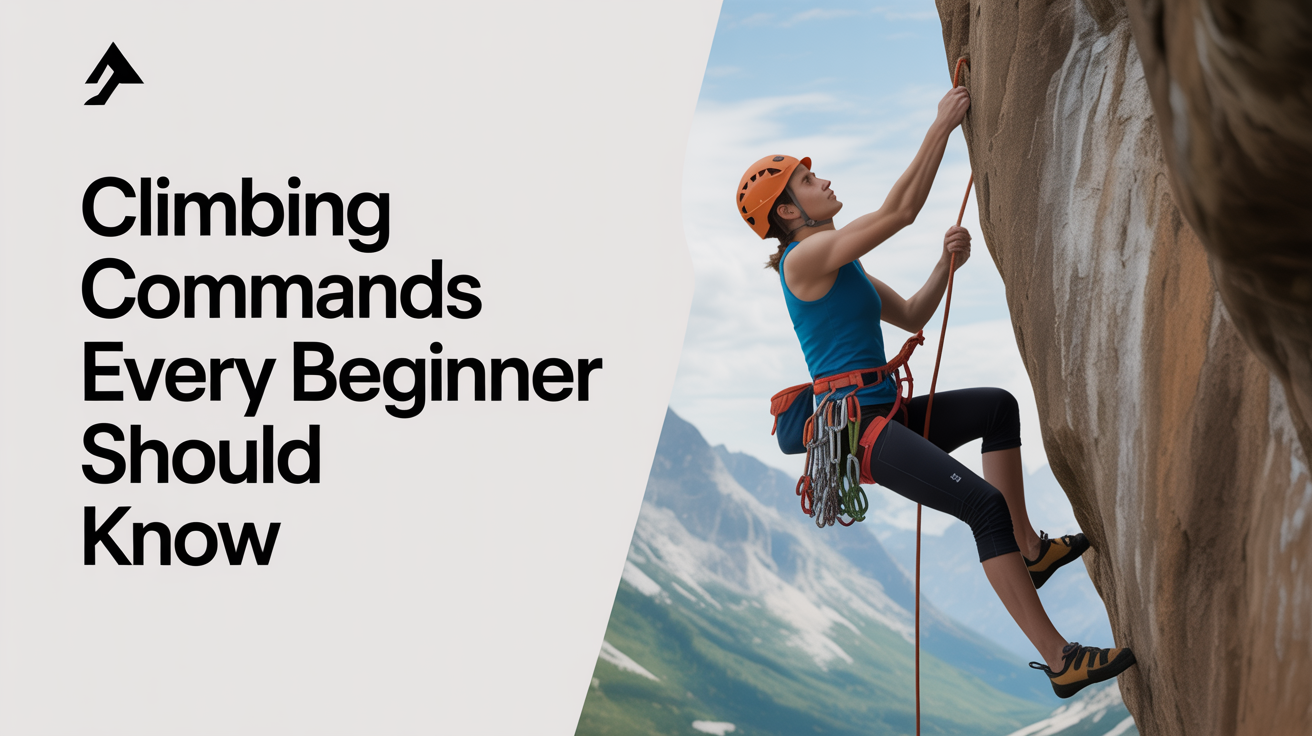
The first time someone yells "Take!" across a busy climbing gym, it can feel like a foreign language. A short set of standard phrases does most of the work on the wall, and once you know them, you'll realize they exist for a very good reason. Clear, loud, consistent communication between climber and belayer is one of the most practical safety habits you can build from day one.
This guide covers the core commands used in most gyms and crags, explains who says what and when, and helps you understand the system before you step into a formal belay class. Think of it as your vocabulary list, you still need the hands-on lesson to graduate.
At a Glance
- "On belay?" / "Belay on" is the handshake that must happen before anyone climbs; never start on an assumption.
- "Take" and "Slack" are opposites, mixing them up at the wrong moment is exactly the kind of mistake commands exist to prevent.
- Always use your partner's name in a busy gym; several ropes may be in earshot and answering the wrong call is a real hazard.
- "Off belay" / "Belay off" should only be exchanged when the climber is genuinely safe, not because someone shouted something that sounded close enough.
- Commands only work on top of a correct setup, run the buddy check before the "On belay?" exchange even starts.
- Agree on your specific command set and a backup (like rope tugs) with your partner before you leave the ground, especially outdoors or in a loud gym.
Why Climbing Commands Matter
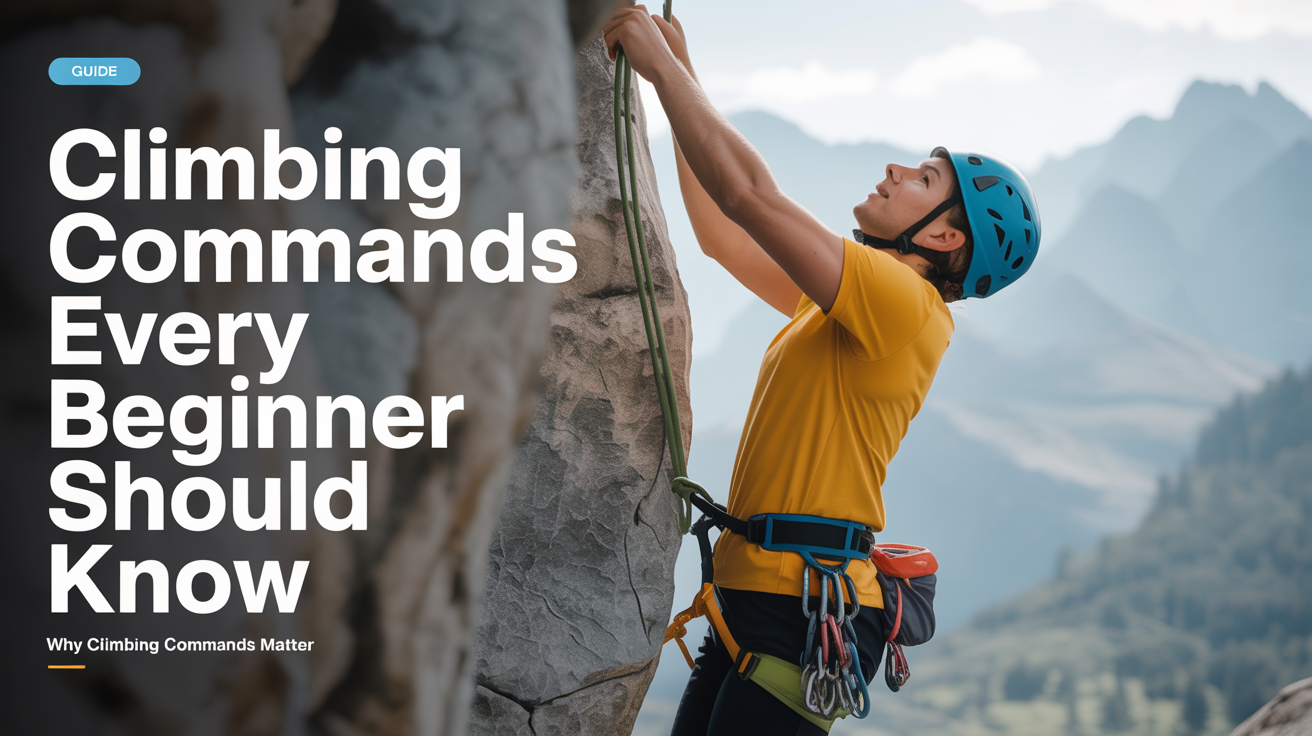
Climbing is a two-person system. The belayer manages the rope while the climber moves upward; the climber signals what they need while the belayer responds and adjusts. When those two roles stay in sync, the rope is always managed correctly. When communication breaks down, wrong name called in a noisy gym, a mumbled response, an assumed "yes", the consequences can be serious.
Commands are short by design. They need to cut through gym noise, echo off rock faces, and land clearly even when one partner can't see the other. Each phrase has a specific meaning, and none of them are interchangeable. "Slack" and "Take" are opposites; confusing them at the wrong moment matters.
The stakes behind this aren't hypothetical. A 2023 study of nearly 4,000 members of the French Federation of Mountain and Climbing found that unexpected falls and static, unresponsive belaying, exactly the kind of breakdown clear commands are meant to prevent, were among the most commonly reported causes of climbing fall injuries, and that the risk fell most heavily on less experienced climbers. Building the command habit early is a direct way to close that gap.
A good habit to build early: always use your partner's name when calling across a busy space. In a crowded gym, several ropes may be in use at once, and a belayer may answer a command meant for someone else entirely. A quick "Hey Jordan, on belay?" removes the ambiguity immediately.
The Standard Call-and-Response Commands
Most gyms in the US follow the commands below. Some gyms or regions use slight variations, your facility may post their preferred phrasing near the belay stations, so it's worth checking when you arrive somewhere new. When in doubt, ask your partner which commands they use before you leave the ground.
The Full Command Table
| Who says it | Command | Meaning | Expected response | Urgency |
|---|---|---|---|---|
| Climber | "On belay?" | Are you ready and managing my rope? | "Belay on" | Wait for confirmation, don't proceed without it |
| Belayer | "Belay on" | Yes, I'm set up and attentive | (climber proceeds) | Low, but must be sincere |
| Climber | "Climbing" | I'm about to start moving up | "Climb on" | Low |
| Belayer | "Climb on" | Go ahead, I'm with you | (climber moves) | Low |
| Climber | "Take" | Pull in slack and hold me tight | "Got you" or no reply, just action | Moderate, act promptly |
| Climber | "Slack" | Give me a little more rope | (belayer feeds rope) | Moderate, feed a small amount only |
| Climber | "Lower" or "Lower me" | Let me down gradually | "Lowering" | Moderate |
| Belayer | "Lowering" | I'm lowering you now | (climber leans back) | Moderate |
| Climber | "Falling!" | I'm about to fall or am falling | (belayer brakes immediately) | Highest, react instantly, no confirmation needed |
| Climber | "Watch me" | Be extra attentive, I may fall soon | "I've got you" or "Watching" | High |
| Either | "Off belay" | I'm safe, you can dismantle the belay | "Belay off" | Confirm certainty before acting |
Breaking Down Each Command
"On belay?" / "Belay on" This is the handshake that starts every roped climb. The climber asks; the belayer confirms they are set up, attentive, and holding the rope. Never start climbing until you hear "Belay on." This exchange also prompts both partners to take one final look at each other's systems, harness, knot, belay device, locking carabiner.
"Climbing" / "Climb on" A second confirmation that the climber is moving. The brief pause between "Belay on" and "Climbing" gives both partners a moment to settle. The belayer's "Climb on" is an active signal, not a formality, it means eyes on the climber, brake hand ready, paying attention.
"Take" The climber wants the rope pulled snug and held. Common uses: resting on the wall, clipping a draw on lead, or stopping to read the route. The belayer takes in any remaining slack and locks off the brake hand. No slack should be left in the system after a "Take."
"Slack" The opposite of "Take." The climber needs a small amount of additional rope, often to clip a bolt above them on lead without being pulled off balance. On top-rope it's less common, but still useful if the rope is pulling the climber's harness awkwardly. Give just a little at a time; the belayer should stay alert.
"Lower" / "Lower me" The climber is done and wants to be brought down. The belayer responds "Lowering" and feeds rope steadily through the device, keeping the descent smooth and controlled. The climber leans back into the harness and keeps their feet on the wall. Never lower someone who hasn't clearly asked to be lowered.
"Falling!" and "Watch me" "Falling" is a warning, or a declaration already in progress. It tells the belayer to go to full brake immediately. "Watch me" is the heads-up before a crux move: the climber is uncertain, may fall, and wants the belayer fully dialed in. Both are useful on lead; on top-rope "Watch me" is still a good habit to build, since it keeps communication active.
"Off belay" / "Belay off" Used when the climber reaches a safe anchor or ledge and no longer needs the rope managed. The belayer should only respond "Belay off" when they're certain the climber is safe, not just because someone shouted something that sounded like "off belay." In a noisy environment, confirm before dismantling the setup. Terminology also shifts by region: some UK and international climbers say "Safe" instead of "Off belay," which is one reason general references on belaying keep separate US and UK command glossaries side by side. Knowing that variation exists matters if you ever climb with partners trained somewhere other than your home gym.
Before the Commands: The Buddy Check
Commands only work if the underlying gear setup is correct. That's why most gyms and climbing partnerships follow a buddy check before the "On belay?" exchange even happens, a quick, systematic confirmation that the harness is doubled back, the figure-eight knot is tied and dressed properly, the belay device is threaded correctly, and the locking carabiner is closed and locked.
For a step-by-step walkthrough of that process, see The Buddy Check: Partner Checks Before You Climb. Doing this every single time, even when you're experienced, is normal, it's not paranoia, it's the system working as intended.
If you're still working on your knot, How to Tie In: The Figure-Eight Follow-Through Knot covers the standard tie-in method from scratch.
Agreeing on Commands Before You Climb
Spend sixty seconds talking with your partner before you get on the wall. Confirm which commands you'll use, especially if one of you trained at a different gym or comes from an outdoor background. Some areas say "Safe" instead of "Off belay." Some gyms have added a third confirmation step. Some partners have a personal shorthand they prefer.
None of that is a problem, as long as both of you know what to expect. Surprises in climbing are generally unwelcome.
Also agree on what to do if you can't hear each other. On longer routes or at outdoor crags, the rope moving tells a story: a small set of rope-tug signals covers most situations when shouting doesn't reach.
Rope-Tug Backup Signals
| Signal | Typical meaning | When it's used |
|---|---|---|
| One sharp tug | "Are you there / did you feel that?" | Checking the line is live when voices can't carry |
| Two tugs | "I'm off belay" or "take me off" | Climber has reached the anchor and is secured |
| Three short tugs | "Off belay, you can break down the system" | Confirms the belayer is clear to strip the belay |
| Steady, repeated pulling | "Something is wrong, pay attention" | Emergency attention-getter when shouting fails entirely |
These are not universal, gyms and regions vary, so agree on a specific set with your partner rather than assuming everyone uses the same code. Your outdoor course or mentor will typically teach the local convention for the terrain you're climbing.
Practicing Commands at the Gym
The best place to drill commands is on easy terrain, a low-angle wall or a route you can climb comfortably without much mental load. Run through the full sequence, including "Off belay" and "Belay off," on every lap. It should become automatic, like checking your mirrors before pulling out of a parking space.
A few things new climbers skip that are worth keeping:
- Say the command clearly, not quietly. Volume matters; the gym is loud.
- Wait for a response before acting. "Climbing" without hearing "Climb on" means you don't actually have confirmation.
- Make eye contact when possible. The verbal exchange is the standard, but eye contact adds a layer of confirmation that's hard to beat.
The National Park Service's general climbing safety guidance makes a related point worth carrying indoors too: clear communication within your group, not just between climber and belayer, is one of the basic habits that prevents most avoidable incidents. In a gym that means being aware of neighboring parties; outdoors it extends to the whole group on a route or at a crag.
Understanding all of this is good preparation. But the actual skill of belaying, loading the device, managing rope, catching a fall, lowering safely, needs to happen in person with a certified instructor. How to Belay: A Beginner's Introduction gives you the overview; a gym belay course gives you the hands-on reps and the sign-off that makes it real.
FAQ
What if I forget a command mid-climb?
Stop moving, take a breath, and communicate clearly. "Hey, I need a second" is better than guessing. Your belayer would rather pause than have you do something unsafe because you were uncertain. No one expects you to be perfect on your first few routes, just keep talking.
Do outdoor climbers use the same commands?
Mostly yes, though regional and cultural variations exist. The core commands, "On belay," "Belay on," "Climbing," "Climb on," "Take," "Lower", are widely recognized. Outdoor settings add complications like wind, distance, and echo. Many climbers supplement with rope signals when they can't hear each other. Your outdoor course instructor will cover what's standard for your area.
What does "take" mean vs. "hang"?
They mean essentially the same thing in practice, the climber wants to rest on the rope. "Take" is the more widely used term in the US. Some climbers say "Hang" or "Gotcha." Whatever word you use, the belayer's job is the same: pull in slack and hold. Just make sure your partner knows what your preferred word means before you leave the ground.
Is it okay to climb without calling commands on easy gym routes?
In a relaxed, uncrowded setting with an experienced partner, some climbers shorten the sequence on routes they know well. That's their call to make. As a beginner, practice the full sequence every time, the habit is cheap to build now and expensive to develop later when it really matters. Most gym staff will encourage you to use the full command sequence regardless.
What happens if someone else responds to my commands?
It happens in busy gyms, someone on a nearby rope answers "Belay on" when you called "On belay?" Use your partner's name to prevent it. If you're unsure whether your belayer actually responded, don't start climbing. Look at them, get clear confirmation, then go. It's a thirty-second delay, not a crisis.
Why do some gyms use different commands than the ones listed here?
There's no single global governing body enforcing one universal command set, gyms develop conventions that work for their layout, noise level, and staff training. The meanings behind the core commands, ready, go, hold, lower, falling, are close to universal even when the exact wording shifts. When you visit a new gym or climb with a new partner, a quick sixty-second check-in on terminology avoids any confusion before it matters.