Neutral vs Moderate vs Aggressive Climbing Shoes Explained
Confused by climbing shoe types? Here's what neutral, moderate, and aggressive shapes actually mean, and which one fits your climbing best.
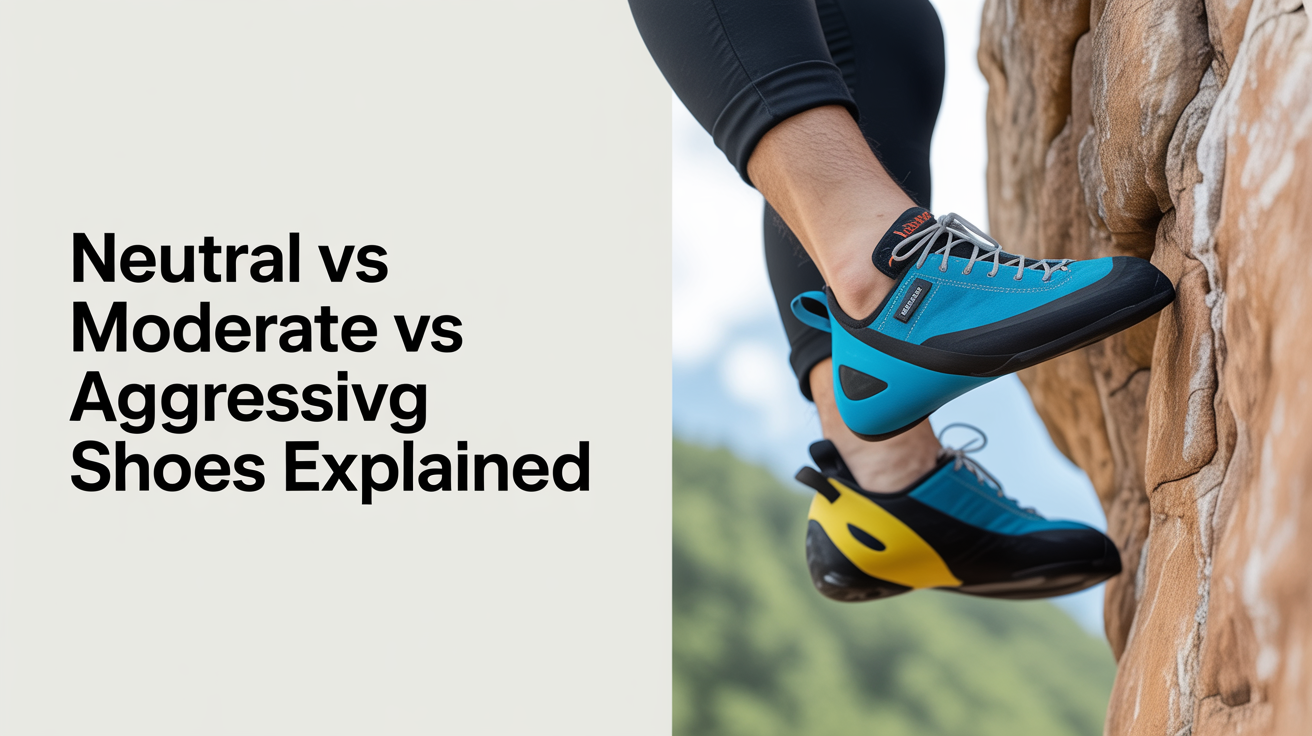
Stand in front of a wall of climbing shoes at any gym pro shop and you'll notice they don't all look the same. Some sit flat like a sneaker. Others curl downward at the toe like a bird's talon. That curve isn't a style choice. It's the whole point, and understanding climbing shoe types is the fastest way to stop guessing and start buying shoes that actually match how you climb.
Shoe companies build around three broad shapes: neutral, moderate, and aggressive. Each one trades comfort for precision in a different amount, and each is built for a different kind of terrain. None of them is objectively "better." A downturned shoe that feels incredible on an overhanging boulder problem will make your feet ache on a mellow slab, and a flat shoe that feels like slippers all day won't do much for you on tiny edges. If you're still working out how to choose climbing shoes for beginners, the shape category is where that decision actually starts.
What "Shoe Shape" Really Means
The shape of a climbing shoe is called its last, the mold the shoe is built around. The last determines how flat or curved the sole sits, how much the shoe tapers toward the big toe, and how much the whole package wants to curl your foot into a claw. Rubber compound and closure system (laces, velcro, or slip-on) matter too, but shape is what separates the three categories from each other.
A flatter last spreads your weight across more of your foot, which is comfortable but less precise on small holds. A curved last concentrates your weight onto the front third of your foot, right over the big toe, which is exactly where you want power when you're standing on something the size of a coin. The tradeoff is that a curved shoe does that job less comfortably and only really shines on steep or technical terrain.
Neutral Shoes: Built for Comfort and Volume
Neutral shoes have a flat sole and a straight or barely tapered last. They look, and mostly feel, like a snug athletic shoe. Because the sole sits flat against the wall, your foot works close to its natural shape instead of getting curled forward, which is why neutral shoes are the ones people can wear for a full day at the gym or on a long multi-pitch route without their feet screaming by hour two.
That comfort comes with a real limit. On tiny edges or pockets, a flat shoe doesn't concentrate force the way a curved one does, so you'll feel less precise standing on small features. Neutral shoes are at their best on:
- Slab and vertical terrain with bigger footholds
- All-day routes where comfort matters more than millimeter precision
- Beginners still building basic footwork and balance
- Gym sessions where you're on the wall for hours, not minutes
Most all-day approach-style and beginner-marketed shoes fall into this category, and they're a completely reasonable place to start and to stay for a long time.
Moderate Shoes: The Middle Ground
Moderate shoes add a slight downturn and a bit more taper through the toe box. Think of them as the compromise built on purpose. You get noticeably more precision than a neutral shoe on smaller holds and steeper walls, while keeping enough comfort that you're not desperate to rip them off between climbs.
This is the category most climbers end up living in once they've moved past their first pair. It handles a wide range of terrain reasonably well: vertical faces, mild overhangs, technical footwork on smaller holds, even some bouldering. It won't be the best tool for extremely steep or technical climbing, but it also won't punish your feet the way an aggressive shoe can.
If you're buying a second pair of shoes and want one shoe that covers most of what a gym or a mixed outdoor day throws at you, moderate is usually the answer. It's also a sensible next step once you've read up on how climbing shoes should fit, since moderate shoes still need a snug fit to perform, just not the aggressive, toe-curling fit that downturned shoes require.
Aggressive Shoes: Precision for Steep, Technical Climbing
Aggressive shoes have a pronounced downturn, an asymmetric last that curves hard toward the big toe, and often a stiffer heel cup built for hooking. They're designed to put maximum power directly over your big toe, which matters enormously when you're pulling on tiny holds on steep, overhanging terrain where your feet have to do work your arms can't.
The tradeoff is comfort, and it's not a small one. Aggressive shoes are usually sized tight and downturned enough that standing flat-footed in them is uncomfortable, sometimes genuinely painful after twenty or thirty minutes. Climbers generally keep them in a bag and only put them on right before they climb, then pull them off the second they're back on the ground. If you're learning what overhang climbing is and how to tackle it, aggressive shoes are part of that toolkit, but they're a specialist's tool, not a starting point.
Aggressive shoes earn their keep on:
- Steep overhangs and roofs
- Small, technical holds where precise toe placement matters
- Competition-style bouldering
- Heel hooks and toe hooks, where the shoe's shape and rubber placement matter as much as the fit
Comparing the Three at a Glance
| Category | Comfort | Precision | Best Use Case |
|---|---|---|---|
| Neutral | High, wearable for hours | Lower on small holds | Slab, vertical terrain, all-day wear, beginners |
| Moderate | Medium, snug but tolerable | Good on most holds | General gym and outdoor climbing, mixed terrain |
| Aggressive | Low, meant for short bursts | Highest on tiny, steep holds | Overhangs, technical bouldering, competition |
Why Beginners Should Start With Neutral or Moderate
New climbers are almost always steered toward neutral or moderate shoes, and there's a practical reason beyond comfort. Footwork is a skill you build over months, not days, and it develops through feeling the wall and learning to trust small amounts of pressure on your feet. A stiff, flat, or lightly curved shoe teaches that skill honestly. An aggressive shoe can mask sloppy footwork by forcing your foot into an efficient position whether your technique is there yet or not, and it does so at the cost of comfort you don't need to pay for yet as a beginner.
There's also a fit issue. Aggressive shoes are typically sized very tight, often a size or more below street shoe size, specifically to eliminate any dead space that would reduce precision. That's a hard fit to judge if you don't already know how your feet respond to being curled into a downturned shape for an hour. Starting with a neutral or moderate shoe gives you a chance to learn what a "climbing snug" fit feels like before you commit to something built to be worn at the edge of comfortable.
None of this means aggressive shoes are off-limits early on. Some beginners with strong ankle mobility and a high pain tolerance do fine in a mildly aggressive shoe from day one. It just means neutral and moderate are the safer, more common starting point, and there's no rush to skip ahead.
How Shape Should Match Your Climbing
The honest answer to "which shape is best" is that it depends on what you're climbing most often. Someone who spends most sessions on vertical gym walls and easy outdoor slab will get more day-to-day value from a neutral or moderate shoe than from an aggressive one, no matter how advanced their grade. Someone who's shifted toward steep bouldering and technical competition-style movement will start feeling held back by a flat shoe once the holds get small and the wall leans back.
Many climbers end up owning two pairs once they're a year or two in: something neutral or moderate for everyday mileage, and something more aggressive for specific sessions where they know they'll be on steep terrain. That's not overkill. It's just recognizing that one shoe shape can't do everything well, and that's fine. The shoes are tools, not identities.
Frequently Asked Questions
Can I climb everything in one pair of shoes?
Yes, especially early on. A moderate shoe is built to handle a wide range of terrain reasonably well, and plenty of climbers spend years on a single pair before deciding they want something more specialized for a specific style of climbing.
Are aggressive shoes bad for beginners?
Not bad exactly, but usually unnecessary and less comfortable than what a beginner needs while building basic footwork. Most beginners get more out of a neutral or moderate shoe, and can always add an aggressive pair later once they know what kind of climbing they enjoy most.
Does shoe shape affect how a shoe should fit?
Yes. Aggressive shoes are meant to fit very snug, often noticeably smaller than your street shoe size, because dead space reduces precision. Neutral shoes fit closer to a snug athletic shoe. Fit expectations differ by category, which is worth understanding before you try shoes on.
Will a flat shoe hold me back on steep climbs?
It can. Neutral shoes aren't built to concentrate force the way a downturned shoe does, so steep, technical terrain with small holds will feel harder in them. That's a reasonable tradeoff for the comfort and versatility you get in return, at least until steep climbing becomes a regular part of your sessions.
How do I know when it's time to size up in aggressiveness?
A common sign is feeling like your current shoes aren't precise enough on the terrain you're actually climbing, not just terrain you'd like to try someday. If you're regularly on overhangs or small technical holds and feel like your feet are the limiting factor, that's a reasonable point to try a more aggressive shoe.