How Should Climbing Shoes Fit?
Learn how climbing shoes should fit for beginners: snug but not painful, no dead space, and why comfort beats aggression when you're just starting out.
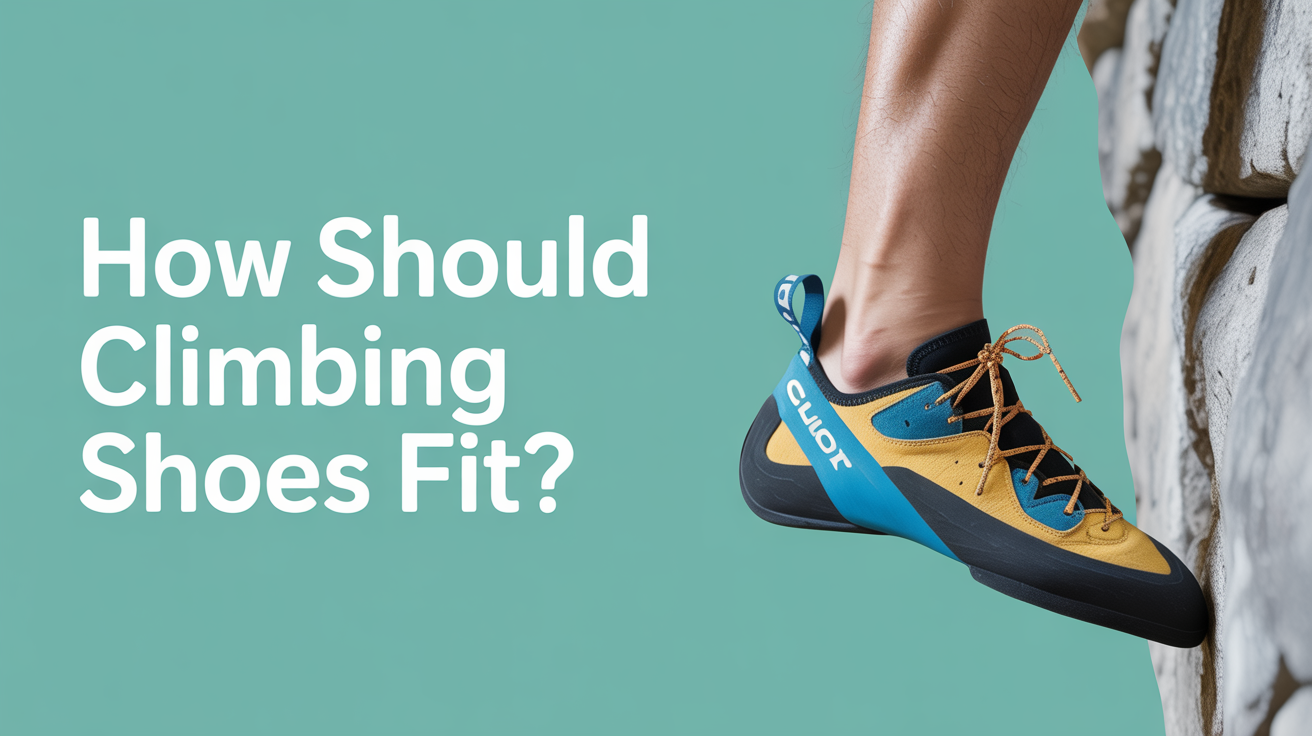
Climbing shoes should fit snugly, close enough that your foot can feel the rock beneath you, but not so tight that you're gritting your teeth after five minutes. That distinction matters more than anything else in this guide. Getting the fit wrong is one of the most common beginner mistakes, and it usually goes in one direction: too small, chasing the aggressive fit that sponsored athletes wear in competition videos.
You don't need that fit. You need shoes you can actually learn in.
What "Snug" Actually Means for Beginners
Snug means no dead space. No gap at the heel, no air pocket under the arch, and no room for your foot to slide side to side. Your toes should reach the front of the shoe and lie flat or curl only very slightly. That gentle contact with the toe box is what lets you feel holds and place your foot with precision.
What snug does NOT mean: toes buckled under, knuckled up, or cramped into a curl. That's an advanced performance fit for overhanging routes and competition climbers who wear shoes for 20-minute sessions and then immediately take them off. As a beginner, you might wear your shoes for an hour or two at a time while learning movement. Painful shoes teach you nothing except how much you dislike climbing.
The Test on Your Foot
Put on the shoe and stand on a small edge, a stair step, a door threshold, the edge of a chair rung. You should feel the edge clearly through the sole. Now notice whether your heel lifts. If it does, the shoe is too big or the heel cup doesn't match your foot shape. Walk a few steps. Your heel should stay planted in the shoe rather than sliding up on each stride.
If your toes go numb, or you can't bear the shoe after a few minutes of just standing around, that's too tight.
Sizing: Smaller Than Street Shoes, But Not Always
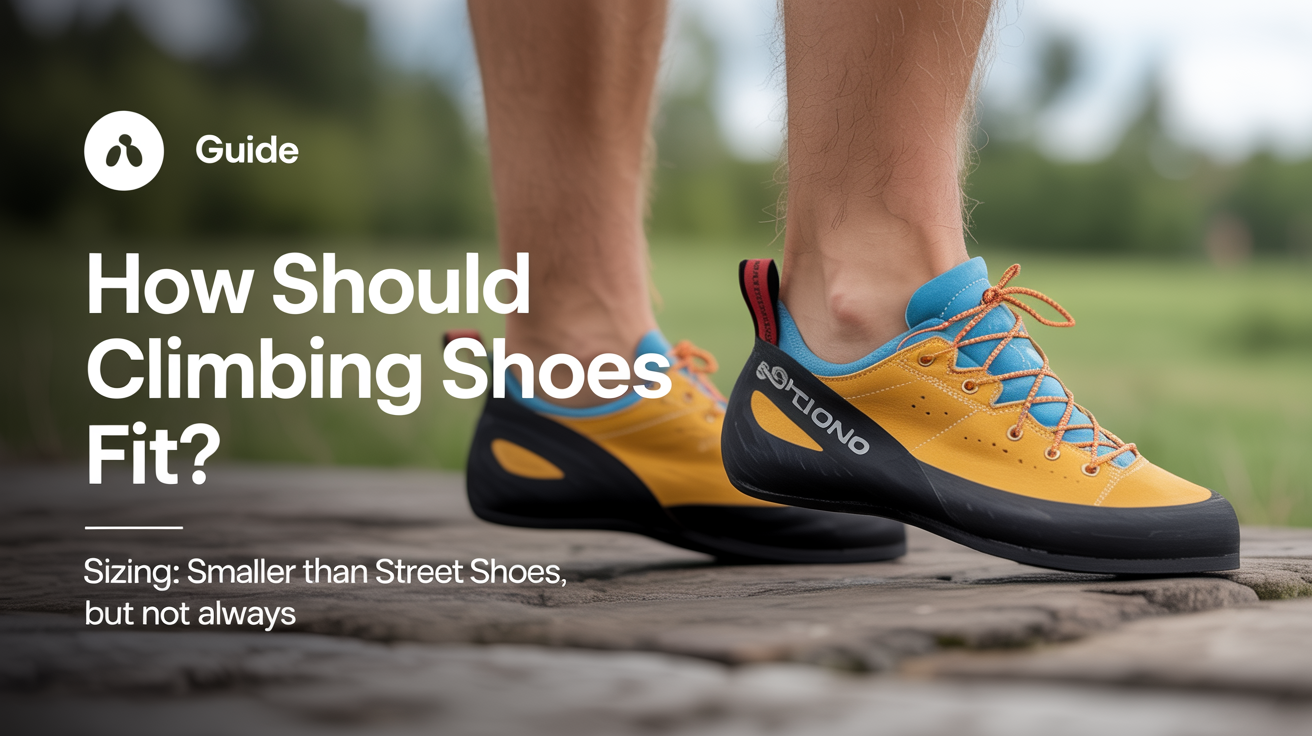
Climbing shoes often size down from street shoes, sometimes by a full size or more. But that rule has so many exceptions that it's almost more useful to forget it and just focus on the fit itself.
Why Brand and Last Matter
Different brands build their shoes around different foot shapes (called "lasts"). Some run narrow; some have a wider toe box; some have an aggressive downturn that loads the big toe differently. A shoe that's perfect for your friend's foot may feel like a torture device on yours even in the same size. This is why trying shoes on in person, or buying from a retailer with a good return policy, is worth the extra effort.
If you're buying online and can't try before you purchase, look for reviews that describe fit relative to street shoe size on a model-by-model basis. Size charts from one brand rarely translate cleanly to another.
Leather Versus Synthetic
Material changes how much a shoe will break in. Leather uppers stretch noticeably, sometimes up to half a size, with regular use over the first few weeks. If you buy a leather shoe and it fits perfectly out of the box, it may end up feeling slightly loose once it's broken in. A little snugger than comfortable is appropriate for leather.
Synthetic uppers stretch very little, maybe a quarter size at most. What you feel in the store is close to what you'll have six months later. For beginners, synthetic shoes are often the easier choice because the fit you try on is essentially the fit you keep.
Signs the Fit Is Off
Getting the fit right is faster if you know what to look for on each end of the spectrum.
Too tight:
- Toes curl under or knuckle sharply in the toe box
- Numbness or tingling starts within minutes
- You can only wear the shoes for a few minutes before needing to pull them off between routes
- Pain lingers after you remove the shoe
Too loose:
- Your heel lifts inside the shoe when you stand on a foothold
- You can feel your foot sliding forward in the shoe on steep terrain
- Toes don't reach the front of the shoe (dead space at the toe tip)
- The shoe wrinkles or folds under your arch when you weight it
A small amount of discomfort is normal in climbing shoes, they're performance equipment, not running shoes. But there's a meaningful difference between "firm, close contact" and "this hurts every time I put them on." Trust that difference.
The Fitting Process: Practical Tips
Try Them On Late in the Day
Feet swell slightly through the day from walking and standing. Trying shoes on in the morning gives you an optimistic fit that may feel tighter by the afternoon session at your gym. Late afternoon or evening is a better time to get an accurate read.
Be Consistent With Socks (or No Socks)
Most climbers wear their shoes sockless, especially as they get more serious about feeling holds. If you plan to climb sockless, try the shoes sockless. If you prefer thin socks, totally reasonable as a beginner, try them with the same socks you'll actually use. Mixing the two during fitting gives you unreliable information.
Give Yourself a Few Minutes
Don't stand up, decide it feels fine in 15 seconds, and buy the shoe. Walk around. Stand on an edge. Do a few minutes of moving around the store in them. Your foot needs a moment to settle into the last, and you need time to notice whether any pressure points are developing.
The Beginner's Case for Comfort
Here's the thing that gets lost in a lot of climbing gear conversations: you'll climb better in a shoe you can actually wear. Footwork is the foundational skill in climbing. Learning to trust your feet, place them deliberately, and stand on small holds requires focus, not distraction from throbbing toes.
Experienced climbers can tolerate an aggressive fit because they've already internalized footwork. Their technique compensates. As a beginner, you're building that technique from scratch. A comfortable shoe lets you stay on the wall longer, take more laps, and actually practice the skill you're trying to learn.
Shoot for the snugger end of comfortable, not the painful end of tight. You can always size down a little in your next pair once you understand how your foot fits into different lasts and how your technique has developed.
For a broader look at what gear you actually need as a beginner, see our guide on climbing gear for beginners. And if you're still in the process of picking a specific model, how to choose climbing shoes for beginners walks through the main categories, flat versus moderate versus aggressive, and which makes sense at this stage.
Climbing Shoe Fit Checklist
Use this before buying or on your first few sessions with a new pair:
- Toes reach the front of the shoe with flat or very slight curl (not knuckled under)
- No heel lift when standing on a small edge
- No dead space under the arch or at the toe tip
- No lateral sliding of the foot inside the shoe
- No numbness or sharp pain within the first few minutes of wearing
- Heel cup holds your heel firmly without pinching the Achilles
- You can wear the shoes for a full session without needing to pull them off between every route
- If leather: fits slightly snugger than perfectly comfortable to account for stretch
- If synthetic: fits as close to the final desired fit as possible
FAQ
Should climbing shoes hurt?
Not exactly, but they shouldn't feel as relaxed as sneakers either. A well-fitting beginner shoe should feel firm, close, and a little unusual compared to everyday footwear. What it shouldn't do is cause real pain, numbness, or make you desperate to remove the shoe after a few minutes. Discomfort that goes away once you take the shoes off is generally fine. Pain that lingers, or that starts immediately and stays sharp, means the shoe is too small.
How much smaller should climbing shoes be than my street shoes?
There's no reliable universal number. Some people size down one full size; some barely size down at all. It depends entirely on the brand, the last, and your foot shape. Use shoe-specific reviews and, if possible, try on multiple sizes in person. If you can only go by street size, know that leather shoes will stretch more than synthetic, and factor that in.
Can I wear climbing shoes with socks?
Yes. Many beginners wear thin liner socks, and that's a perfectly valid choice, especially if you're renting shoes at a gym or are concerned about hygiene. Just be consistent: if you plan to climb with socks, size the shoe with socks on your feet. Going sockless in a shoe sized for socked climbing will give you too much dead space.
How do I know if my climbing shoes are broken in?
Leather shoes typically break in over three to six sessions. You'll notice the upper conforms more closely to your foot shape, and any initial hot spots tend to mellow. Synthetic shoes break in much less, what you have after a session or two is essentially what you'll have long-term. If a synthetic shoe is still painful after a few sessions, it's the wrong fit rather than a break-in issue.
When should I replace or resole my climbing shoes?
The rubber sole wears down first, usually at the toe patch where you edge and smear most. You can have climbing shoes resoled by a specialty cobbler, this is common, costs significantly less than a new pair, and makes sense for shoes that fit well but have worn rubber. Many climbers resole their favorite pair two or three times before retiring them. If the rand (the thin rubber strip wrapping the shoe's edge) starts to delaminate, that's a trickier repair, but a good cobbler can often handle it.