How to Choose Climbing Shoes for Beginners
Learn how to choose climbing shoes as a beginner—what shape, closure, and fit to look for, when to buy your first pair, and what to skip entirely.
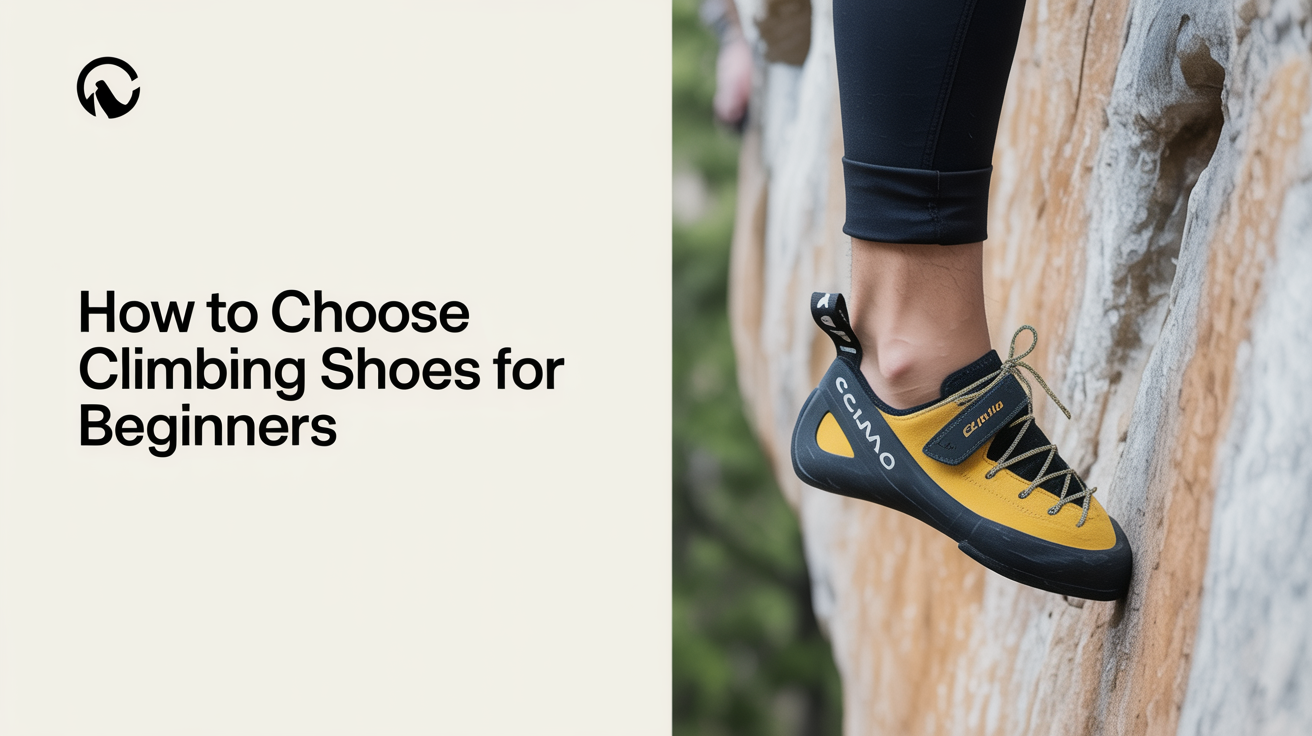
The single most common mistake new climbers make when buying shoes is choosing a pair that looks aggressive and performance-oriented, the deeply downturned, skin-tight kind you see on advanced boulderers. Those shoes are designed for very specific movement on steep, overhanging terrain, and they are genuinely uncomfortable on a beginner's feet for good reason. Your first pair of climbing shoes should fit well, feel stable, and let you focus on movement rather than on how badly your toes hurt. That's the whole criteria, and this guide will walk you through it.
Rent First, Buy When You're Ready
Before spending anything, borrow from the gym. Nearly every climbing gym rents shoes, and renting for your first several sessions is the smart move, not because rental shoes are great (they're usually worn and a bit stiff), but because they tell you whether climbing is something you actually want to pursue. Most beginners climb for a month or two before they can feel the difference between their own well-fitted shoes and a rental pair.
A good rule of thumb: once you're climbing two or more days a week and feel yourself improving, that's a reasonable signal to invest in your own pair. You'll also start to notice what bothers you about rentals, too loose in the heel, too wide across the toe box, and that feedback is genuinely useful when you go to try on your own.
For everything else you'll need at this stage, see Climbing Gear for Beginners: What You Actually Need.
Understanding Shoe Shapes (Profile)
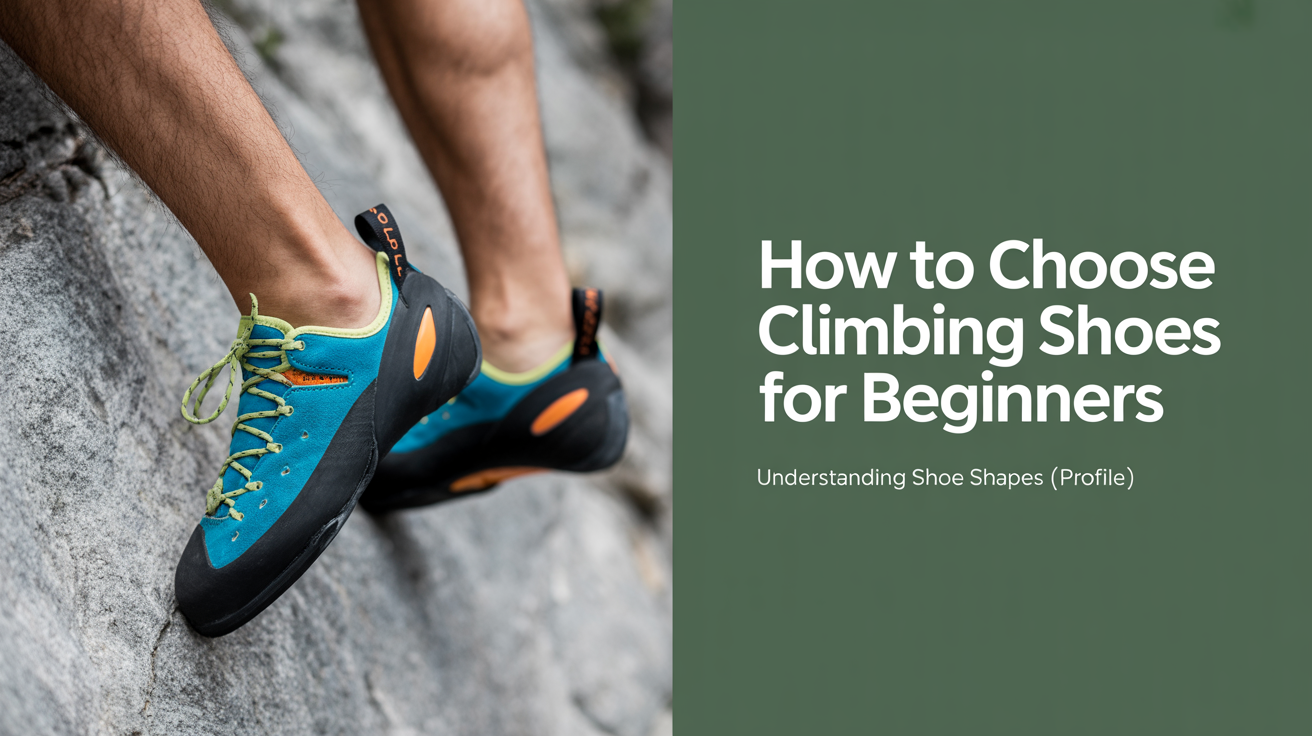
Climbing shoe profile refers to how curved, or "downturned," the shoe is from heel to toe. This single factor matters more than brand, rubber compound, or any other spec.
Neutral (Flat) Profile
A neutral shoe sits flat when you set it on a table. The sole runs in a straight line from heel to toe, and the foot rests in a natural position. These are the right shoes for beginners. They're comfortable enough to wear for a full gym session, they work well on vertical and slightly overhung routes, and they build foot strength properly because they don't force your toes into an artificial curl.
Most rental shoes are neutral or close to it. Your first purchased pair should be, too.
Moderate Profile
Moderate shoes have a slight downturn, maybe 10 to 15 degrees. They perform better on steeper terrain and still fit comfortably enough for most beginners. If you've been climbing for four to six months and spend a lot of time on overhanging gym walls, a moderate profile is a reasonable next step. These aren't a beginner's first pair, but they're not off-limits either.
Aggressive (Downturned) Profile
Aggressive shoes have a pronounced curl that forces the toes into a hooked position. This concentrates power on the tip of the big toe for precise footwork on tiny holds. They hurt to wear for extended periods, they're expensive, and they're genuinely not useful until you're climbing at a level where that precision matters. Skip these for at least your first year.
Closure Types: Velcro, Lace, or Slip-On
Most beginner-friendly shoes come in three closure styles, and each has real tradeoffs.
Velcro (Hook-and-Loop)
Velcro shoes use one, two, or three straps across the top of the foot. They're the most popular choice for gym climbing because you can take them on and off between climbs without unlacing anything. If you're bouldering, where you're sitting on a mat, removing shoes between attempts, velcro is extremely convenient. Fit adjustment is limited compared to laces, but for most feet it's close enough.
Lace-Up
Laces let you dial in the fit across the whole foot, not just at the strap points. This makes them a strong choice for people with narrower feet, wider feet, or any foot shape that sits awkwardly in a standard velcro shoe. The tradeoff is time: you'll spend more of your rest period relacing. Some people find this annoying; others find that the better fit is worth it. Try both if you can.
Slip-On
Slip-ons (sometimes called slippers) have no closure at all, they rely entirely on rubber tension and the shoe's shape to stay on your foot. Beginner slip-ons exist and some people love them for their simplicity. The fit has to be nearly perfect, though, because there's nothing to adjust. If you're between sizes or have a non-standard foot shape, lace or velcro gives you more room to work with.
Materials: Leather vs. Synthetic
The upper of a climbing shoe is made from either leather or synthetic fabric, and the difference matters more than most beginners expect.
Leather stretches. A leather shoe that fits snugly when new will typically stretch half a size to a full size over the first 10 to 20 sessions. Some climbers buy leather shoes slightly tighter than comfortable and let them break in. Others find this frustrating if they misjudge the stretch. Leather also breathes better, which matters if you climb in a hot gym.
Synthetic holds its shape. A synthetic shoe that fits well on day one will fit the same way on day one hundred. There's no break-in period and no guessing about stretch. The tradeoff is that synthetics tend to be less breathable and can feel warmer over a long session.
For beginners, synthetic is often easier to shop for because what you try on is what you get. With leather, you need to account for future stretch, which adds a variable that's hard to predict without experience.
Getting the Fit Right
This is the most important section. A poorly fitted shoe will make climbing miserable regardless of its profile, closure, or rubber. For a complete breakdown, read How Should Climbing Shoes Fit, but here are the essentials.
What to Look For
- No dead space. The shoe should make full contact with your foot everywhere. Any gap, especially in the heel cup or along the sides of the toe box, means the shoe is too big.
- Toes flat or barely curled. In a neutral beginner shoe, your toes should lie flat or have only the gentlest downward curl. If your toes are curled hard against the front of the shoe, the shoe is too small or too aggressive.
- Snug heel. The heel cup should fit cleanly with no slipping. Heel slippage makes footwork sloppy and causes blisters.
- Discomfort vs. pain. Climbing shoes are meant to be snug, not comfortable the way a running shoe is comfortable. Some pressure is normal. Sharp pain, numbness, or the sensation that your toes are being crushed is not.
Sizing
Climbing shoes run smaller than street shoes, sometimes by a full size or more. Don't use your street shoe size as a starting point. Always try on and stand in the shoe, then step onto a slightly inclined surface (most shoe shops have a small demo board) to feel how the shoe loads.
What to Avoid
| Fit Problem | Why It Matters |
|---|---|
| Too much toe space | Shoe moves on foot; poor feel for the wall |
| Heel slippage | Sloppy footwork; hotspots and blisters |
| Severe toe curl | Pain, injury risk, unnecessary for beginners |
| Too wide in the toe box | Loose fit undermines precision |
Rubber: Thickness and Stiffness
The rubber sole is what contacts the wall, and two variables matter: thickness and stiffness.
Thicker, stiffer rubber is more durable and more comfortable on small footholds because it distributes pressure. Softer, thinner rubber gives more sensitivity, you can feel the texture of the hold through the shoe, but it wears faster and requires more foot strength to use well.
Beginners benefit from stiffer rubber. It makes standing on footholds feel more stable, especially when your feet aren't yet strong or precise. As your technique improves and you start climbing harder routes, you can move toward softer rubber for feedback. For now, stiff is your friend.
Resoling: Your Shoes Aren't Disposable
One thing most beginners don't realize: climbing shoes can be resoled. When the rubber wears through, typically at the toe rand and the ball of the foot, a cobbler who specializes in climbing gear can strip the old rubber and bond new rubber in its place for a fraction of the cost of a new pair. This extends the life of a well-fitting shoe considerably.
This matters for shoe selection because it changes the economics. A slightly better-quality neutral shoe that fits well and can be resoled is a better long-term buy than the cheapest option available. You don't need to overspend, but buying once and resoling is often smarter than buying cheap and replacing.
FAQ
Should my climbing shoes hurt when I first put them on?
Some snugness and pressure are normal, climbing shoes are not designed to feel like sneakers. But sharp pain, numbness, or the feeling that your toes are being forced into an unnatural curl means the shoe doesn't fit right. For beginners especially, comfort within a snug fit is the goal, not pain tolerance.
How much should I spend on my first pair?
Most beginner-appropriate shoes fall in the 70 to 110 dollar range. You don't need to spend more than that for your first pair. The expensive shoes at the top of the lineup are aggressive performance tools, not better beginner shoes. Save the budget for a shoe that fits, not one with a premium price tag.
Can I use climbing shoes for other activities?
Not really. The rubber sole is designed to grip textured rock and climbing wall texture, it wears fast on pavement and gritty floors. Wearing your climbing shoes to walk around the gym or approach an outdoor crag will sand down the rubber quickly. Put them on at the wall, take them off when you step away.
When should I upgrade from my first pair?
Most climbers upgrade when their first shoes wear out or when they've developed enough technique that they can feel the shoe's limitations. There's no set timeline. If your shoes still fit, still have rubber, and you're still improving, keep climbing in them.
Do I need chalk before I need shoes?
Most gyms supply chalk or have a communal chalk bucket, so it's lower priority than shoes. Once you're climbing regularly, a personal chalk bag is a small, inexpensive addition that keeps your hands dry between attempts. See Chalk and Chalk Bags: What Beginners Need to Know for the details.