Climbing Gear for Beginners: What You Actually Need
A practical stage-by-stage guide to beginner climbing gear — what to rent, what to buy first, and what life-safety gear must be UIAA/CE rated.
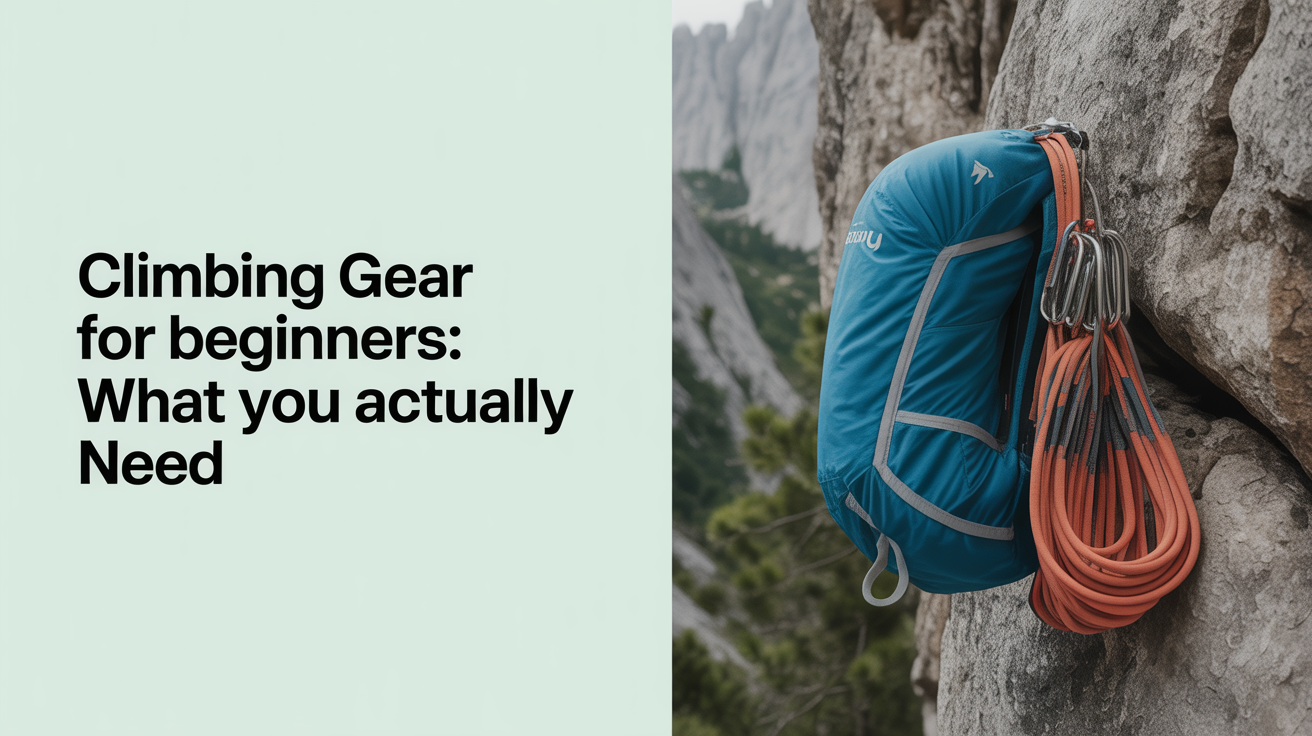
The good news about starting climbing is that the gear list is much shorter than most people assume. You do not need a wall of equipment to walk into a gym and have a great session. What you actually need depends entirely on what kind of climbing you want to do first. At most gyms, you can rent almost everything while you figure that out.
Here is an honest, stage-by-stage breakdown of what to get, what to skip for now, and how to think about spending your money wisely.
Stage One: Bouldering (The Shortest Gear List in Climbing)
Bouldering is climbing short walls without ropes, and it has the lowest barrier to entry of any discipline. At a bouldering gym, the padded floor is built in, and the routes (called "problems") top out below a height where a fall would seriously injure you if you land correctly.
To go bouldering at a gym, you need exactly two things:
- Climbing shoes
- Chalk (in a chalk bag)
That is genuinely it. No harness, no rope, no carabiners. The gym provides the mats, the walls, and the problems. You show up and climb.
Climbing Shoes: Your First Real Investment
Shoes are where your money goes first, and for good reason. A rubber-soled climbing shoe lets you stand on tiny features and generate friction on the wall in a way that regular sneakers simply cannot. Wearing sneakers on a climbing wall is possible, but it is frustrating and genuinely limiting.
The good news is that you do not need an aggressive, downturned performance shoe as a beginner. A flat or mildly downturned beginner shoe will serve you well for the first year or two. Fit matters more than price. For a full guide to sizing and shape, see how to choose climbing shoes for beginners and how climbing shoes should fit.
Price tier: Entry-level climbing shoes run roughly $70 to $100 new. You can often find lightly used pairs for less at gear swaps or through gym community boards.
Renting first: Most gyms rent shoes for $4 to $6 a session. If you are going twice before you commit, rent. If you are going regularly, owning your own pair quickly pays for itself, and a proper fit beats a rental in comfort.
Chalk
Chalk absorbs sweat and improves your grip on holds. It is not strictly mandatory, but once you have tried climbing with sweaty hands, you will understand why almost every climber uses it.
You can use loose chalk (powder), chalk balls (a mesh pouch filled with powder, less messy), or block chalk that you break up yourself. For gyms, chalk balls are often preferred because they produce less dust. Some gyms restrict loose chalk entirely, so check the house rules before you buy.
A chalk bag is what you clip to yourself or set on the floor while bouldering. For a full breakdown of options and how to fill one, see chalk and chalk bags: what beginners need to know.
Price tier: A chalk bag costs $15 to $30. A refillable chalk ball or a small bag of chalk runs $5 to $15. This is a modest, one-time purchase.
Stage Two: Roped Gym Climbing
Once you move to top-rope or lead climbing at a gym, the gear list grows, but not dramatically. Gym roped climbing means the rope is already fixed or available at the wall. You are not bringing a rope. What you add is the equipment that connects you to that rope safely.
Harness
A harness is a system of padded loops that wraps around your waist and thighs. It is what clips into the rope and keeps you suspended if you fall. This is life-safety equipment, and it must be properly rated.
Look for harnesses that carry a UIAA or CE EN 12277 certification mark. These ratings mean the harness has been independently tested to meet minimum strength and safety standards. Do not buy a harness from an unknown seller without these marks, and do not buy one second-hand unless you know its full history. A harness that has taken a significant fall or been stored improperly may look fine while being compromised.
A beginner harness should fit snugly with gear loops for hanging equipment and padded leg loops for comfort during long hangs. Most entry-level models are very good.
Price tier: A solid beginner harness runs $50 to $80 new. Mid-range options with more padding or adjustability go up to $100 to $130.
Renting: Gyms rent harnesses. If you are taking your first belay class or trying roped climbing for the first time, rent. Once you commit to the discipline, owning your own harness gives you consistent fit and lets you skip the rental line.
Belay Device
A belay device is a friction tool that allows you (the belayer) to control the rope for a climber and catch a fall. Common beginner options include tube-style devices and assisted-braking devices.
Tube-style devices (sometimes called ATC-style) are simple, lightweight, and inexpensive. They require good technique and attention from the belayer.
Assisted-braking devices (such as Grigri-style tools) add a camming mechanism that helps lock the rope under load. They are popular in gyms because they add a layer of security, but they still require proper training. They are not foolproof.
This is equipment you must learn to use hands-on with a qualified instructor. A belay certification from your gym is standard and usually takes a couple of hours. You will learn rope threading, brake hand position, catching falls, and lowering. No article is a substitute for that in-person session.
Look for a UIAA or CE-rated device. Belay devices that do not carry ratings are not appropriate for climbing.
Price tier: A tube-style device costs $20 to $35. Assisted-braking devices run $75 to $110.
Locking Carabiner
You need one locking carabiner to connect your belay device to your harness. A locking carabiner has a gate that screws or twists shut, preventing accidental opening under load. Again, look for UIAA or CE EN 362 certification.
Price tier: A solid locking carabiner costs $15 to $25.
Stage Three: Outdoor Climbing
Outdoor climbing is a significant step up in complexity and risk, and the gear list reflects that. You will need more equipment, and more importantly, you will need to learn how to use it properly before you go.
This section is an overview, not a tutorial. Please treat outdoor climbing as a discipline that requires hands-on instruction from a certified guide or experienced mentor, not something to learn from articles alone.
Helmet
A helmet is non-negotiable outdoors. Rockfall, unexpected swings into the wall, and falls at outdoor crags all carry head-impact risks that a gym environment mostly eliminates. A climbing helmet must be UIAA or CE EN 12492 rated.
Price tier: Entry-level helmets run $50 to $80. Mid-range options with more ventilation and lighter weight cost $100 to $160.
Many gyms also encourage or require helmets for certain wall types. Even indoors, some new climbers wear them while learning to fall.
What Else Outdoor Climbing Requires
Beyond a helmet, outdoor roped climbing typically requires a rope (dry-treated ropes for alpine environments), additional carabiners and quickdraws, anchor-building equipment, belay skills beyond gym top-rope, and an understanding of reading rock and environmental hazards.
None of this should be assembled from a shopping list alone. Sign up for an intro outdoor climbing course, go with an experienced mentor, or hire a guide. The American Alpine Club, local climbing coalitions, and many gyms run intro outdoor programs that cover the essentials safely.
Gear Checklist by Stage
| What you need | Bouldering (gym) | Roped climbing (gym) | Outdoor climbing |
|---|---|---|---|
| Climbing shoes | Buy | Buy | Buy |
| Chalk bag and chalk | Buy | Buy | Buy |
| Harness | Not needed | Rent, then buy | Buy |
| Belay device (UIAA/CE rated) | Not needed | Rent, then buy | Buy |
| Locking carabiner (UIAA/CE rated) | Not needed | Rent, then buy | Buy |
| Helmet (UIAA/CE rated) | Optional | Optional | Required |
| Rope | Not needed | Not needed (gym provides) | Required |
| Quickdraws and anchor gear | Not needed | Not needed | Required |
Gear Care and Retirement
Life-safety climbing gear does not last forever, and knowing when to retire equipment matters as much as buying the right gear in the first place.
Harnesses and soft goods (ropes, slings, webbing) degrade with UV exposure, abrasion, and chemical contact. Most manufacturers recommend retiring soft goods after five to ten years regardless of use, and immediately after any significant fall or visible damage. Inspect your harness before every session: look for fraying, cuts, stiffness, or fading on load-bearing components.
Metal hardware (carabiners, belay devices) should be retired if they show sharp grooves worn by rope friction, corroded gates, or any crack or deformation. A gate that does not spring shut reliably is a serious problem.
When in doubt, retire the gear. The cost of a new harness or carabiner is not worth the risk of trusting damaged equipment.
FAQ
Do I need my own gear to try climbing for the first time?
No. Most gyms rent everything you need (shoes, harness, and belay device) for $10 to $20 total. Starting with rentals is completely reasonable. Buy gear once you know you enjoy climbing and plan to go consistently.
Is second-hand climbing gear safe to buy?
It depends. Shoes and chalk bags can safely come from second-hand sources. Life-safety gear (harnesses, ropes, belay devices, carabiners) is a different matter. Only buy used safety gear if you know the seller personally, can verify the full history of the item, and can confirm it has not taken a serious fall or been exposed to chemicals. When in doubt, buy new.
How do I know if my gear is UIAA or CE rated?
The rating is stamped or labeled directly on the gear. UIAA certification appears as the UIAA logo with a standard number (e.g., UIAA 105 for harnesses). CE certification appears as "CE" followed by a standard number (e.g., CE EN 12277 for harnesses). If you cannot find a certification mark, the gear is not appropriate for climbing.
Do beginners need a chalk bag right away?
You can borrow or buy a chalk ball and tuck it in your pocket for early sessions. A chalk bag is inexpensive, though, and quickly becomes a useful habit — it also helps you set chalk down between climbs rather than fussing with a bag. Many beginners pick one up alongside their first shoes.
When should I stop renting and start buying?
A reasonable rule of thumb: if you are going twice a month or more and plan to keep going, buying your own shoes and chalk bag usually pays off within two to three months compared to rental fees. For a harness and belay device, the calculation is similar but slightly slower since those rental fees are lower. There is no rush — rent until you are sure, then invest.