How to Climb More Efficiently and Save Energy
Learn how to climb more efficiently by using straight arms, reading routes, moving feet first, and resting smart so you stop getting pumped so fast.
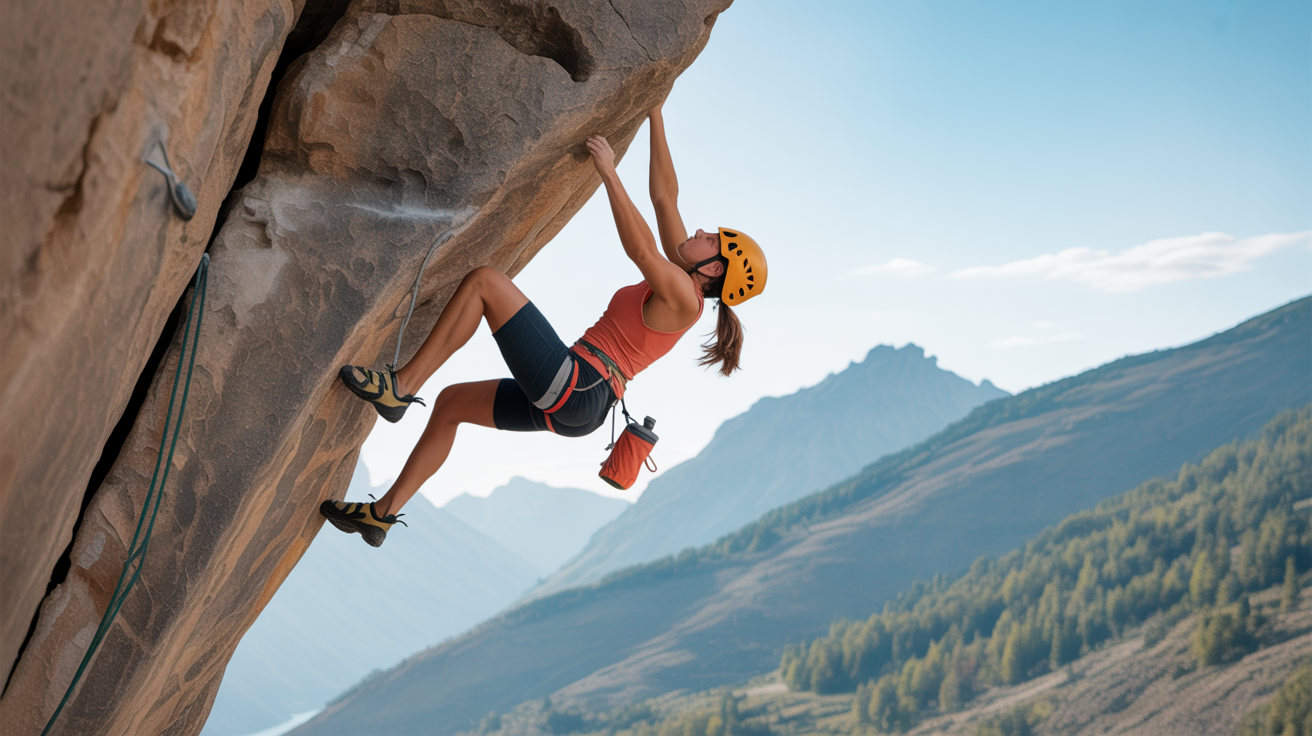
Getting pumped is the universal beginner experience. You pull hard, your forearms swell, your grip turns to jelly, and you're off the wall in seconds. The frustrating part is that the problem usually has less to do with strength and more to do with how you're using what you already have. Efficient climbing is about conserving energy on every move so that more of your capacity reaches the crux instead of getting burned up on straightforward terrain.
This guide covers the core habits that drain energy unnecessarily and what to do instead. None of these techniques replace hands-on coaching. Learning to fall safely and operate rope systems should happen in person, with a qualified instructor or experienced partner who can watch your form in real time.
Why You Get Pumped Faster Than You Expect
Your forearm muscles contract to grip the wall. While they're contracted, blood flow through those muscles is restricted. Lactic acid builds up, the burning sensation starts, and grip strength drops. The worse your positioning, the harder those muscles have to work just to keep you on the wall.
Two things drive most unnecessary pump in beginners. First, bent arms: when your elbows are bent, your biceps and forearms are all working at once even when you're stationary. Second, death-gripping: squeezing holds far harder than the hold actually requires. Both are reflexive responses to feeling insecure on the wall, and both accelerate fatigue dramatically.
Understanding that pump is partly a positioning problem rather than a fitness problem changes how you approach a route. You stop trying to climb faster and start trying to climb with less effort.
Straight Arms and Skeleton Load
The single habit that will most immediately change how long you last on a route is keeping your arms straight whenever you're not actively pulling. On a straight arm, your skeleton carries the load through your bones rather than your muscles holding it through contraction. You can hang from a pull-up bar with straight arms for much longer than with bent arms, and the same principle applies on the wall.
Straight arms mean your hips drop away from the wall, which is counterintuitive. Beginners want to hug the wall, but that position actually forces elbow bend and makes your arms do more work. Reaching long and dropping your weight through a straight arm into a hold is a core piece of climbing technique for beginners.
Practice this on easy terrain where you're not worried about falling. Stand on your feet, reach for a hold, and consciously let your arm straighten before you look for the next move. The habit builds slowly, but the payoff is significant.
Move Feet First, Then Hands
Most beginners move their hands first and then scramble their feet up to catch up. Efficient climbers invert this: they place the foot precisely, then push off it to reach the next handhold from a higher, more stable position.
This matters for energy because hands on the wall need grip strength to stay there. The longer your hands are on holds waiting for your feet to arrive, the more strength you spend just hanging. Moving a foot costs almost nothing from the muscles that get pumped.
Footwork is the foundation of efficient movement. When your feet are placed well and trusted, you push rather than pull your way up the wall. Pushing uses your large leg muscles, which have more endurance and recover faster than your forearms.
Try this drill on a low traverse or easy slab: before moving a hand, force yourself to find and step to the next foothold. Only after your weight has shifted onto that foot do you reach for the next hold. It feels slow at first and then becomes automatic.
Read the Route Before You Touch the Wall
A wasted move is energy you can never get back. Reading a route from the ground before you climb lets you decide in advance which holds to use, where to rest, and how to sequence sequences that might otherwise trap you.
Look for the obvious rest spots first. Bigger footholds, jugs you can shake out on, corners you can press into with a hip. Then trace the sequence backward from those rests to figure out how to arrive at each one without burning out.
On the wall, try to commit to a move before you start it. Reaching tentatively for a hold, adjusting, reaching again, and adjusting a second time triples the time you spend on that hold and the grip strength you use. One deliberate reach costs less than three hesitant ones.
Route reading also helps you identify holds that are worse than they look. A sloper that looks like a jug from below might be nearly useless, while a small-looking crimp might be perfectly angled for your grip. The more you read routes on the ground, the faster this recognition develops.
Rest Positions and Shaking Out
Resting on the wall sounds obvious, but many beginners skip rest holds entirely, especially when they're starting to pump. Paradoxically, stopping to rest when you feel the burn starting lets you recover enough to finish the route. Waiting until your grip fails means the route is already over.
A good rest position has your weight on your feet, ideally on a large foothold or a ledge. Your arms should be straight or close to it. Shake one hand loose and drop it below your hip so blood flows back into it. After 10 to 15 seconds, switch arms.
Not every route has an obvious rest. Part of efficient climbing is creating rest where it looks like there isn't any. A well-placed hip against the wall, a foot smeared on a feature, or a knee bar in a pocket can all take load off your hands long enough to recover a small amount of grip.
Your legs are the primary engine on most routes. When you're standing on solid footholds with straight arms on jugs, you're resting even if it doesn't feel like it. Recognizing those micro-rests and using them deliberately is a skill that separates climbers who get pumped fast from those who can stay on the wall through technical sections.
Grip Lighter and Breathe Steadily
Grip pressure is one of the most overlooked efficiency levers. Most beginners grip every hold at maximum pressure. On a positive jug, you probably need about 40 percent of your maximum grip strength to stay on. Using 100 percent wastes the difference.
The cue that helps many people is to use only as much grip as the hold demands. A big jug gets a relaxed hand. A small crimp gets more pressure. On a hold you can't hang, you'll know immediately because you'll slide off. Until that happens, try deliberately lightening your grip and see what the hold actually requires.
Breathing matters for a related reason. When people tense up on the wall, they often hold their breath. A held breath increases tension throughout your upper body, which tightens your forearms even on holds that don't need it. Exhaling steadily through hard moves and breathing normally on easier terrain keeps your muscles from over-tensing.
Pacing and Smooth Movement
Moving at an even pace uses less total energy than stop-and-start climbing. Rushing through easy sections to rest at a good hold burns forearm strength on moves that shouldn't be taxing. Pausing too long on marginal holds drains grip while you hesitate.
Try to keep movement continuous and deliberate rather than jerky. Smooth weight transfer from foothold to foothold produces less wasted motion and fewer micro-corrections that each take small amounts of strength to execute. Think about climbing the route with as few distinct moves as possible rather than finding as many holds as possible.
This kind of smooth pace comes with practice and route reading. Once you know where you're going, the movement becomes more fluid because you're not improvising each decision on the fly.
Frequently Asked Questions
Why do my forearms pump up so fast even on easy routes? Bent arms and over-gripping are the most common causes. If your elbows are bent while you're stationary on the wall, your muscles are working to hold you even when you're not moving. Straighten your arms on holds where you can and use only the grip pressure the hold actually requires.
How long does it take to develop efficient climbing habits? The foundational habits, particularly moving feet first and keeping arms straight, can start showing results within a few sessions if you practice them deliberately on easy routes. More complex skills like on-sight route reading typically develop over months of consistent climbing.
Should I climb until failure to build endurance? Climbing to complete failure repeatedly in a session can cause longer-term fatigue and increases injury risk. Many coaches suggest stopping individual climbs before you completely lose grip, climbing volume rather than intensity, and building in rest days. Ask an instructor at your gym what approach fits your current level.
Can I get better at climbing without getting stronger? Yes, particularly in the early stages. Most beginners improve faster from technique changes than from strength training because technique determines how efficiently you use the strength you already have. The more you can reduce unnecessary energy expenditure, the further your existing fitness takes you.
Is grip training outside the gym a good idea for beginners? Most coaches advise against supplemental grip training for beginners because finger tendons take longer to adapt than muscles, and overloading them before they're conditioned leads to injury. Building volume at the gym on varied terrain is typically the safer and more effective approach early on.