How to Care For and Retire Climbing Gear
Learn how to inspect, clean, store, and retire climbing rope, harness, carabiners, and slings so your gear stays safe longer.
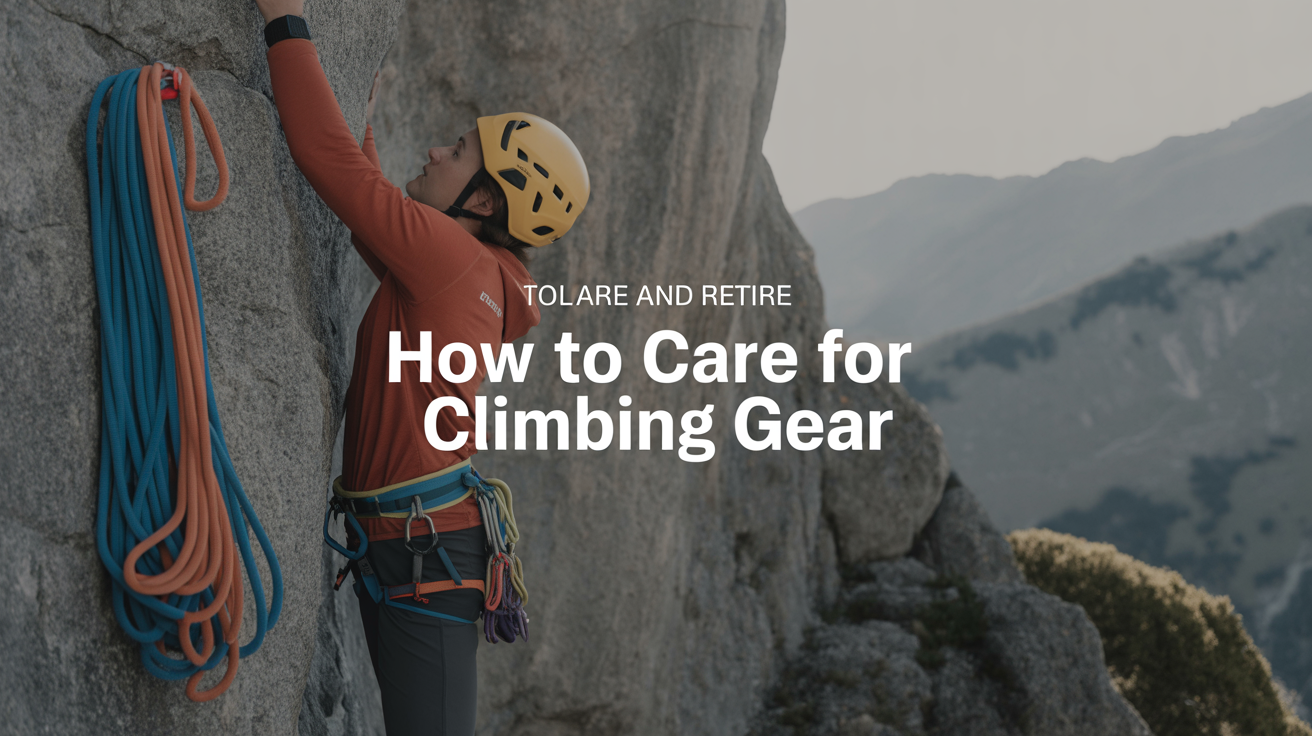
Climbing gear is the only thing between you and the ground, so knowing how to look after it matters as much as knowing how to use it. Good care habits extend the useful life of your equipment and, more importantly, help you catch damage before it becomes a problem on the wall. That said, no guide replaces the inspection and retirement instructions in each manufacturer's manual. When in doubt, retire the piece.
Inspecting Your Gear Before and After Every Session
A quick check before you leave the house and again after each session is the single most valuable habit you can build. It takes a few minutes and catches problems while they are still minor.
Rope: Run the rope slowly through your hands, feeling for flat spots, stiff sections, soft spots, or core shots where the sheath has worn through to the inner strands. Look at the sheath for heavy fraying, glazing from excessive friction, or discoloration that could indicate chemical contact. Pay particular attention to the ends, which take the most stress from repeated loading.
Harness: Flex the waist belt and leg loops, looking at the belay loop and tie-in points especially. The belay loop is the most critical load point on a harness. Check the stitching on tie-in points for cuts, abrasion, or UV-bleached webbing that has turned pale or stiff. If the load-bearing webbing shows any fraying or cut strands, retire the harness immediately.
Carabiners and other metal hardware: Look for deep gouges, cracks, sharp burrs, or gate mechanisms that do not snap shut cleanly and seat fully. A gate that sticks, rattles, or does not lock reliably is not safe to use. Check the nose of each carabiner for wear grooves from rope or webbing running over it repeatedly.
Slings and quickdraws: Hold the webbing or Dyneema up to light and look for cuts, abrasion, UV fading, or stiffness. Thin slings show damage more readily than thicker webbing, so inspect them carefully after any outdoor use where they contact rock directly.
Washing and Cleaning Each Type of Gear
Dirt, sweat, chalk, and grit gradually degrade fibers and create abrasion points inside the weave. Regular cleaning removes these before they cause damage.
Rope: Hand-wash your rope in a bathtub or large bucket with lukewarm water and a purpose-made rope wash, or a small amount of mild detergent with no fabric softener. Work it gently and rinse thoroughly. Loosely coil or flake the rope in a figure-eight pattern, then let it air-dry out of direct sunlight in a well-ventilated space. Never put a rope in a tumble dryer.
Harness: Unclip all gear and brush off chalk and dirt before washing. Hand-wash with mild soap and lukewarm water, paying attention to the belay loop and tie-in areas. Rinse well, then hang to dry away from direct sunlight.
Metal hardware: Wipe carabiners and belay devices with a damp cloth, and rinse off mud or salt if you have been climbing near the coast. For stiff gates, open and close them several times in clean water to flush out grit, then let them dry naturally. Avoid lubricants that attract dirt; a tiny amount of PTFE-based lubricant on gate pivot pins is acceptable if specified by the manufacturer.
Slings and webbing: Hand-wash with mild soap, rinse well, and air-dry out of direct sunlight.
Storing Gear to Extend Its Life
How you store climbing gear between sessions matters almost as much as how you use it.
Keep all rope and textile gear away from direct sunlight. UV radiation degrades nylon and Dyneema over time even when the gear is not being used. Store ropes in a rope bag rather than loosely in a car boot where they pick up exhaust fumes, battery acid, or fuel.
Chemicals are a serious concern. Even brief contact with acids, alkalis, or bleach can weaken nylon and polyester fibers in ways that are not visible to the eye. Keep gear away from any cleaning products, solvents, or battery storage areas. If you suspect chemical contact, retire the piece.
Metal hardware stores well in a dry environment. Moisture by itself is not a major problem for aluminum, but salt air accelerates corrosion of gates and pivot mechanisms, so dry everything after sea-cliff climbing.
Manufacturer Lifespan Guidance
Most manufacturers publish indicative service lives for their products. These are general guidance ranges based on typical use, not guarantees, and actual lifespan depends heavily on how often the gear is used, how it is loaded, and how it is stored.
| Gear | General guidance range |
|---|---|
| Dynamic rope | Up to around 10 years from manufacture if rarely used; 1 year or less under frequent heavy use |
| Harness | Up to around 10 years from manufacture; inspect annually and retire on any sign of webbing damage |
| Carabiners and metal hardware | Up to around 10 years with no visible damage, corrosion, or heavy wear |
| Textile slings and quickdraws | Up to around 10 years from manufacture; retire much sooner if visibly worn or UV-faded |
Always read the specific retirement guidance in your product manual. These ranges are starting points, not substitutes for regular inspection or for following what the manufacturer states for your specific model.
When to Retire Gear Immediately
Some situations call for immediate retirement regardless of how old the piece is or how good it looks.
After a major fall: A rope that has held a serious leader fall, or a harness or carabiner involved in a severe impact load, should be retired or at minimum sent to the manufacturer for assessment. Internal damage is not always visible. Many manufacturers define a maximum number of hard falls for their ropes; check your manual and keep a session log if possible.
After any chemical contact: Do not continue using textile gear if you know or suspect it has been exposed to acids, alkalis, or solvents.
After any visible damage: A core shot in a rope, cuts or fraying in harness webbing, a cracked carabiner, or a gate that will not close properly are all immediate retirement triggers.
If you cannot establish the history of secondhand gear: Donated or purchased used gear with an unknown history should be retired rather than used for life-critical climbing.
When in doubt: The cost of replacing gear is insignificant compared to the cost of a fall on compromised equipment. If something feels wrong or you cannot confidently rule out damage, retire the piece.
If you are still putting together your setup, climbing gear for beginners: what you actually need covers the essential pieces and what to prioritize. Once you have your kit, getting climbing shoes that fit properly is worth understanding separately, since fit affects both performance and foot health. If you already have shoes and want to check the fit, how climbing shoes should fit walks through what to look for.
Frequently Asked Questions
How do I know when my rope actually needs retiring?
The manufacturer's manual for your rope lists specific retirement criteria. Beyond the stated service life and hard-fall limits, retire the rope if you find a core shot, a flat or stiff section, heavy sheath fraying, or any sign of chemical exposure. A rope that passes visual and tactile inspection but has had many hard falls or heavy use over several seasons is worth replacing as a precaution even without visible damage.
Can I wash my harness in a washing machine?
Most manufacturers advise against machine washing because the mechanical action can stress stitching and webbing. Hand-washing in lukewarm water with a mild soap is the standard recommendation. Check your harness manual for what the manufacturer specifies.
My carabiner has a small burr on the nose from use. Is it still safe?
Minor smoothing from rope running over the nose is common and does not necessarily make a carabiner unsafe. A sharp burr that could abrade rope sheath is more concerning and should be assessed. If you are uncertain, contact the manufacturer or a qualified instructor or retailer rather than continuing to use it for critical clips.
Is it safe to buy used climbing gear?
Used rope, harnesses, and slings from an unknown source carry real risk because you cannot verify their history. A rope that has taken a severe fall may look fine externally but have damaged internal fibers. If you do buy secondhand gear, it should only be from a source you trust completely, with a known and documented history. Many experienced climbers advise against secondhand rope and harnesses entirely.
How should I keep track of my gear's age and use?
Keep a simple log noting when you bought each piece and, for your rope, roughly how many sessions you have used it and whether you have taken any hard falls. Some rope bags include a log card for this purpose. The date of manufacture is printed or embossed on most gear and is the starting point for the manufacturer's service life guidance.