How Auto Belay Systems Work for First-Time Gym Climbers
New to auto belay climbing? Learn how the device catches falls, what gym certification involves, and the clip-in check to run every climb.
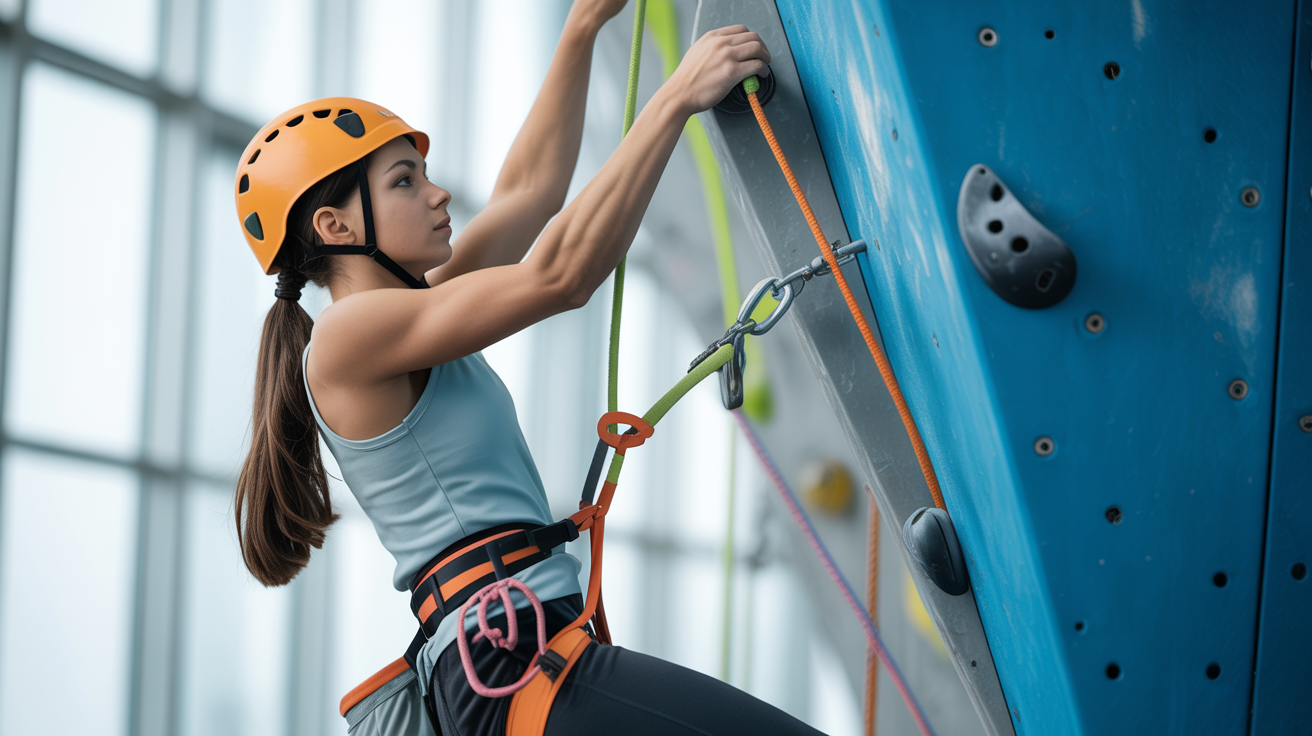
Walk into almost any climbing gym and you'll see a row of tall walls with a thin cable running from a box near the ceiling down to a spot on the floor. Those are auto belay stations, and auto belay climbing is usually the first thing a brand-new climber tries because it doesn't require a partner. You clip in, climb up, and when you let go, the device lowers you back to the ground on its own. No human on the other end of a rope. That sounds almost too simple, which is exactly why it's worth understanding what's actually happening inside that box before you trust it with your body weight.
What an Auto Belay Actually Does
An auto belay is a self-contained braking device mounted at the top of the wall. A flat webbing strap or thin cable runs from the device down to a carabiner that you clip to your harness. As you climb, the device reels in the slack so the strap stays snug against you. If you fall or simply let go at the top, an internal braking mechanism catches the strap and lowers you at a steady, controlled speed, roughly the pace of someone walking down a ladder, not a sudden drop and not a slow crawl.
Most units use one of two mechanisms. Older and simpler designs use a magnetic eddy current brake, which relies on spinning magnets creating resistance as you fall. Newer devices, and the ones most gyms have switched to after some magnetic units drew safety concerns, use a hydraulic or centrifugal braking system that's less sensitive to speed and more consistent regardless of how heavy or light the climber is. From a climber's perspective, both feel similar: you let go, there's a brief moment of falling, then the device catches you and eases you down.
The important thing to understand is that an auto belay is not magic and it is not forgiving of skipped steps. It only works correctly if you're clipped in, and it only catches you the way it's designed to if the carabiner is locked and attached to the strap, not to your harness's gear loop or nothing at all.
Getting Certified: The Orientation Gyms Require
Because the whole system depends on a human doing the clipping correctly, nearly every gym requires a short orientation before you're allowed to touch an auto belay station unsupervised. This is usually called an auto belay certification or auto belay clinic, and it typically runs 15 to 30 minutes. A staff member walks you through:
- How to inspect the carabiner and confirm it locks
- Where and how to clip it to your harness's belay loop (the reinforced loop at the front, not a side gear loop)
- How to test the strap's tension before you leave the ground
- What a controlled fall and lower actually feels like, often with a practice climb of just a few feet
- What to do if the strap doesn't retract properly or feels loose
Some gyms fold this into the general new-visitor orientation described in our guide to what to expect at your first climbing gym visit, while others run it separately, sometimes for a small fee, sometimes free with a day pass. Either way, you'll usually get a sticker or a note on your gym account marking you as auto belay certified so staff can check at a glance. If you're shopping around for a gym, it's worth asking during a tour how their auto belay orientation works, since the depth and quality vary a fair amount between facilities. Our piece on how to find and choose a climbing gym covers other questions worth asking on that same visit.
The Clip-In Check You Do Every Single Climb
Certification happens once. The clip-in check happens every single time, no exceptions, even if you've climbed that exact route fifty times before. Before you leave the ground:
- Pull the carabiner down and clip it to your belay loop.
- Close the gate and, if it's a locking carabiner, screw or push the lock closed.
- Tug down firmly on the strap. You should feel it hold and hear a bit of resistance from the retracting mechanism, not a loose flop.
- Look down at the connection point one more time before you start climbing.
That last visual check matters more than people expect. Auto belay accidents in gyms are rare, but when they happen, the cause is almost always the same: someone climbed without clipping in at all, thinking a friend or staff member had done it, or the carabiner was clipped to the wrong point on the harness. A quick physical tug and a glance down catches both problems in about three seconds.
Auto Belay vs Top Rope Belay: What's Different
It helps to compare auto belay to a human-belayed top rope climb, since gyms usually offer both and beginners often ask which is "safer." The honest answer is that both are safe when done correctly, and both carry more risk when a step is skipped.
| Auto Belay | Top Rope with a Belayer | |
|---|---|---|
| Partner needed | No | Yes, a trained belayer |
| What catches your fall | Internal braking device | A person managing rope through a belay device |
| Communication | None needed once clipped in | Verbal calls ("climbing," "on belay," "lower me") |
| Common failure point | Not clipping in, or clipping incorrectly | Belayer inattention, letting rope slack build up |
| Best for | Solo practice, quick laps, waiting on friends | Longer routes, coaching feedback, shared experience |
If you want to learn the human side of belaying, which most gyms eventually expect regular members to know, our beginner's introduction to belaying walks through the fundamentals, and our guide to belay devices explained, ATC versus assisted braking breaks down the manual equipment a belayer actually holds. Auto belay is a genuinely useful tool on its own, but it's not a replacement for learning to belay a partner if you plan to climb ropes long term.
Common Mistakes First-Timers Make
A few patterns show up again and again with new auto belay users, and knowing them ahead of time helps you avoid becoming a cautionary story at the gym.
Forgetting to clip in. This is the big one. It usually happens when someone gets distracted mid-conversation or assumes a friend already clipped them. The fix is simple and boring: always do your own physical check, every time, regardless of who else is around.
Unclipping before touching down. Some climbers reach the top, unclip out of habit or excitement, and then realize they're still several feet up. Stay clipped in until your feet are on the mat and the strap has gone slack in your hand.
Downclimbing off an active auto belay. The device is built to lower you smoothly when you let go, not to be climbed down while it's under tension. Trying to downclimb can create jerky, unpredictable strap behavior. If you want to come down under control, let go and let the device do its job, or ask a staff member if downclimbing is permitted at your gym.
Grabbing the strap itself. In a moment of nerves, some climbers grab the webbing strap instead of the wall. This can pull you off balance and doesn't add any safety since the device is already managing your descent.
Auto belay climbing is one of the friendlier ways to start, precisely because so much of the risk is removed once the clip-in habit is solid. Treat the orientation seriously, run the physical check every climb, and it becomes as routine as buckling a seatbelt.
Frequently Asked Questions
Is auto belay safe for a complete beginner?
Yes, when you've completed your gym's orientation and you run the clip-in check every time. The device itself is a well-established piece of climbing equipment used in gyms worldwide. Most incidents trace back to a missed clip-in rather than equipment failure, which is why the check matters so much.
How does auto belay work if I weigh a lot less or more than other climbers?
Modern hydraulic and centrifugal auto belay units are designed to give a consistent, controlled descent speed across a wide weight range, generally covering everyone from a light child to a heavy adult within the manufacturer's rated limits. Older magnetic models could behave differently at very low weights, which is part of why many gyms have upgraded their fleets. Ask staff if you're unsure whether a specific unit has a minimum weight requirement.
Do I need a partner to use an auto belay?
No. That's the main appeal. You clip yourself in, climb, and the device lowers you when you let go, so you can climb solo while a friend rests or while you wait for a top rope lane to open up.
What's the difference between auto belay certification and general belay certification?
Auto belay certification covers clipping in correctly and understanding the automated lowering system, usually a short orientation. General belay certification, needed to belay a partner on top rope or lead, is a longer skills course covering rope handling, catching falls, and communication, since you're now responsible for someone else's safety rather than just your own.
What should I do if the auto belay strap feels loose or doesn't retract?
Stop and tell a staff member before climbing. A strap that isn't taking up slack properly, or a carabiner that doesn't lock cleanly, means the unit needs to be checked or taken out of service. Gyms would rather field that report than have someone climb on a device that isn't functioning as intended.