Belay Devices Explained: ATC vs Assisted-Braking
Learn the difference between tube-style ATCs and assisted-braking belay devices, how each works, and which one beginners should learn on first.
Choosing a belay device is one of the first real gear decisions a new climber faces. Walk into any climbing gym and you will see two broad families on people's harnesses: tube-style devices (the ATC being the most common example) and assisted-braking devices (Petzl GriGri being the most recognized). Both do the same core job, but they work differently and reward different habits. Understanding those differences helps you make a sensible choice and, more importantly, helps you understand why technique matters regardless of which device you clip in.
Before anything else: belaying is a hands-on skill. No article replaces a course from a certified instructor or a gym belay certification class. Learn the physical motions with an experienced person watching your brake hand and your body position before you take anyone's life in your hands on the wall.
At a Glance
- Tube devices (ATCs) rely entirely on friction and your brake hand; nothing about the device itself slows the rope until you pull the brake strand down.
- Assisted-braking devices (ABDs) add a camming mechanism that helps arrest a sudden fall, but "assisted" does not mean hands-free, ever.
- Most gyms start beginners on tube devices specifically to build brake-hand discipline before introducing a device that can feel more forgiving.
- ATCs are lighter, cheaper, and work with more rope diameters (including half and twin ropes); ABDs are heavier, pricier, and mostly single-rope only.
- Every belay device must be matched to the rope diameter it is rated for, check both the device manual and the rope's specs.
- Buy nothing until you know which style of climbing you are drawn to; renting or borrowing during your certification course is normal and expected.
How a Tube-Style Device Works
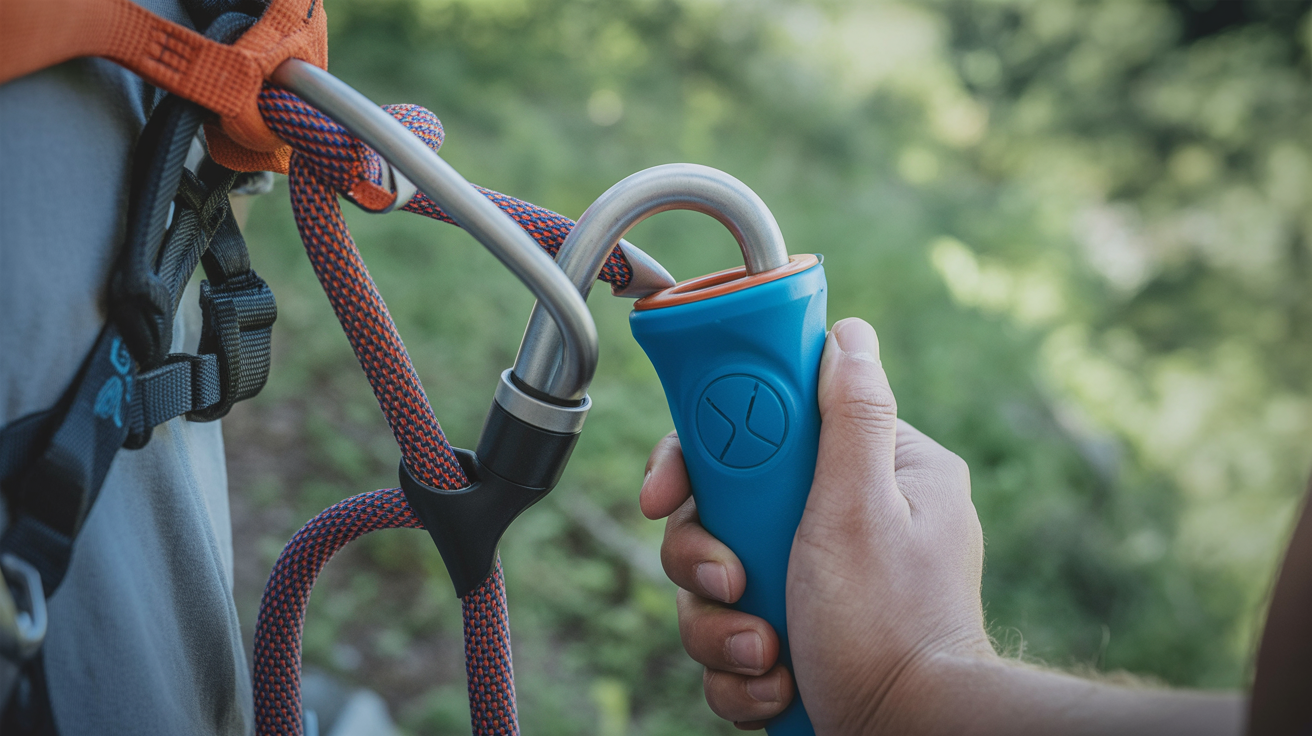
An ATC (Air Traffic Controller, a name coined by Black Diamond that has become a general term) is a simple aluminum plate with two slots and a wire cable bail. You thread a bight of rope through one of the slots alongside a locking carabiner clipped to your harness belay loop. When the rope runs through the device, friction slows a fall. To lock off a falling climber, you pull the brake strand sharply downward, which bends the rope around the carabiner and creates enough friction to hold the load.
The critical point is that the ATC generates almost no friction on its own at rest. The brake hand does the work. Releasing the brake strand removes the friction, and the rope can slide freely. This is not a flaw; it is a design feature that lets you pay out slack quickly for a lead climber. It also means that technique is everything. A tube device will not compensate for inattention.
Most gyms teach beginners on tube devices for this reason. You develop the correct muscle memory for brake-hand discipline before you are introduced to anything that might give a false sense of security. Basic tube devices typically weigh between 60 and 80 grams, cost well under fifty dollars, and have essentially no moving parts to service or wear out beyond the wire bail, which is part of why gyms hand them out for rental so freely.
How an Assisted-Braking Device Works
Assisted-braking devices (ABDs) add a mechanical camming mechanism. The Petzl GriGri is the most common; other brands make similar devices. When the rope loads suddenly, the cam rotates and pinches the rope against the device body, dramatically increasing friction and helping arrest a fall even if the brake hand has not moved into the locked position yet.
"Assisted" is the key word. The device assists the braking action; it does not create a hands-free system. Every manufacturer, climbing gym, and safety organization is emphatic on this point: keep a brake hand on the rope at all times with any belay device. Petzl's own instruction manual says the same thing. There are documented accidents caused by belayers assuming the GriGri would lock off automatically while they looked away or used both hands to clap. As Wikipedia's summary of belay device mechanics puts it, conditions like an icy, muddy, worn, or unusually thin rope can all prevent a camming device from braking properly, so no belay device of either type should ever be treated as self-locking.
The cam mechanism also affects rope-feeding. Paying out slack for a lead climber requires a slightly different technique compared to an ATC. There is a small lever or thumb paddle you depress to bypass the cam for smooth feeding. This takes practice, and doing it incorrectly can accidentally override the cam mid-lead, removing the assisted-braking function entirely at the wrong moment. Getting coaching on GriGri-specific feeding technique before taking it to the wall is important.
ATC vs Assisted-Braking: Side-by-Side
| Feature | Tube-Style (ATC) | Assisted-Braking (GriGri-style) |
|---|---|---|
| Mechanism | Friction only | Cam assists braking |
| Brake-hand required | Yes, always | Yes, always |
| Rope-feeding effort | Smooth and intuitive | Requires learned technique |
| Lowering | Simple rope-pay-out | Lever-controlled, slower learning curve |
| Weight | Very light (60-80 g) | Heavier (175 g for GriGri) |
| Works with half/twin ropes | Yes (device-dependent) | No (most ABDs are single-rope only) |
| Learning curve | Lower for first-timers | Higher, but often preferred for sport climbing |
| Typical gym rental | Common | Less common |
| Cost | Low | Higher |
| Rope diameter range (typical) | Wide, often 7.5-11 mm across a product line | Narrower, commonly 8.5-11 mm depending on the model |
| Moving parts to inspect | None (wire bail only) | Cam, spring, and release lever need periodic checks |
Prices vary by retailer and season; check current listings rather than relying on any number printed here.
Matching a Device to How You Climb
Beyond the beginner-vs-experienced question, the right device also depends on what kind of climbing you are actually doing. This is not a strict rulebook, plenty of climbers break from it, but it reflects how most instructors advise new climbers to think about the choice.
| Climbing situation | Commonly recommended device | Why |
|---|---|---|
| Indoor top-rope, first few months | Tube (ATC) | Builds brake-hand habits with no cam to lean on |
| Indoor or outdoor sport lead | ABD (GriGri-style), once trained | Reduces arm fatigue holding a tired leader in place |
| Trad or multi-pitch with half/twin ropes | Tube (ATC) | Most ABDs do not support two-rope systems |
| Long belay sessions at the gym (working a project) | ABD | Cam holds the load, easing hand fatigue over many falls |
| Gym belay certification (device unspecified) | Whatever the gym issues | Learn the house device first; add others later |
Which Should a Beginner Learn On?
Most gyms require or strongly recommend that new belayers start on a tube device. There are good reasons for this. The tube device demands that you develop correct brake-hand habits from the first belay. There is no cam to bail you out if your brake hand drifts up or releases. That discipline transfers cleanly to every other device you will ever use.
Once you have logged enough belays that the brake-hand position feels automatic, adding an ABD to your toolkit makes sense, particularly if you plan to do a lot of sport lead climbing where you might be holding a tired climber in position for extended periods. The cam reduces arm fatigue during prolonged holds. Many experienced sport climbers use a GriGri as their primary device for exactly this reason.
If the gym where you are starting issues ATCs for rental or certification courses, start there. If the gym requires a GriGri for its lead certification, find a course that teaches GriGri-specific technique (rope feeding, lowering, the anti-panic response) from the start. Do not skip to an ABD on your own without instruction simply because it sounds safer. It is not safer without the accompanying technique.
Whichever device you choose, buy one that carries a certification label from a recognized testing body. The UIAA's safety commission maintains international equipment standards and accredits safety labels across more than 130 manufacturers; a device without a UIAA or equivalent CE certification stamped on it is not something to trust with a partner's life, no matter how good the price looks.
For pairing this decision with your other early gear choices, see climbing gear for beginners: what you actually need for a full rundown of what to buy first (and what to rent while you are still figuring things out).
Safety Considerations That Apply to Both Devices
The device is only one part of a belay system. Every single time, before the climber leaves the ground:
- The climber checks their own knot (or harness buckles for a top-rope anchor).
- The belayer checks that the rope is threaded correctly and the locking carabiner is locked.
- Both partners check each other's systems out loud (a "partner check" or "BARK" check, depending on your gym's terminology).
Skipping this step is where accidents happen. No device, regardless of price or mechanism, replaces a systematic pre-climb check. Research bears this out at the mechanism level, too: a 2023 study of nearly 4,000 members of the French Federation of Mountain and Climbing found that static, unresponsive belaying and unexpected falls were among the most commonly reported causes of fall-related injury, and that newer climbers were disproportionately affected. The device in your hand matters far less than whether you are actively, attentively using it.
Also: the belay device must be rated for the rope diameter you are using. Most devices specify a working range (for example, 8.9 mm to 11 mm). Check the rope and the device's manual together. Using a device outside its rated range can mean unpredictable friction or a device that doesn't lock reliably.
If you are buying your first set of gear rather than renting, the article on how to choose climbing shoes for beginners and how should climbing shoes fit covers the other piece of kit you will buy early.
Frequently Asked Questions
Is a GriGri hands-free?
No. Petzl, climbing gyms, and instructors worldwide are consistent on this: there is no such thing as a hands-free belay device. Keeping a brake hand on the rope at all times is required with every belay device, including the GriGri. The cam assists the braking action in a sudden fall; it does not replace the brake hand for controlled lowering or routine rope management.
Can I use an ATC for lead climbing?
Yes. Tube devices are widely used for lead climbing and are the standard tool for many traditional climbers. The technique for catching a lead fall on an ATC requires good body position and a reliable brake-hand reflex. Take a lead belay course before attempting it; the body mechanics differ from top-rope belaying.
Which device do climbing gyms use for rentals?
Most gyms stock tube devices for rental because they are inexpensive and durable. Some gyms require their own device for belay certification regardless of what you own. Ask before you arrive.
Can beginners skip the ATC and go straight to an ABD?
You can, if your gym allows it and you take a course that specifically covers ABD technique. The risk is that you develop a false sense of security in the cam without building the underlying brake-hand habit. Many instructors prefer students learn on a tube device first so the fundamentals are solid, then transition to an ABD.
Do I need to buy both?
Not at the start. Rent or borrow whatever your gym provides for the certification course. Once you are comfortable belaying and have a clearer sense of what style of climbing you enjoy most, buy the device that fits that direction. Plenty of climbers use only one type their entire career.
How do I know when my belay device needs to be retired?
Inspect it before every session for deep grooves worn into the metal, sharp burrs or edges, a bent or cracked frame, or (on an ABD) a cam or spring that no longer moves smoothly. A tube device with a groove deep enough to catch a fingernail is compromised. Manufacturers publish inspection guidance in the product manual; when in doubt, retire the device rather than keep using it.