Do You Need a Helmet for Climbing?
Helmets are optional at the gym but essential outdoors. Learn when to wear one, what types exist, and how to get the right fit.
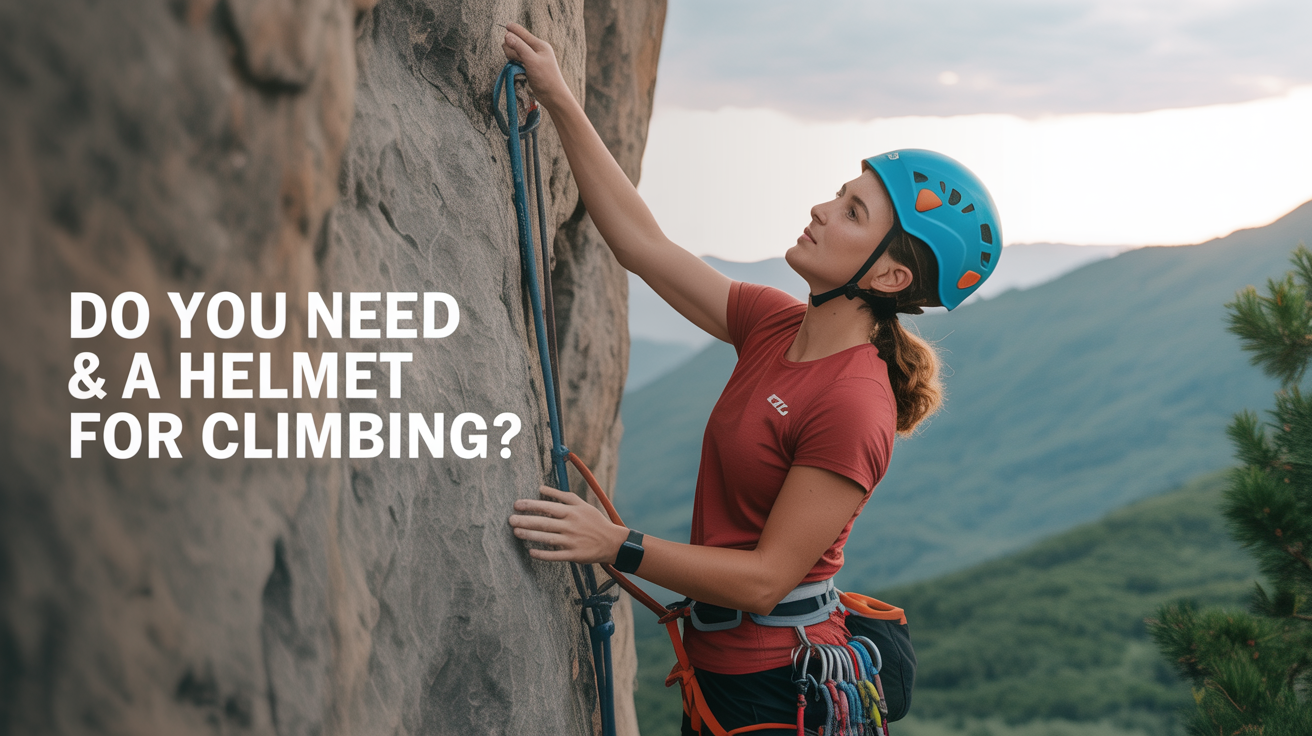
At a climbing gym, almost nobody wears a helmet. Outside, on real rock, most experienced climbers do. That gap confuses a lot of beginners, so this guide walks through why the rules differ, what a helmet actually protects you from, and how to choose one if you decide to buy.
Why Gyms Usually Skip Helmets
Indoor climbing walls are designed to remove the two main hazards that make helmets valuable outdoors: falling rock and head contact during an inverted fall.
Gym walls are routinely inspected. Holds are tightened or replaced on a schedule, so a bolt-on hold is not going to drop on your head mid-climb. The walls themselves are padded at the base, and the floor layout is managed so that a falling climber lands in a predictable zone. In this environment, a helmet adds no meaningful protection.
There is also the physics of a gym fall. On a top-rope route, the rope keeps your arc predictable. On a lead route in a gym, the overhang angles are usually set so that you swing away from the wall rather than into it. Your head rarely contacts anything hard. That said, some gyms do recommend helmets for younger children or on specific lead walls, so check the house rules when you arrive.
What Changes Outdoors
Rock does fall. Even on a well-traveled sport crag with clean, solid stone, the person above you might knock a pebble loose with a hand move. On trad routes, multipitch walls, or anywhere less traveled, the risk increases. A loose flake the size of a golf ball falling from 15 meters can cause a serious head injury. A helmet is not a guarantee of safety, but it substantially reduces that risk.
The second hazard is contact with the wall during a fall. Outdoors, routes follow the natural line of the rock rather than a designed angle. A fall on a vertical or slab route can swing or tumble you directly into the face. An inverted fall, where your feet clip over your rope, can put your head in the path of the wall first. A helmet absorbs and distributes the impact that would otherwise hit bare bone.
Belayers are also exposed. Rockfall does not target only the climber. Standing at the base of a multipitch route or below a crumbly cliff, a belayer has no way to dodge falling debris quickly. Many serious rockfall injuries at outdoor crags happen to the person on the ground.
When Wearing a Helmet Is the Standard Practice
Use this as a rough guide:
Outdoor roped climbing of any kind. Top-rope, sport lead, trad, and alpine routes all carry rockfall risk, and falls on natural rock are less predictable than gym falls. Put the helmet on at the base of the approach, not just at the first bolt.
Any multipitch climbing. Height and exposure multiply both rockfall risk and fall consequences. On a three-pitch route, you might spend ninety minutes below your partner as they climb above you.
Belaying outdoors. Even if you are an experienced climber who has made peace with your own risk tolerance, your belayer did not sign up for the same calculus. Wearing matching helmets is the considerate norm at most crags.
Bouldering near tall problems or loose areas. Helmet use is less common in pure bouldering because crash pads and spotters manage fall risk, but on highball problems or at a loose crag, some climbers choose to wear one.
Types of Climbing Helmets
Climbing helmets come in two main construction styles, and both must meet UIAA or CE EN 12492 certification to be sold as climbing helmets. Use only certified helmets; general-purpose cycling or skateboarding helmets are not designed for the same impact geometry.
Hardshell helmets have a rigid ABS plastic outer shell with foam padding inside. They are durable, resist multiple smaller impacts, and tend to cost less. The tradeoff is weight. Hardshells are a reasonable choice for a beginner who climbs a few times a year and wants something robust that will survive a decade in a gear bag.
Foam construction helmets (sometimes called in-mold or EPP/EPS helmets) integrate the foam directly with a thin outer shell. They are lighter and often better ventilated, which matters on long, hot routes. They are also more sensitive to damage from drops and compression, so you need to inspect them more carefully. Most modern helmets from major brands like Black Diamond, Petzl, and Mammut sit in this category.
Some helmets are hybrid designs combining a hard outer shell with denser foam underneath, aiming to balance durability with weight.
Replace your helmet after any significant impact, even if you see no visible damage. The foam is designed to deform under load, absorbing the energy, but that deformation is permanent. The helmet will not protect you the same way in a second impact.
Getting the Right Fit
A helmet that does not fit correctly is less effective and more likely to be left in the pack. Most brands size helmets by head circumference, measured at the widest point just above your eyebrows. Measure with a soft tape before you buy.
The helmet should sit level on your head, two finger-widths above your eyebrows, with no tilt forward or back. The chin strap should be snug but not restrictive. Shake your head in all directions; if the helmet shifts significantly, adjust the retention system or try a different size. Many models have a dial or strap system at the back for fine-tuning.
If you are renting gear as a beginner, inspect any rental helmet for cracks, dents, or significant UV fading before putting it on. Ask gym staff to replace it if you have any concerns.
Frequently Asked Questions
Do climbing gyms require helmets? Most do not for adult climbers, though some gyms have specific policies for youth programs or lead walls. Check when you arrive. Outdoors, no one can require you to wear a helmet, but it is the standard practice at most crags.
Can I use my bike helmet for climbing? No. Bicycle helmets are tested for forward falls onto hard surfaces and are not designed to handle the angled, rotational, or top impacts that matter in climbing. Use only a helmet certified to UIAA or CE EN 12492.
How long does a climbing helmet last? Most manufacturers give a service life of five to ten years from the date of manufacture, assuming no significant impacts and proper storage. UV exposure and repeated minor impacts shorten that lifespan. Check the manufacture date stamped inside the helmet and follow the brand's guidance.
Do I need a helmet for bouldering? In a gym, no. At an outdoor bouldering area, it depends on the height and rock quality of the problems you are attempting. On highball problems or at crags with notoriously loose rock, many climbers wear one.
Is a more expensive helmet safer? All certified helmets must pass the same UIAA/CE tests, so a budget-certified helmet is not necessarily less protective than a premium one. Higher-priced helmets typically offer better ventilation, lighter weight, and more comfortable fit systems. For a beginner, a mid-range certified model is a reasonable starting point.
For more on building a beginner kit, see climbing gear for beginners: what you actually need. When you are ready to sort out footwear, how to choose climbing shoes for beginners and how climbing shoes should fit cover the specifics.
Climbing carries real risk. This article is educational. Learn belaying, falling, and anchor-building from a qualified instructor in person, use UIAA/CE-certified gear, and always conduct a partner check before you leave the ground.