Common Climbing Injuries and How to Prevent Them
Learn how beginners get hurt climbing, which injuries are most common, and how to prevent them through smart training, warm-ups, and rest.
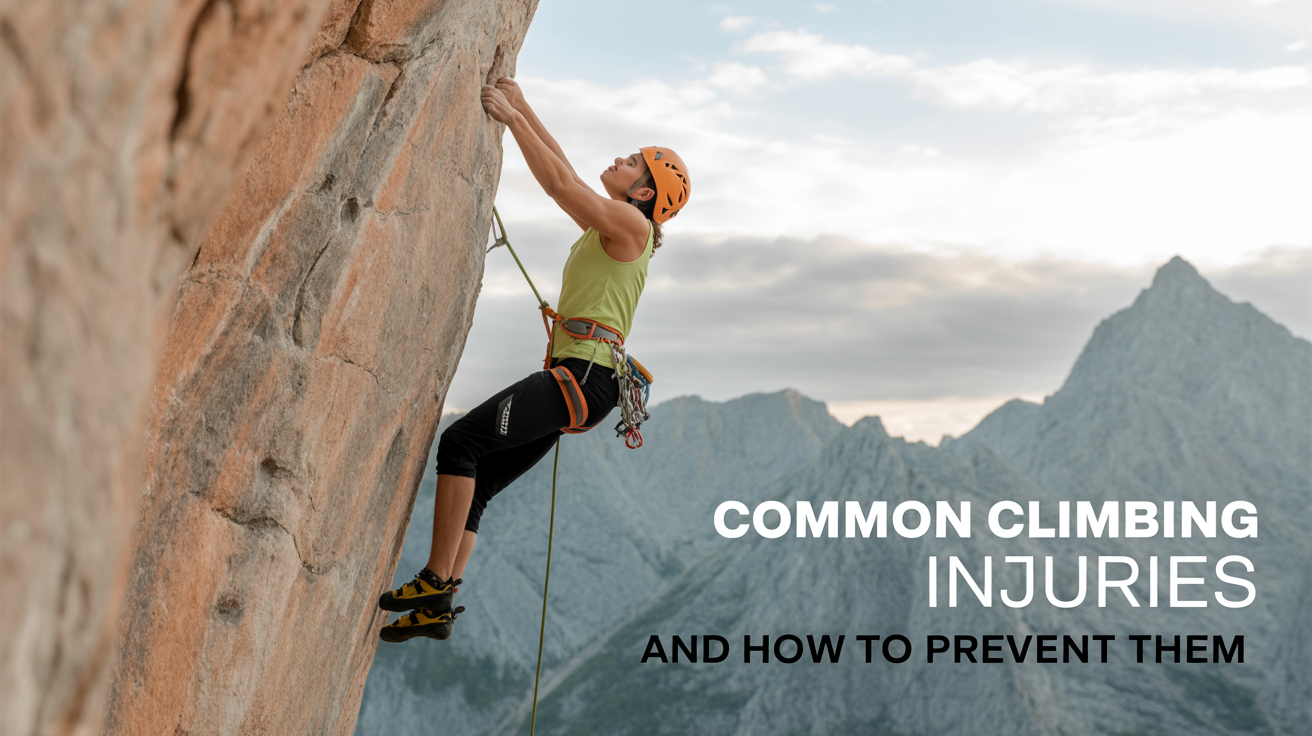
Rock climbing is genuinely safe for most people when they learn proper technique and build up load gradually. The injuries that do happen to beginners are almost always predictable and preventable. This guide explains what goes wrong, why it happens, and what you can do to stay healthy on the wall.
This is educational information, not medical advice. If you are in pain or have an injury, see a doctor or physiotherapist before continuing to climb.
Why Beginners Get Hurt
The short version: new climbers get excited, train more than their connective tissue can handle, and skip rest days. Muscle fitness builds faster than tendons and pulleys do, so your arms feel fine right up until something snaps or aches badly enough that you have to stop.
Two patterns show up repeatedly:
Over-gripping. Beginners grip the wall far harder than necessary because they lack the footwork and body positioning to offload weight from their hands. That constant, excessive tension fatigues finger tendons quickly and creates conditions for a strain.
Progressing too fast. Jumping straight to V3 or V4 problems in your first month, or climbing five days a week from the start, loads the fingers before they have adapted. Connective tissue adaptation lags behind strength gains by months, not days.
The fix for both is patience. Two to three sessions per week, resting a day between each, with a gradual grade increase over months rather than weeks.
Finger Pulley Strains (The Most Common Climbing Injury)
The flexor tendons that curl your fingers are held close to the bone by a series of pulley ligaments. The A2 pulley, located at the base of the ring finger, is the one climbers strain most often because it takes the highest load when you grip small crimps.
Symptoms of a pulley strain include a sharp pop during a hard move, pain when pressing the injured finger against the palm, or swelling along the finger.
Prevention comes down to a few concrete habits:
- Warm up properly before any hard climbing. Start with easy, juggy routes for 10 to 15 minutes before touching anything small or strenuous.
- Avoid the full-crimp position (thumb wrapped over the top knuckle) when you are tired. The half-crimp and open-hand grip distribute load more evenly.
- Do not hang board or do dedicated finger training in your first year. Hangboards are training tools for climbers with a foundation, not beginners. Beginners who use them too early almost always get hurt.
- If a finger starts to ache during a session, stop. Climbing through finger pain is how minor strains become full ruptures requiring months off.
Shoulder Injuries
The shoulder is a mobile, complex joint, and pulling movements put it under real stress. Beginners often injure the rotator cuff (the group of muscles stabilizing the shoulder) or develop impingement pain from climbing with poor shoulder position.
The most common mistake is reaching overhead and then pulling down with the arm straight, locking the shoulder out under load. A better habit is to keep a slight bend in the arm and engage the lat (the large muscle beneath the shoulder blade) to stabilize before you pull.
Antagonist shoulder work helps a lot. Climbing is heavily pull-dominant. Rows, face pulls, and external rotation exercises balance the shoulder and reduce injury risk. You do not need a complicated program. Even two sets of band pull-aparts after each session makes a difference over time.
If you feel clicking, catching, or pain when reaching overhead, see a physiotherapist. Shoulder injuries that get ignored tend to worsen.
Elbow Tendinopathy
Climbers develop two common elbow problems: medial epicondylalgia (pain on the inside of the elbow, often called "golfer's elbow") and lateral epicondylalgia (pain on the outside, "tennis elbow"). Both involve degeneration of the tendon where forearm muscles attach to the elbow.
These conditions develop slowly. You might notice a dull ache after sessions that gradually takes longer to clear. Ignoring the early signs and continuing to climb hard usually turns a manageable irritation into a months-long setback.
Prevention mirrors the finger advice: rest between sessions, warm up thoroughly, and don't push through elbow pain. Eccentric strengthening exercises (controlled lowering under load) are effective for recovery if you develop tendinopathy, but see a physiotherapist for a proper program.
Skin Care and Flappers
Skin problems are the most common issue beginners report because the friction from textured holds removes skin faster than new callus can form. A flapper (a torn flap of skin) is painful and forces you off the wall.
Build skin gradually by keeping sessions to 90 minutes or less in the first few months. After a session, let your skin dry fully before applying a small amount of climbing salve or unscented hand cream. Filing sharp callus edges with a fine file reduces the chance of a flapper when callus catches a rough hold.
Climbing with open wounds risks infection and slows healing. Take the day off.
The Role of Warm-Up and Rest
A proper warm-up is the single most effective injury prevention tool available. Before touching a hard move:
- Spend five minutes on gentle arm circles, wrist rotations, and shoulder mobility.
- Climb easy routes or problems for 10 to 15 minutes at a pace where you feel zero effort.
- Progress gradually into moderate terrain before attempting anything at your limit.
Rest is equally important. Connective tissue repairs and strengthens during rest, not during climbing. Most beginners benefit from two climbing days per week for the first two to three months. Three days per week is plenty for most of the first year.
When rest days feel frustrating, remember that taking an extra day off is almost always faster in the long run than managing an injury for six weeks.
Belaying and Falling Safely
Injury prevention is not only about training load. How you fall and how you belay also matter enormously. A bad fall on top-rope or lead, or a belayer who feeds slack poorly, can result in impact injuries.
Learn to belay and fall safely from a qualified instructor or at a gym that offers structured instruction. The technique for falling on a bouldering mat, catching a fall on lead, and managing a top-rope descent all have important subtleties that do not come through in reading. Practice falling in a controlled way before you need to do it by accident.
For guidance on the systems involved, see our guides on how to belay and how to tie in with the figure-eight follow-through knot. When climbing with a partner, always run through climbing commands before you leave the ground.
Frequently Asked Questions
How long does a finger pulley strain take to heal?
A mild strain (Grade 1) often clears in two to four weeks with rest. A moderate strain (Grade 2) can take six to twelve weeks. A complete rupture (Grade 3) may require surgery and six months or more of recovery. The range is wide, which is why getting a diagnosis from a physiotherapist who works with climbers makes sense rather than guessing and hoping for the best.
Is it safe to climb with sore fingers?
General muscle soreness in the forearms is normal, especially in the first weeks. Pain that is sharp, localized to a specific finger joint or pulley, or that worsens as you climb is a signal to stop. Climbing through pain regularly is how minor issues become serious ones.
Should beginners use a hangboard to get stronger?
No. Hangboards apply isolated load to finger tendons in a way that climbing itself does not. Beginners who have not yet built a base of connective tissue strength through regular climbing are at high risk of pulley injury from hangboard training. Most physiotherapists who work with climbers recommend waiting at least a year of consistent climbing before adding any dedicated finger training.
What is antagonist training and do beginners need it?
Antagonist training means working the muscles that oppose the ones you use for climbing, mainly the pushing muscles of the chest, triceps, and external shoulder rotators. Climbing is strongly pull-dominant, and over time this imbalance stresses joints. A small amount of push-up, dipping, or band work two or three times per week helps. Beginners do not need an elaborate program, but some attention to balance is worthwhile from the start.
When should I see a doctor or physiotherapist about a climbing injury?
See a professional any time you experience a sharp pop or snap in a finger or elbow during a move, pain that does not improve after a week of rest, swelling that persists, or pain that is getting worse rather than better. A physiotherapist who treats climbers can distinguish between grades of injury, recommend appropriate loading or rest, and give you a realistic timeline. Self-diagnosing and returning to climbing too early is the most common reason minor injuries become chronic.