Bouldering vs Top-Rope vs Lead: Climbing Styles Explained
Not sure which type of climbing to try first? This plain-English breakdown covers bouldering, top-rope, lead, and auto-belays so you can choose with confidence.
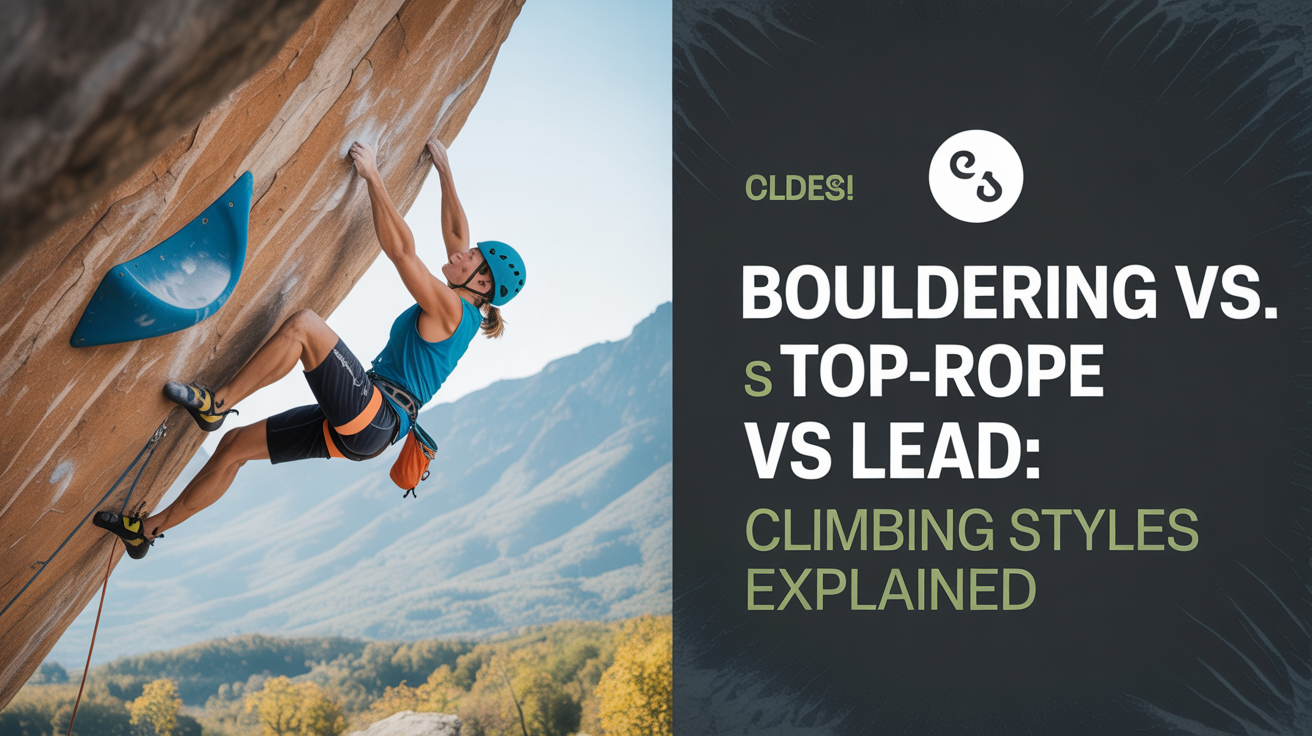
Walk into almost any climbing gym and you'll see several very different things happening at once: people hopping off low walls onto thick mats, climbers tied into ropes on towering walls, and a few folks clipping quickdraws as they go. These are all rock climbing, but the gear, skills, and risks involved are quite different. Knowing the difference before you show up will save you a lot of confusion and help you pick the right starting point.
At a Glance
- Bouldering needs only shoes and chalk; no rope, harness, or partner required, and falls land on foam pads.
- Top-rope uses a rope pre-anchored at the top of the wall, so a fall is caught almost immediately, a foot or two of drop at most.
- Lead climbing means clipping the rope into protection as you go, so a fall can mean dropping 10 feet or more.
- Belay certification is required before a gym lets you belay a partner on top-rope or lead; auto-belays let you climb roped routes solo.
- Most beginners should learn bouldering and top-rope first and leave lead climbing until they're solid on falls and technique.
- All three styles carry different, not lesser, risks: landing quality matters most in bouldering, belay attentiveness matters most on rope.
What Is Bouldering?
Bouldering is climbing on short walls, usually under 15 feet, without any rope. You wear climbing shoes and often chalk your hands to improve grip. That's it for gear. If you fall, and you will fall, you land on thick foam crash pads that cover the floor beneath the wall.
Most gyms have a bouldering area that's open to anyone without a lesson. Problems (that's the word climbers use for a route) are marked by colored holds or tape, so you can spot your difficulty level and work your way up. A beginner problem at a gym might take just two or three moves; a hard one might stump experienced climbers for weeks.
Why bouldering is a great first stop
- No rope, no harness, no partner required
- You can show up alone and climb at your own pace
- Gear costs are low: shoes plus chalk
- Falls are short and the mats are forgiving at beginner grades
- The social scene is usually relaxed and beginner-friendly
The tradeoff is that falls from near the top of a boulder problem, even onto a mat, can cause ankle or wrist injuries if you land awkwardly. Learning how to fall is a real skill. Check out bouldering for beginners for a deeper look at fall technique and your first session.
What Is Top-Rope Climbing?
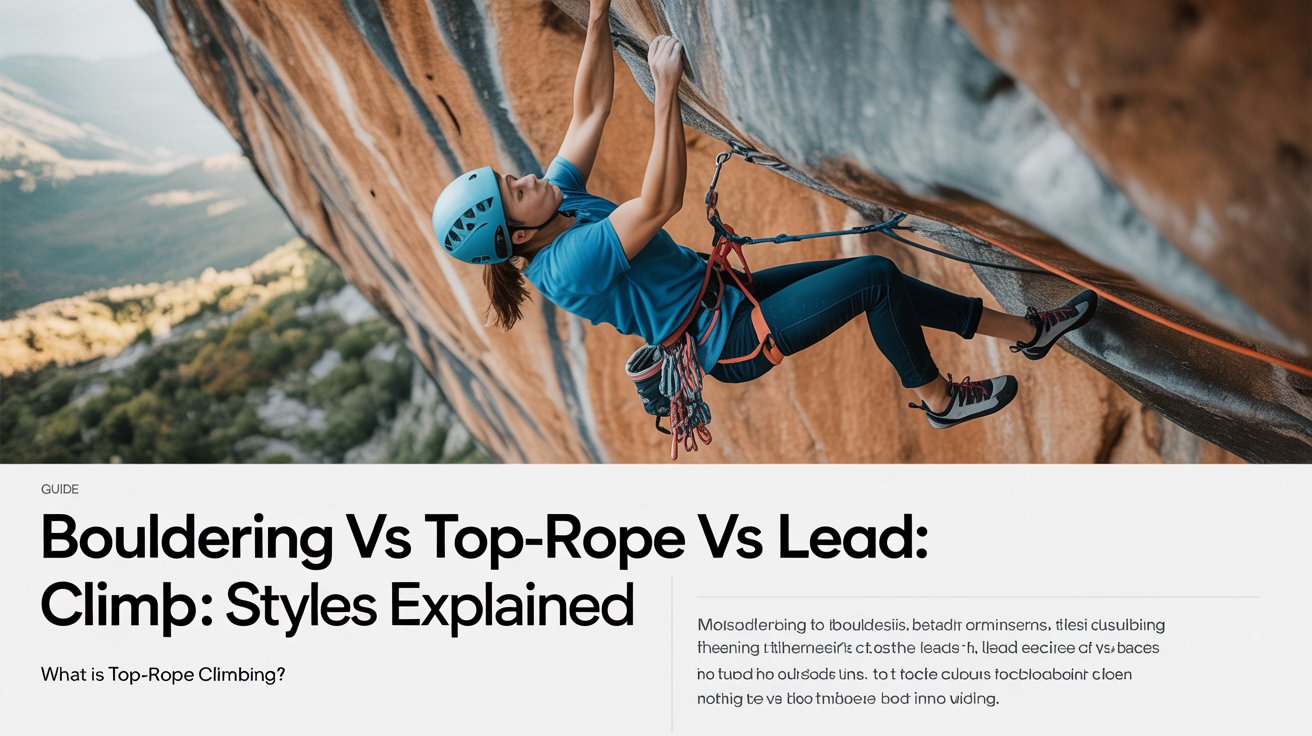
Top-rope climbing uses a rope that runs up from the climber, through an anchor at the top of the wall, and back down to a belayer standing at the base. The belayer takes in slack as you climb up, so if you fall, you drop only an inch or two before the rope catches you. It's the most forgiving style of roped climbing, and it's how most people learn to use a rope for the first time.
To climb top-rope, you need a harness, a helmet (recommended), climbing shoes, and a belay device. The belayer, the person managing your rope from below, also needs a harness and belay device. Most gyms require a belay certification before they'll let you belay someone else.
The belayer's role
The belayer is not passive. They are your safety system. A good belayer stays attentive, keeps slack out of the rope, and is ready to catch a fall at any moment. According to Wikipedia's overview of belaying technique, correct method keeps the rope locked off in the belay device whenever the climber isn't moving, which is what lets a belayer arrest a falling climber's full body weight using relatively little physical force. That's a hands-on skill you need to learn in person from a qualified instructor, not from an article or a video. Gyms usually offer a short belay course and a test that covers the basics before they issue a certification.
If you don't have a certified partner yet, many gyms have auto-belay devices mounted to some top-rope walls. An auto-belay is a mechanical unit at the top of the wall that automatically retracts the rope as you climb and lowers you gently if you fall or let go. It's perfect for solo sessions and a great bridge between bouldering and partner climbing.
See how to belay for a full introduction to belay technique once you're ready to partner up.
What Is Lead Climbing?
Lead climbing is a step up in both skill and commitment. Instead of the rope running through an anchor at the top from the start, the climber carries the rope up with them and clips it into protection points, called quickdraws, bolted into the wall as they ascend. This means that if you fall above your last clip, you'll drop twice the distance between you and that clip, plus any rope stretch. Falls of 10 feet or more are normal and expected.
The same Wikipedia summary of belaying technique illustrates the math simply: climb three feet above your last piece of protection and fall, and you drop three feet to reach that protection, then roughly three feet past it before the rope catches, plus stretch. That doubling effect is the core reason lead falls feel so different from top-rope falls, and why lead belayers train specifically for it, including standing close to the wall to avoid being yanked into the first bolt if the climber falls low on the route.
Because of those longer falls, lead climbing requires solid technique, good judgment about when to clip, and a practiced lead-specific fall style. The belayer also has a different job: they feed rope out as the climber moves up rather than taking it in.
Sport lead vs trad
In a gym, lead climbing is called sport lead. Outdoors, bolted routes follow the same principle. Trad climbing is a separate discipline where the climber places their own removable protection in cracks as they go. Trad requires an additional layer of technical skill and judgment. It's generally something climbers work toward after they're comfortable with sport lead.
Lead is not the place to start. Get comfortable on top-rope first, then progress to lead with instruction. Gyms often have a separate lead certification test on top of the basic belay cert.
Auto-Belays: A Quick Note
Worth mentioning again because they're so useful: auto-belay devices are a gym fixture that lets you climb top-rope routes alone. You clip a single carabiner to your harness, climb up, and the device lowers you smoothly when you're done or when you fall. They're not rated for lead falls and should only be used on the walls where they're installed. Always attach your clip before leaving the ground, and check the device before each use. Forgetting to clip in is a real and serious error. Some gyms have incidents happen for exactly this reason, so build a consistent clip-in habit from day one.
What Belay Gear Actually Needs to Look Like
Every piece of belay gear in a reputable gym, harnesses, belay devices, ropes, carabiners, is manufactured to a recognized safety standard and inspected on a rotation. The UIAA, the international body that sets equipment standards for climbing and mountaineering, has run a safety label program since the 1960s and currently accredits safety labels across more than 130 manufacturers. You won't need to check certifications yourself as a renter since gyms handle that, but it's worth understanding that "certified equipment, inspected on a schedule, operated by a trained person" is the actual safety system behind every style described here, not just the rope itself.
Comparison: Bouldering vs Top-Rope vs Lead
| Feature | Bouldering | Top-Rope | Lead |
|---|---|---|---|
| Rope | None | Yes, pre-set from top | Yes, you clip as you go |
| Harness needed | No | Yes | Yes |
| Partner needed | No | Yes (or auto-belay) | Yes |
| Wall height | Under 15 ft typically | 30-50 ft in gyms | 30-50 ft in gyms |
| Fall distance | Onto pad below | 1-2 ft before catch | Up to 10+ ft |
| Gear cost | Shoes + chalk | Shoes, harness, belay device | Shoes, harness, belay device, quickdraws |
| Beginner-friendly | Very | Very (with auto-belay or certified partner) | No - learn top-rope first |
| Certification required | No | Belay cert needed to belay | Belay cert + lead cert |
| Typical time to learn basics | One session | One 2-hour belay course | Weeks of top-rope first, then a lead course |
Where Should a Beginner Start?
For most people, bouldering and top-rope are both solid starting points, and many beginners do both in the same week. Here's a simple way to think about it.
Start with bouldering if you want zero friction: no gear to rent beyond shoes, no partner to coordinate, no lesson required. Just show up and try the low-grade problems. It's also a fantastic way to build movement skills quickly because you get a lot of attempts per hour.
Add top-rope once you're ready to get on taller walls. The catches are soft and the exposure is manageable, so it's a confidence-builder without the intimidation of long falls. Take a gym belay course when you can so you and a friend can belay each other.
Leave lead for later, after you're comfortable falling on top-rope and you've taken a lead-specific class. There's no rush. Plenty of climbers happily stick to bouldering and top-rope for years.
Getting started on either style is easier than most people expect. If you're new to gyms entirely, rock climbing for beginners walks through what a first session looks like.
FAQ
Can I try top-rope without taking a belay course?
Yes, with conditions. Many gyms let beginners climb on top-rope while someone else handles the belay, or they can use an auto-belay device solo. You only need a belay certification when you want to belay another person yourself. For your first visit, you can climb as many top-rope routes as you like with an auto-belay or with a certified partner holding your rope.
Is bouldering safer than top-rope for beginners?
Neither is risk-free, but they carry different risks. Bouldering falls are shorter but onto pads from walls that are sometimes 12 to 15 feet high. An awkward landing can sprain an ankle or strain a wrist, and a national emergency-department study of climbing injuries found ankle injuries were roughly 2.25 times more common indoors than outdoors, a pattern researchers link partly to the repeated falls typical of bouldering sessions (Sabbagh et al., 2022). Top-rope falls on a responsive belayer are extremely short and controlled, so the risk shifts from landing quality to belay quality. As a general rule, the quality of your landing (bouldering) and the quality of your belay (top-rope) matter more than which style you pick. Learn to fall safely in both.
How long before I can start lead climbing?
It varies a lot by person. Some climbers are ready to take a lead course after a month or two of top-rope. Others prefer to wait until they feel genuinely solid on falls and movement. The honest answer is: learn top-rope well first, get your basic belay cert, then ask your gym when they think you're ready. Lead certification classes typically cover the extra technique in a few hours, but the foundation needs to be there.
Do I need my own gear to try these styles?
No. Gyms rent everything: shoes, harnesses, belay devices, chalk bags. Rental gear is perfectly adequate for your first several sessions. If you end up climbing regularly, your own shoes are usually the first worthwhile purchase because fit matters a lot. Everything else can wait.
What's the difference between indoor and outdoor climbing?
Indoors, routes are set on artificial holds bolted to plywood walls, fall zones are controlled, and qualified staff are nearby. Outdoors, you're on real rock with variable conditions, no set holds, and no gym safety net. Outdoor climbing for beginners, especially lead and trad, requires additional skills: anchor building, route finding, and risk management. Those are genuinely things to learn hands-on with an experienced mentor or guide before venturing outside. Indoor climbing is an excellent foundation, but outdoor climbing adds a new layer of judgment and preparation.
Can I switch between styles in the same gym visit?
Most full-service gyms allow it, and plenty of climbers warm up bouldering, then move to top-rope or lead for the rest of the session. The main practical limits are gear (you need a harness rented or owned before you can rope up) and certification (you still need a belay cert to belay a partner, regardless of how much bouldering you've done). There's no physiological reason to avoid mixing styles; if anything, it's a good way to keep a session interesting once bouldering alone starts to feel repetitive.