What Is Spotting in Bouldering?
Learn what spotting means in bouldering, how to spot a climber properly, correct hand position and body stance, and the real limits of a spotter's role.
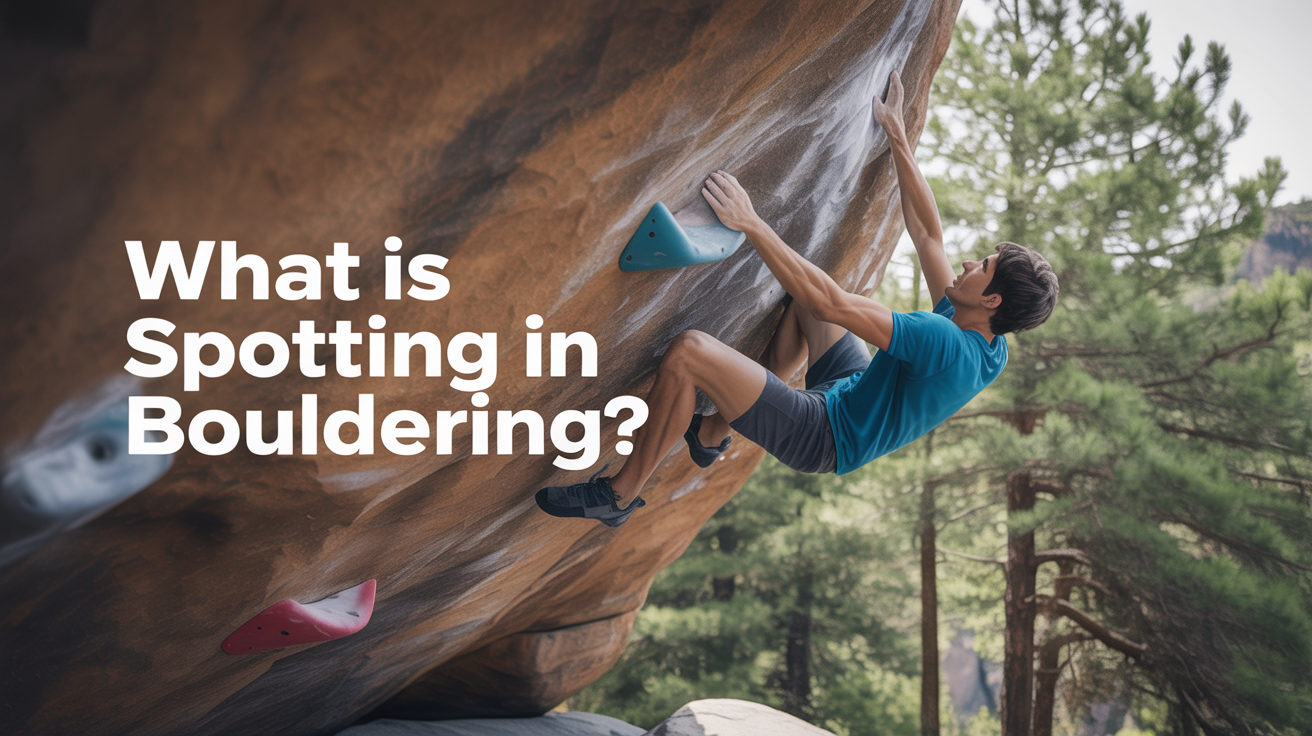
Bouldering looks like a solo activity. No rope, no harness, just a climber and a wall. But behind almost every serious boulder problem stands a spotter, quietly tracking every move and ready to act in a fraction of a second. Spotting is one of those skills that new climbers often overlook until they watch a bad fall play out without one.
This guide explains what spotting is, what it can and cannot do, and how to do it well. If you are new to bouldering, read this alongside working with an experienced climber or a coach at your gym. Reading about technique is useful; practicing it with feedback is the part that actually builds the skill.
What Spotting Means in Bouldering
Spotting is the act of guiding a falling climber toward a safe landing. The spotter does not catch the climber like a baseball. The goal is narrower: redirect the fall so the climber lands on their feet (or at least on the crash pad), protect the head and neck, and prevent the kind of awkward rotation that causes wrist and ankle injuries.
The word comes from gymnastics, where a coach physically supports an athlete through a skill. Bouldering spotting shares the protective intent but works differently. The climber is usually moving fast, may be inverted, and the contact is brief and reactive rather than continuous.
Spotting matters most during the crux sections of a problem, near the top of the boulder where a fall could be long, and any time the climber is working moves that might send them backward or sideways rather than straight down. On indoor walls with thick crash pads and predictable fall zones, a spotter is still valuable. Outdoors on natural boulders, where the landing is often uneven rock or roots, a good spotter can be the difference between a bruise and a broken ankle.
The Spotter's Body Position
Where you stand and how you hold yourself determines whether you can do anything useful when a fall happens.
Stance. Set up with your feet roughly shoulder-width apart and one foot slightly ahead of the other. A staggered stance lets you absorb a moving load without getting knocked over. Bend your knees slightly, keep your weight forward, and stay light on your feet so you can shift direction fast. Planting your feet flat and rigid is a common beginner mistake; you end up absorbing the climber's momentum with your back instead of your legs.
Distance. Stand close enough to make contact the instant a fall starts, but far enough that the climber is not landing directly on top of you. For most problems this means positioning yourself one to two feet away from the wall, adjusting as the climber moves up or traverses.
Eyes. Watch the climber's hips, not their hands. Hands are distracting and move constantly. The hips tell you where the body's center of mass is going, which gives you the earliest warning of a fall.
Movement. A common error is to pick a spot and stay there. If the climber traverses left, you move left. If they move up, you back up a step so your hands stay level with their hips. This lateral shadow is one of the things that separates effective spotters from decorative ones.
Hand Position and Contact
Your hands are tools for redirecting momentum, not brakes. Keep them up with palms facing the climber and fingers together. Some spotters naturally spread their fingers wide, which can lead to catching a thumb at a bad angle. Flat palms are safer.
The two main contact zones are the shoulders and the lower back. When a climber falls backward, the instinct is to grab their arms or backpack. Resist that. Arms can be pulled out of sockets under load, and straps can twist and complicate the landing. Aim to guide the torso.
Do not grab the climber. A grabbing motion tends to be too slow, and if you do make contact before a fall is fully committed, you can pull the climber off the wall or throw off their balance. Light, steering contact is the goal.
In practice, most spotting is hands-free until contact is actually needed. You are there as a last line, not a first line. The crash pad is the first line.
Communication Before the Problem Starts
Good spotting begins before the climber leaves the ground. A short conversation takes about fifteen seconds and removes a lot of uncertainty.
Ask or establish: Where is the crux? Where does the fall zone point? Are there specific moves where the climber expects to bail? Is there a particular direction they tend to fall? Some climbers are comfortable being talked through a problem; others prefer silence and will cue the spotter with a word or sound when they are about to commit to a hard move.
If you are spotting someone for the first time, say what you plan to do. "I'll be right behind you, watching your hips" is enough to set expectations. On a long problem with multiple fall zones, it is reasonable to agree on when you will reposition.
Check the crash pad placement together. Pad gaps are a common source of ankle injuries. If the problem traverses, you may need more than one pad, and you may need to drag them as the climber moves.
What Spotting Cannot Do
Spotting reduces risk. It does not eliminate it. This distinction matters, especially for new climbers who might feel falsely secure.
A spotter cannot prevent a fall. They cannot guarantee a clean landing on a difficult outdoor problem with an awkward angle. They cannot substitute for a crash pad, and they cannot make up for a pad placement that leaves gaps or edges exposed. On high ball problems (boulders tall enough that the fall is serious), spotters can redirect a fall but a bad landing at that height can still cause serious injury regardless of technique.
Learning to fall is as important as learning to spot, and both are worth practicing deliberately. Knowing how to fall safely while bouldering is a skill you build in a gym, not something you figure out mid-fall on your first outdoor trip.
No amount of reading prepares you for the speed and unpredictability of a real fall. If you are new to spotting, practice at a gym with a patient partner on low, predictable problems before you take on the role on hard or tall boulders. Many climbing gyms offer intro sessions or clinics that include spotting practice. Ask.
Building the Habit
The value of spotting is partly mechanical and partly cultural. A group of climbers that spots each other consistently pays more attention, communicates more, and catches problems before they become injuries. Even on easy warm-up problems, spotting is a way to stay engaged and build the reflex.
For a deeper look at how bouldering fits into your broader progression as a climber, bouldering for beginners: a complete starter guide covers how to structure your early sessions. Once you are comfortable with how falls and spotting work, understanding where your projects sit in the V-scale grading system helps you choose problems with appropriate fall zones for your current skill level.
Frequently Asked Questions
Do you need a spotter if there is already a crash pad?
A pad covers the landing zone, but it does not steer you onto it. A spotter helps ensure you land on the pad rather than beside it, and helps prevent rotational falls that can send you past the pad's edge. On any problem where the fall direction is uncertain, a spotter adds real value even when pads are well placed.
How close should a spotter stand?
Close enough to make contact within one step, but not so close that the climber lands on the spotter. For most indoor problems, one to two feet from the wall is a reasonable starting point. Adjust based on how the problem moves. If the climber is working a traverse, you will need to move laterally throughout.
Can a lighter person spot a heavier climber?
Yes, with adjustments. The goal is redirection, not stopping. A smaller spotter can still guide a heavier climber's fall toward the pad and protect the head and shoulders, even if they absorb less of the impact. Stance, timing, and positioning matter more than matching body weight.
Should spotters give beta while spotting?
Not during an active attempt. Talking while someone is on the wall splits their focus and your own. Save feedback for when the climber is back on the ground. Some climbers will ask for a quick word between attempts, and that is fine, but the spotting role and the coaching role work best when they stay separate.
Is spotting less important on indoor bouldering walls?
Indoor problems have thick pads, padded walls, and generally predictable fall zones, which reduces but does not eliminate the value of spotting. High indoor problems, traverse problems with lateral fall trajectories, and any move with a real chance of an inverted fall all benefit from a spotter. It is also worth developing the habit indoors so it is automatic when you eventually climb outdoors, where the stakes are higher.