Indoor vs Outdoor Bouldering: What's the Difference?
Indoor and outdoor bouldering share the same movements but are very different experiences. Here's what to expect before you make the transition.
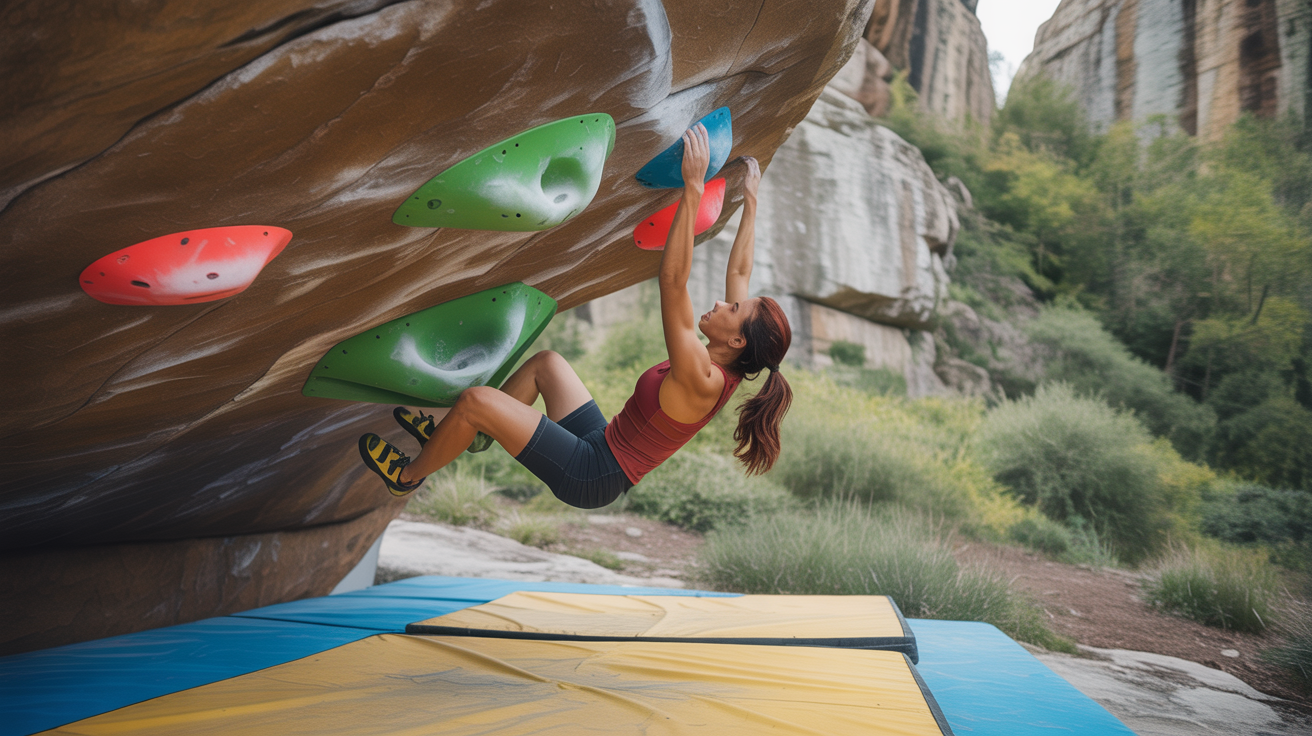
Most people start bouldering inside. The gym is warm, the holds are color-coded, and the padded floor forgives a bad fall. Then someone mentions a local crag, and suddenly the same basic discipline feels completely foreign. The moves are similar, but almost everything else changes.
Understanding those differences before you head outside will make the experience safer and more enjoyable.
How the Holds Work
In a gym, route-setters bolt shaped holds onto plywood panels and mark each problem with tape or matching hold colors. You know exactly which holds are yours. The sequences are designed to be solved, usually within the session.
On real rock, there are no colored holds. You read the stone itself, searching for edges, slopers, pockets, and pinches that the rock happens to offer. What counts as a "good" hold is less obvious, and the sequence is rarely self-evident. This problem-solving layer is one reason many climbers fall in love with outdoor bouldering, but it also means the learning curve is steeper. Problems that look easy from the ground can stump gym climbers for entire sessions.
Rock texture also changes your grip. Granite, sandstone, limestone, and gneiss each feel different under your fingers. Friction moves that work on gym texture may feel slippery on certain rock types, and vice versa.
How Grades Feel
A V3 in a gym and a V3 outside are not the same thing. Most climbers find that outdoor grades feel significantly harder, at least at first. A few reasons:
- Hold condition. Worn or polished outdoor holds can be slick. Gym holds are replaced or scrubbed regularly.
- No beta spray. Indoors, someone nearby almost always tells you the sequence. Outdoors you figure it out yourself.
- Rock type and angle. Gyms tend to overrepresent overhang and undercutting sequences. Real rock has more vertical and slab terrain, which rewards different technique.
- Physical environment. Heat, humidity, and sunlight affect friction on rock. Cold, dry days are generally better for hard moves.
It's common to climb a full grade or two below your gym level when you first go outside. That's normal. Your bouldering grades explained on the V-scale will start to realign as you build outdoor experience.
Landing Zones and Fall Safety
This is the most important difference for beginners to understand.
Gym floors are thick, engineered crash pads that cover the entire landing area. Outdoor bouldering relies on portable crash pads, which must be placed strategically, and even then they rarely cover everything. The ground around them is often uneven: roots, rocks, and sloped dirt.
Spotting becomes essential outside. A spotter's job is not to catch you, but to guide your body onto the pads and protect your head and spine if you fall unexpectedly. This is a skill that takes practice to do well, and it requires communication between the climber and the person below.
Before going outside, make sure you have developed solid falling technique for bouldering in a gym setting. But even that preparation has limits. Falling on an outdoor problem with a bad landing zone, no spotter, and one small pad is genuinely hazardous. Go with people who have experience at that specific area and who can show you how to set the pads for each problem. Do not assume your gym falling skills transfer automatically.
Leave No Trace
Outdoor climbing areas require a different mindset than a gym. Access depends on climbers behaving well and leaving sites in good condition.
A few basic rules:
- Tick marks (chalk dots to mark holds) should be brushed off when you leave. Carry a soft-bristle brush.
- Excess chalk on the rock damages the texture over time. Some areas have restrictions or bans on chalk entirely.
- Stay on established trails to avoid damaging vegetation around the base of problems.
- Pack out everything you bring in, including tape, food wrappers, and chalk bags that fall from your bag.
- Respect any seasonal closures. Many crags restrict access during nesting season for raptors.
Local climbing organizations and the Access Fund maintain guidelines for specific areas. Checking those before you visit is part of going outside responsibly.
Indoor vs Outdoor Bouldering: A Comparison
| Factor | Indoor Gym | Outdoor Crag |
|---|---|---|
| Hold identification | Color-coded or taped | You read the rock |
| Landing surface | Full-coverage padded floor | Portable crash pads on uneven ground |
| Grade accuracy | Consistent within the gym | Varies; often feels harder |
| Rock type | Standardized textures | Granite, sandstone, limestone, and others |
| Spotting required | Rarely | Almost always |
| Beta availability | Easy to get | You figure it out |
| Access rules | Gym policies | Leave No Trace, local access agreements |
| Weather dependence | None | Temperature, humidity, and moisture all matter |
How to Make the Transition
The most reliable approach is to go with someone who climbs outside regularly and knows the area. They can place pads well, show you how to read the rock, and flag problems that have tricky or dangerous landings. Reading a guidebook or watching video is useful preparation, but it does not replace having an experienced person beside you for the first several sessions.
A few practical steps:
- Start with a beginner-friendly area. Some crags have problems specifically described as good for first-timers, with flat landings and straightforward movement. Ask at your gym, or look for area-specific forums.
- Rent or borrow pads before buying. Outdoor pads are expensive and bulky. Try the experience before committing.
- Go on a dry day. Wet rock is far more slippery than it looks, and some rock types (especially sandstone) are damaged by climbing when damp. Check local guidelines about wet-rock policies.
- Warm up on easier problems. There are no warm-up walls outdoors. Start on grades well below your gym level and let your body adjust to the different texture and movement demands.
- End your session before you're pumped out. Outdoor landings are less forgiving, and tired climbers fall badly.
For a broader picture of outdoor movement and equipment, revisit the bouldering starter guide before your first trip.
Frequently Asked Questions
Do I need a crash pad to go outdoor bouldering? You need at least one, and for most problems you need more than one. Borrowing or renting from a local gym or gear shop makes sense for your first trips. Going to an outdoor boulder without any pad is a genuine risk, especially on problems above knee height.
Can I go outdoor bouldering alone? It's not recommended, especially as a beginner. A spotter is important for pad placement and for guiding you onto the pads during unexpected falls. Solo outdoor bouldering is practiced by experienced climbers who know a specific area well and have assessed the risks carefully. For your first outdoor sessions, go with a group.
Why do my fingers feel worse on real rock? Real rock is rough and abrasive in ways gym holds are not. Skin tears faster, and certain rock types (limestone in particular) can feel sharp on smaller edges. Shorter sessions and chalk management help. Some climbers apply a light skin file between sessions to keep calluses even.
How do I find good beginner outdoor bouldering areas? Start with your local climbing gym. Staff often know the nearby crags well and can recommend appropriate areas. Local climbing clubs and regional guidebooks are also good resources. The Mountain Project app maintains user-contributed information on boulder problems across most major climbing regions.
Does outdoor bouldering require different shoes? Your gym shoes will work fine outdoors. Some climbers prefer a slightly stiffer sole for outdoor climbing because it gives more precision on small footholds in rock, but this is a preference, not a requirement. Clean your shoes before you boulder outside, as gym rubber picks up floor chalk that reduces friction on rock.