Climbing-Specific Strength: What to Train (and What Not To)
A beginner's guide to climbing strength training: what exercises actually help, which ones to skip for now, and a simple plan to build safely.
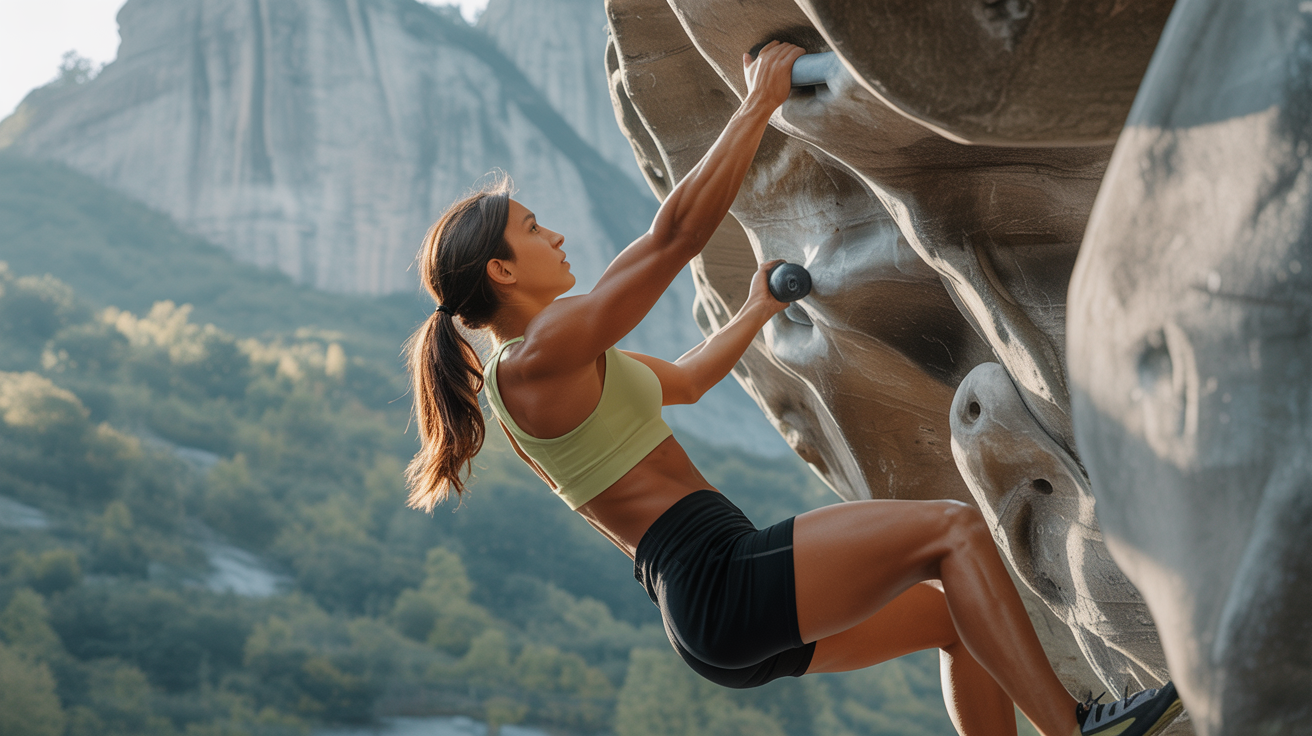
New climbers often want to train harder so they can climb better. That instinct makes sense, but it leads a lot of beginners down the wrong path early on. The most useful thing to understand before adding any supplemental training is that climbing itself is the best workout you can do for climbing. Everything else plays a supporting role.
This guide covers what supplemental exercises are actually worth your time, which popular training tools to avoid until you have years of climbing behind you, and how to put together a simple plan that won't wreck your fingers before your tendons have had time to catch up with your muscles.
Why Climbing More Beats Everything Else
Skill and movement efficiency drive most early-stage improvement, and you only develop those by climbing. A beginner who climbs three days a week for six months will almost always outpace someone who climbs once a week and does gym training on the other days.
Your body also adapts to climbing in a specific sequence. Muscles respond to new demands in weeks. Tendons, pulleys, and connective tissue take months to years. That gap is the core reason beginners get injured: they get stronger faster than their fingers can handle the load. Prioritizing climbing time over strength training keeps your overall load manageable and builds the specific coordination and contact strength that no exercise machine replicates.
Understanding how to get better at climbing as a beginner starts with that principle. Volume and variety on the wall, not training intensity off it.
Supportive Exercises Worth Doing
That said, a few categories of supplemental work do help, as long as they stay secondary to climbing.
Pull strength. Climbing is a pulling sport, and basic pulling strength transfers reasonably well. Scapular pull-ups (hang from a bar, then engage your shoulder blades before bending your elbows) teach the shoulder mechanics you use on every move. Regular pull-ups and rows build the lats, biceps, and upper back that take load off your fingers. Do these after climbing sessions, not before, so fatigue doesn't change how you move on the wall.
Core. A stable core lets you keep your hips close to the wall and transfer force through your body rather than gripping harder to compensate. Dead bugs, hollow holds, and hanging knee raises are low-risk options. You don't need a complicated program. Ten minutes of core work a few times a week is enough for most beginners.
Leg strength. Climbing is more leg-driven than it looks. Squats and lunges build the pushing power you use when stepping up on footholds. Many new climbers neglect footwork and over-rely on their arms; stronger legs give you more options and take load off your upper body.
Antagonist training. Climbing works the fingers and forearms heavily in flexion. Without any pulling in the opposite direction, muscle imbalances develop over time. Wrist extensions with a light band or weight, and push-ups or light pressing work, help keep things balanced and reduce elbow injury risk.
Flexibility. High feet, drop-knees, and stemming moves all require hip mobility. Basic stretches for the hips and hamstrings help you use footholds that would otherwise feel awkward. This one gets overlooked but pays off quickly.
What Not to Train (Yet)
Two pieces of equipment show up constantly in climbing training content: hangboards and campus boards. Both are genuinely useful tools for experienced climbers. For beginners, both carry a high injury risk that outweighs any benefit.
Hangboards (also called fingerboards) load individual fingers in static positions, often on small holds. The protocol typically involves hanging from specific grips for seconds at a time, resting, and repeating. This is a high-intensity stimulus that connective tissue in your fingers cannot tolerate safely until it has been conditioned by years of climbing volume. Finger pulley injuries, which are the most common climbing injury overall, happen frequently to beginners who add hangboard training too soon. The pain can sideline you for weeks or months.
Campus boards are rungs mounted on a steep overhang that you use without your feet. They train explosive contact strength and coordination. They're even more demanding than hangboards on unaccustomed fingers and shoulders. Campus board training is appropriate for climbers who have already been training seriously for several years.
A useful rule of thumb used in the coaching community: wait until you have two or more years of consistent climbing before using either tool. Understand how climbing grades work and aim to be climbing at V4 or 5.10+ comfortably before you consider a fingerboard protocol. Even then, start with a coach rather than copying protocols from videos.
The underlying logic is the same as the section above: muscles adapt faster than tendons. Hangboarding and campusing push finger tendons past where climbing volume alone would take them. That's fine when the tendon has been built up gradually. It's a recipe for injury when it hasn't.
A Simple Beginner Training Plan
This assumes you're climbing two to three days per week. Add supplemental work on climbing days after you're done on the wall, or on one rest day if you prefer.
Climbing days (after your session):
- Scapular pull-ups: 2 sets of 8 to 10
- Pull-ups or ring rows: 2 sets of 6 to 8
- Dead bugs or hollow holds: 3 sets of 20 to 30 seconds
- Wrist extensions with a light band: 2 sets of 15
Once or twice per week (climbing or rest day):
- Squats or lunges: 3 sets of 10 to 12
- Push-ups: 2 sets of 10 to 15
- Hip flexor and hamstring stretches: 5 to 10 minutes
Keep the supplemental sessions short. The goal is support, not a second sport. If you're feeling beat up before your next climbing session, scale back. Recovery is part of the training.
As you develop and start projecting harder routes, your needs will shift. You'll eventually want more targeted training, and that's when a climbing coach or a structured training book becomes worth the investment.
Frequently Asked Questions
How long should I wait before using a hangboard? Most coaches recommend two or more years of consistent climbing before starting a hangboard protocol. Your fingers need time to adapt to climbing loads before you add isolated finger loading on top. Rushing this is one of the most common causes of pulley injuries in beginners.
Can I do strength training and climbing on the same day? Yes, as long as you climb first. Climbing requires precise footwork and body awareness, and training fatigue makes both harder to execute. Do your supplemental exercises after your climbing session, not before.
My forearms pump out quickly. Will training fix that? Forearm pump for beginners is mostly a technique issue. Straight arms on holds, feet pushed into the wall, and learning to rest on easier moves all reduce pump significantly. You'll also develop better endurance simply by climbing more often. Supplemental training helps but won't solve a technique problem.
Do I need protein supplements or any special diet to get stronger at climbing? A generally balanced diet with adequate protein supports recovery from any physical activity. You don't need supplements to improve at climbing as a beginner. Sleep and consistency on the wall matter more than nutrition optimization at this stage.
How do I know if finger pain is normal soreness or an injury? Normal climbing soreness is in the muscles of the forearm and upper back. Sharp or localized pain at a finger joint or in the pulley area (the inside of the finger between the first and second knuckle when the finger is curled) is a warning sign. If that kind of pain persists between sessions or gets worse during climbing, stop and see a sports medicine doctor familiar with climbing injuries. Trying to climb through a pulley strain typically makes it significantly worse.