How to Get Better at Climbing as a Beginner
Want to improve at climbing? The biggest gains come from technique and climbing often, not strength training. Here's how to progress as a beginner.
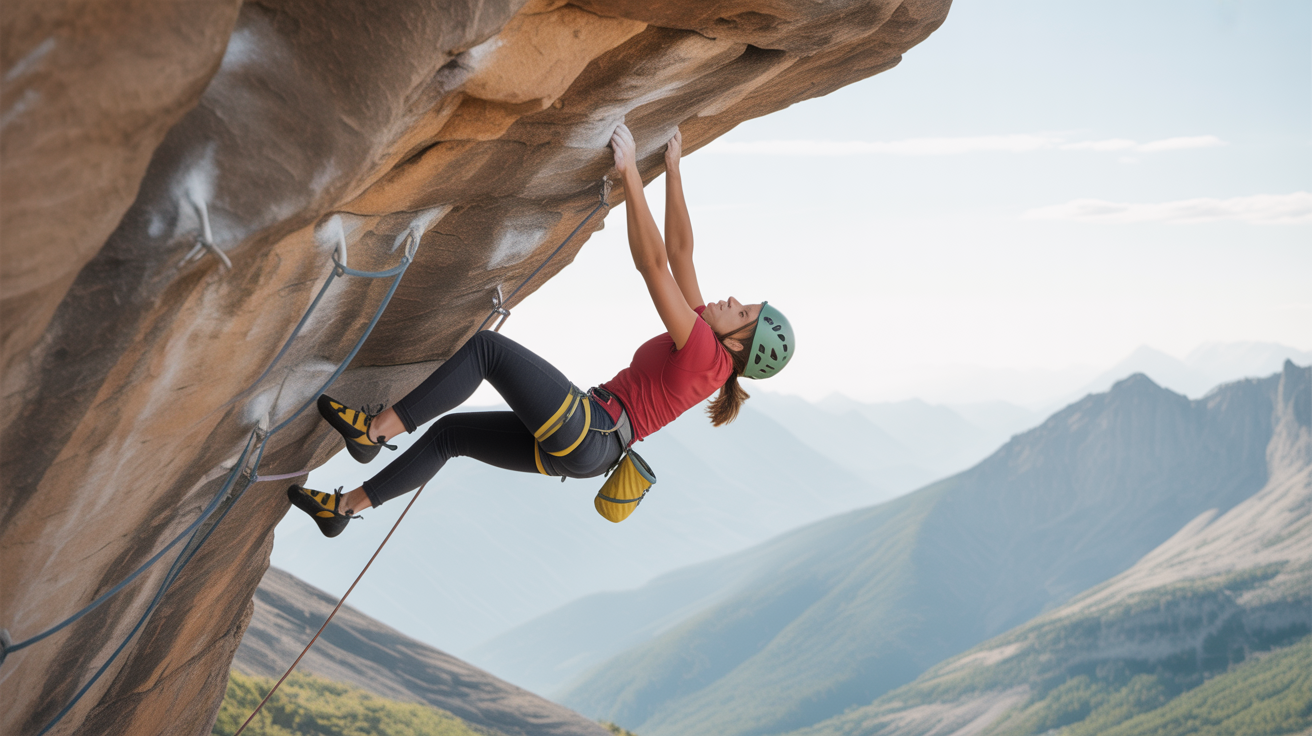
Most beginners assume getting better at climbing means getting stronger. It's a reasonable guess. Climbing looks athletic, and gym culture everywhere says "train harder." But if you've been at it for a few months and feel stuck, the answer almost certainly isn't more pull-ups. It's better movement, and more of it. Technique compounds faster than strength at the beginner level, and the good news is that building technique is genuinely fun.
This guide walks through practical habits that will move you forward and flags one common mistake (early finger training) that sends a lot of beginners to the physio instead.
Climb More, Not Just Harder
The single biggest driver of improvement for beginners is volume on the wall. More sessions means more chances for your body to learn movement patterns, and those patterns start to stick without you even trying.
How Often Should You Climb?
Two to three sessions per week is a solid target. That's enough frequency to build continuity without overloading tendons and fingers that are still adapting. Rest days between sessions are not optional. Connective tissue (tendons, pulleys) recovers more slowly than muscle, and beginners tend to underestimate how much rest matters.
A week might look like: climb Monday, rest Tuesday, climb Wednesday, rest Thursday, climb Saturday. You don't need a rigid schedule, but if you're only getting one session a week, progression will be slow. If you're going five days in a row, you're likely accumulating fatigue that hurts more than it helps.
Climb Easy Problems on Purpose
There's a pull toward always trying your hardest grade. Resist it, at least some of the time. Spending 40-50% of a session on problems that feel comfortable lets you repeat movements cleanly, build confidence, and actually ingrain good habits. Constantly thrashing on stuff that's too hard teaches your body to muscle through with bad form.
If you're bouldering, easy problems are where footwork gets dialed. If you're on roped routes, they're where you learn to read sequences without the pressure of falling.
Make Footwork Your Priority
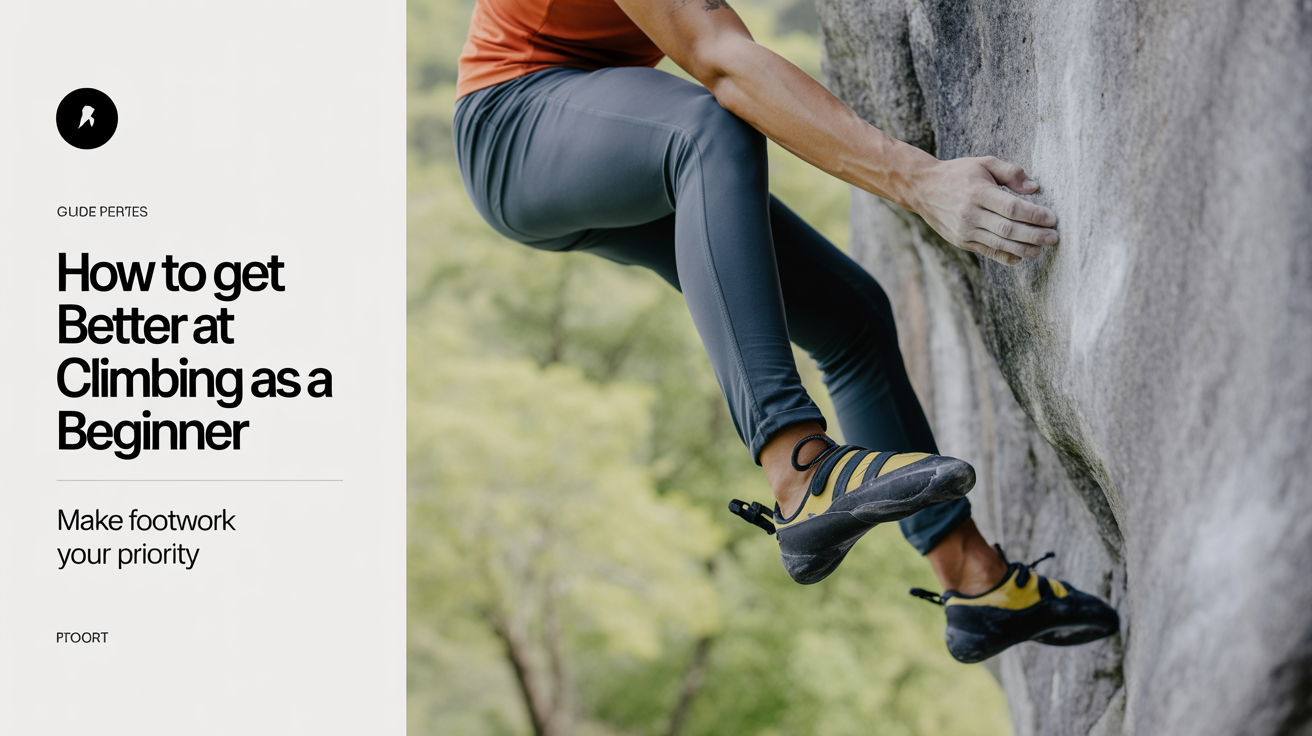
If there's one technical focus that pays off faster than anything else for beginners, it's footwork. Most new climbers treat their feet as an afterthought. They use big hand holds to haul themselves up and hope their feet find something. This works at first. It stops working quickly.
What Good Footwork Actually Looks Like
- Look at the hold before you step on it. Your eyes should find the foothold first, then your foot moves to meet it precisely. Most beginners place feet by feel, which means they land sloppily or miss small edges entirely.
- Step with the front of your shoe. The rubber tip, not the mid-sole. This gives you a smaller contact point and much better friction on most holds.
- Keep weight on your feet. Imagine you're standing on a ladder, not hanging from a bar. Pushing down through your feet instead of pulling with your arms is less tiring and opens up more movement options.
- Don't shuffle. Plant a foot, commit to it, then move.
A useful drill: pick a moderate problem you can do comfortably, then climb it silently. If your feet make a scraping or thudding sound, you're placing them sloppily. Aim for quiet, precise placements.
Learn from Other Climbers
One of the fastest ways to improve is watching people who climb better than you. The gym is full of them, and most are happy to talk.
Watch Beta, Try Beta
When you're stuck on a problem, watch someone else do it, specifically someone closer to your height or build if you can. Note where they place their feet, how they position their hips, and when they rest. Then try it. You don't have to copy everything, but you'll often pick up one adjustment that unlocks the sequence.
This is also a good reason to film yourself occasionally. Set your phone against a wall and record a climb. You will almost certainly see things you had no idea you were doing: a drooping hip, a hand reaching too early, feet cutting before you've committed. It's uncomfortable the first time. It's also one of the most useful tools available.
Consider a Lesson or Coached Session
Many gyms offer intro lessons, technique classes, or clinics for beginners. Even a single one-hour session with a qualified instructor can identify habits worth changing before they become ingrained. The Climbing Primer is an independent educational resource and is not affiliated with any gym or organization. We'd strongly encourage taking advantage of whatever in-person instruction your gym offers. There's no substitute for someone watching you move and giving real-time feedback.
Project Slightly Above Your Level (But Keep the Volume Below It)
"Projecting" means picking a problem or route that's just beyond your current ability and working it over multiple sessions. It's a legitimate training tool because it forces you to problem-solve and build specific movement skills. Understanding what projecting in climbing actually means can help you use this approach intentionally rather than just randomly trying hard things.
The key word is slightly. One or two grades above your consistent level is productive. Five grades above is mostly frustration, with a higher chance of tweaking something.
Most of your climbing should still be at grades you can do. Bank your technique there. Project a little at the top of the session when you're warmed up, then come down and do more moderate volume.
Understand the Grades Without Obsessing Over Them
It helps to have a basic sense of how climbing grades work so you can choose appropriate problems and track your progress meaningfully. Grades are rough guidelines, not a scorecard. The V-scale for bouldering and the Yosemite Decimal System (or French sport grades) for routes all have variation between gyms and setters.
What this means practically: don't chase grades as the primary measure of improvement. Instead, notice whether your movement is getting cleaner, whether you're falling less on problems you've tried before, and whether you're reading sequences more efficiently. Grade ticks are satisfying, but they're a lagging indicator of the actual skill being built.
What Not to Do: Skip the Hangboard for Now
This needs to be said clearly. Hangboarding (hanging from a fingerboard to build grip and finger strength) is a legitimate training tool for intermediate and advanced climbers. It is not appropriate for beginners, and it carries a real injury risk if used too early.
Your tendons and pulleys adapt much more slowly than your muscles. A beginner's fingers can generate more force than the connective tissue is ready to handle, which is exactly the recipe for a pulley injury. Pulley injuries are among the most common climbing injuries and can sideline you for months.
Should beginners hangboard? The short answer is no. Not in your first year, and arguably not in your second year either, unless you're working with a coach who has specifically assessed your readiness. Just climbing is finger training. Every session on the wall builds the tissue adaptation you need. There's no shortcut worth the injury risk.
This applies to other aggressive finger exercises too: rice bucket training, campus board rungs, two-finger pockets on a hangboard. All of these are tools with real prerequisites. Ignore them for now.
Warm Up Before Every Session
Warming up matters more for climbing than for many sports because your fingers, wrists, and elbows are under significant load immediately. A cold tissue tears more easily than a warm one.
A simple routine:
- 5-10 minutes of light movement (walk around, arm circles, light cardio)
- Finger tendon warm-up: gently open and close your hands, do some prayer stretches, extend fingers against light resistance
- Start your session on easy problems for the first 15-20 minutes before touching anything that challenges you
This isn't complicated. It's just something beginners often skip because they're eager to get on the wall.
Track Movement Quality, Not Just Grades
Progress in climbing can feel invisible because the grade numbers don't move every week. But consider tracking other things:
- Are you climbing problems in fewer falls than last month?
- Is your breathing more controlled on sustained routes?
- Are you reading movement sequences before you start, rather than figuring it out on the wall?
- Do moderate problems feel easier than they did six weeks ago?
These are all real indicators of improvement. The grades will follow.
FAQ
How long does it take to see improvement as a beginner climber?
Most beginners notice meaningful improvement within four to eight weeks of consistent practice: two to three sessions a week. The early progression curve is actually steep, which is encouraging. What slows people down is inconsistency (too many gaps between sessions) or spending all their time on problems that are too hard to learn from.
Do I need to be strong to get better at climbing?
Not at the beginner level, no. The strength you need for grades up through V3-V4 (or 5.10-5.11 on routes) develops naturally from climbing. Targeted strength work becomes relevant later, but most beginner plateaus are technique problems, not strength problems.
Should I follow a training program as a beginner?
A structured training program is generally overkill early on. The best "program" is showing up consistently, climbing a variety of problems, and paying attention to footwork and movement. If you want structure, a gym technique class or a session with an instructor is more useful than a generic training plan.
Can I climb outdoors as a beginner?
Outdoor climbing is a different environment from a gym and introduces real hazards: route-finding, rock quality, anchor systems, weather, and more. Before climbing outdoors, learn belaying and outdoor skills in person from a qualified guide or experienced mentor. The Climbing Primer covers these topics educationally, but outdoor and lead climbing skills need to be learned hands-on, with properly rated (UIAA/CE) gear and a full partner check system. Don't head outside based on reading alone.
How do I avoid finger injuries as a beginner?
Rest days are the first line of defense. Warm up every session. Avoid aggressive finger training tools (hangboards, campus rungs) until you have at least one to two years of consistent climbing. If a finger pulley starts hurting with a sharp, localized pain near the base of the finger, stop climbing and rest it. Ignoring that pain is how a minor strain becomes a multi-month setback. When in doubt, ask a sports physio who works with climbers.