How to Read a Bouldering Problem
Learn how to read a bouldering problem before you climb — from finding the start holds to tracing the route, spotting the crux, and planning your sequence.
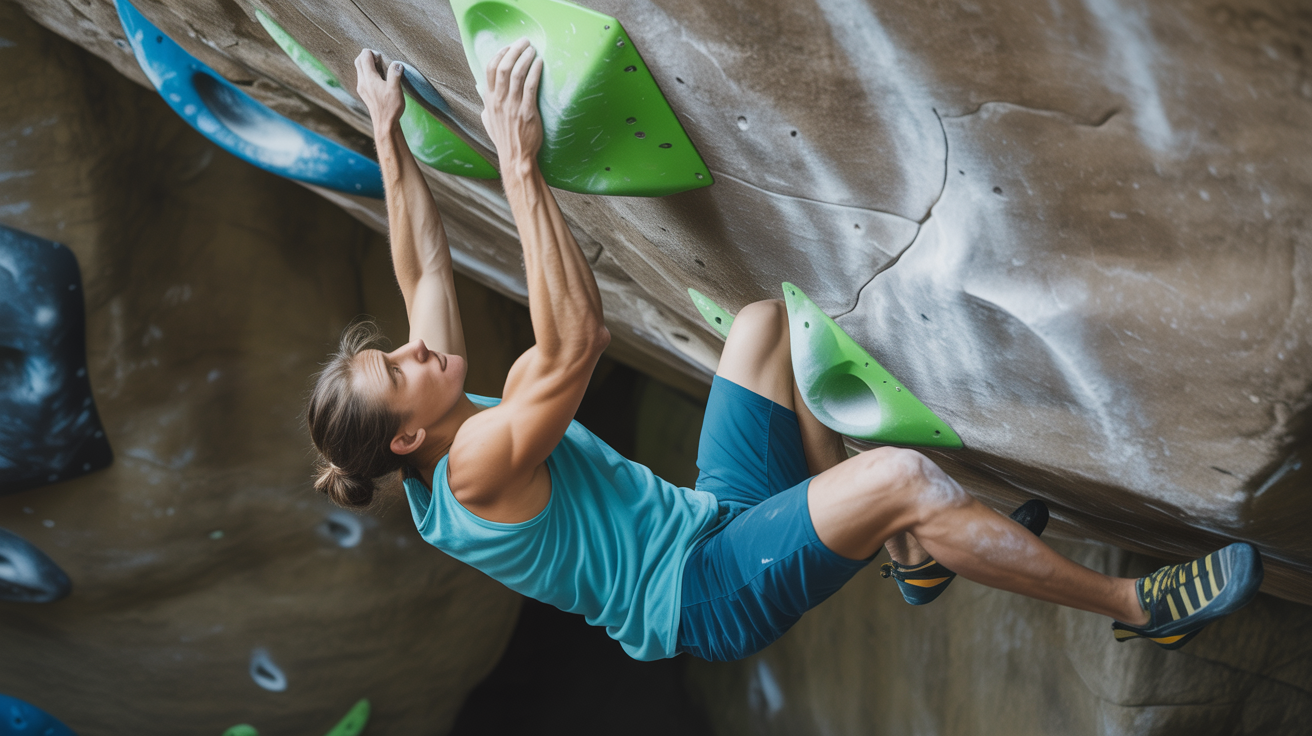
Before you pull on a single hold, there is something every experienced boulderer does that most beginners skip entirely: they stand at the base of the wall and just look. This habit, called route reading, costs nothing, takes about two minutes, and saves you more energy than any training tip you will find online. Understanding how to read a bouldering problem is one of the fastest ways to climb smarter, and it makes the whole experience more fun.
What a Bouldering Problem Actually Is
A bouldering "problem" is a set route from a defined start to a defined finish. Every hold on that route is the same color, or marked with matching tape, so you know which holds belong to your problem and which belong to someone else's. The word "problem" is intentional. Like a puzzle, each route has a solution you need to figure out.
In most gyms, the color-coding system is straightforward. A V2 problem might use yellow holds, while a V5 uses orange. Some gyms use tape instead: a small strip of matching tape marks each hold. Either way, your job is to follow only those holds from bottom to top.
Sit-Starts vs Stand-Starts
Pay attention to how the problem begins. A stand-start means you begin on your feet, holding the designated starting holds with your hands. A sit-start means you begin seated (or nearly so) with your bottom close to the ground, which often adds one or two tricky moves at the beginning.
The starting holds are almost always marked. Common indicators include a small "S" sticker, a pair of colored tape triangles, or a sign posted next to the wall listing which holds to use. If you are unsure, ask a staff member or a more experienced climber nearby. Gyms are generally friendly places.
The Finish Hold
At the top of the route, there is a designated finish hold, usually the highest one of that color. Most gyms require you to control this hold with both hands (or "match" it, meaning both hands on the same hold) and hold it still before you celebrate. Just touching it on your way past does not count. Read the posted rules or ask, because gyms vary on this point.
Tracing the Path from the Ground
Once you know where the problem starts and ends, trace the holds with your eyes. Follow the color from bottom to top, identifying each hold's shape: Is it a crimp, a jug, a sloper, a pinch? How far apart are consecutive holds? Which direction does each hold face?
This visual survey sounds basic, but beginners often skip it and then freeze mid-climb when they realize they do not know what comes next. A two-minute look from the ground removes most of those surprises.
Spotting the Crux
The crux is the hardest move (or sequence of moves) on the problem. It is the part where most people fall. As you trace the route, look for the section that seems most difficult: holds that are farther apart, smaller, or placed in an awkward direction. That is likely the crux.
Planning ahead matters here. If you know the crux is two moves from the top, you can pace yourself, using less energy on the easier section so you arrive at the hard part with something left in your arms.
Mapping Your Hands and Feet
Route reading is not just about hands. Feet matter just as much in bouldering, sometimes more. As you look at the wall, think about where your feet will go.
Some gyms run "feet follow hands", meaning your feet can only use the holds that are part of your problem. Others allow "open feet," where you can step on any hold on the wall. Check the rules posted near the bouldering area, or look at what other climbers are doing on that grade.
For each hand move, ask yourself: which hand goes first? Which direction does my body face? Am I moving left, right, or straight up? Thinking through left-hand, right-hand sequencing on the ground is far easier than figuring it out while your forearms are pumping at the wall.
Why Reading First Saves Energy
Here is the simple reason route reading matters so much: climbing is expensive. Every second you hang on the wall burns energy in your forearms, fingers, and shoulders. Every time you stop mid-climb to figure out what to do next, you are spending energy you could be using to actually move.
When you read a problem on the ground, you build a rough mental script of the sequence. Instead of problem-solving at the wall, you are executing a plan. That shift alone often means the difference between topping a problem on the second try or the seventh.
Experienced climbers also use visualization. They stand at the base, eyes closed or fixed on the wall, and mentally rehearse each move, where the body shifts, which foot pushes, how the next hold feels. You do not need to do this perfectly as a beginner, but even a rough mental preview helps.
Watching Others and Learning Beta
"Beta" is climber slang for information about how to do a move or sequence. Watching someone else attempt or complete a problem before you try it is one of the most useful learning tools available, and it is completely normal gym etiquette to observe.
Pay attention to their feet, not just their hands. Notice where they face their hips. See if they rest at any point. Someone else's beta might not work for your height or arm span, but it gives you a starting point, and adapting beta to your body is a skill you build over time.
If someone has just finished a problem and seems open to chatting, asking "do you have any beta for this one?" is a perfectly reasonable thing to say. Most boulderers enjoy sharing what they figured out.
Common Beginner Mistakes When Reading Routes
A few habits trip up new climbers when they are still learning to read problems.
Using off-route holds. This is the most common one. If a hold is not your color (or not marked with your tape), it is off-route. Grabbing it does not help you get better and can form bad habits. Stick to your holds, even when an off-route hold looks very tempting.
Ignoring the start hold rules. Some problems specify both hands on two specific holds. Starting with only one hand, or from a different hold, means you are not actually doing that problem. Read the start carefully.
Forgetting the finish rules. Slapping a top hold on the way through a big swing and then jumping off is not a send. Control the hold. This matters more as grades go up, controlled finishes are part of the skill.
Only looking at hand holds. Skipping foot analysis during your ground read is a consistent beginner mistake. Feet are how you push your body up; hands mostly guide direction. Give footwork the same attention during your preview.
Skipping the read entirely. Charging straight onto the wall without any preview leads to wasted attempts, extra fatigue, and frustration. Even thirty seconds of looking is better than nothing. As you improve, your reads will get faster and more detailed, but the habit starts now.
A Simple Pre-Climb Checklist
Before you step on the wall, run through these questions quickly:
- Where are the start holds, and how do I begin (sit-start or stand-start)?
- Where is the finish hold, and what does "completing" it look like at this gym?
- Which holds belong to my problem? Can I trace the whole color from bottom to top?
- Where does the route seem hardest, where is the crux?
- Which hand leads each major move? What do my feet do?
- Is there anywhere I might be able to shake out and rest?
- Have I watched anyone else attempt this, or can I get any beta?
You do not need to answer every question perfectly before climbing. Even partial answers make a real difference.
FAQ
Do I have to read a problem before every attempt?
Not necessarily on repeat attempts, after you have tried a section a few times, you will know it. But for your very first try on any problem, a ground read is almost always worth the time. As you advance, reading happens faster and becomes second nature.
What if I cannot trace the holds? The colors look similar.
Lighting in gyms can make some colors hard to distinguish. Step to the side or crouch to look at the angle of the holds, which sometimes helps. You can also use the hold tags or tape as a guide, or simply ask a staff member which holds are on which problem. There is no shame in asking, gyms want you to enjoy the routes.
My sequence never matches what I planned. Is that normal?
Completely normal, especially early on. The mental plan gives you a starting framework, but the real moves often differ once you are on the wall. Think of the ground read as a first draft, not a rigid script. Adjust as you climb and note what actually worked, that feedback improves your next read.
Can I use any foot holds, or only the ones that match my problem?
This depends on the gym. Many gyms use a "feet follow hands" rule for easier grades, and "open feet" for harder ones, or vice versa. Some gyms are open feet across the board. Check the posted rules or ask staff, it varies enough that you should not assume.
How is reading a bouldering problem different from reading a top-rope or lead route?
The core skill is the same, trace the holds, plan the sequence, spot the crux. On bouldering problems the wall is shorter and you can often see the whole route at once, which makes it easier to learn. On roped climbing you may not be able to see the top from the ground, so reading becomes a multi-stage process done in sections as you climb.
Route reading is one of the most transferable skills in climbing. Start practicing it from your very first session at the gym, pause, look, think, then climb. Over time it becomes automatic, and you will notice you are solving problems faster and falling less. For more on the grade system that labels each problem's difficulty, check out our guide to bouldering grades and the V-scale. If you are just getting started and want the full picture of what bouldering involves, our complete bouldering starter guide is a good place to begin.
This content is educational and not a substitute for hands-on instruction. Bouldering carries an inherent risk of injury. Learn safe falling technique from a qualified instructor, warm up before every session, and always climb within your current ability level. The Climbing Primer is an independent resource and is not affiliated with any gym, brand, or organization.